
How To
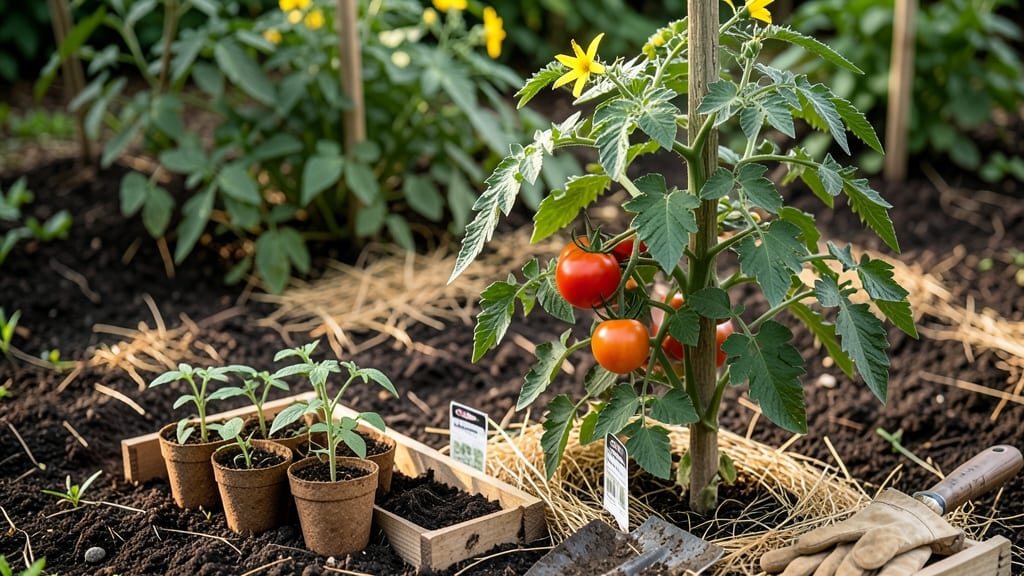
Growing a thriving tomato plant 🍅 starts with the right planting guide—one that covers soil, spacing, and timing to turn your garden into a high-yielding powerhouse.
Picture this: you’re staring at a row of wilted seedlings after a late frost, or worse, your plants are crowded and producing tiny, flavorless fruit. Those are the mistakes you can avoid with the right prep.
Tomatoes thrive when planted in well-draining soil, spaced just wide enough to breathe, and given enough sunlight to fuel their growth. Whether you’re starting from seed or transplanting, the key is timing—especially in USDA Zone 6a, where frost can still sneak in.
In this guide, I’ll walk you through every step—from soil prep to harvest-ready plants—so you can enjoy bigger, juicier tomatoes all season long.


Perfect soil preparation for tomato plants: pH, nutrients & drainage tips
Tomatoes are finicky about their growing conditions, and soil quality is the foundation of a thriving harvest. The right mix of pH balance, essential nutrients, and proper drainage ensures your plants grow strong roots, resist diseases, and produce juicy, flavorful fruit.
Without these basics, even the hardiest tomato varieties will struggle with stunted growth or blight. Let’s break down exactly what your soil needs to support peak tomato production.
First, test your soil’s pH level—tomatoes thrive in slightly acidic to neutral soil with a pH between 6.0 and 6.8. If your soil is too acidic (<6.0) or alkaline (>7.0), your plants won’t absorb critical nutrients like phosphorus or calcium, leading to issues like blossom-end rot.
You can adjust pH by adding lime (to raise pH) or sulfur (to lower it), but organic amendments like compost or worm castings often balance things naturally over time.
| Soil Requirement | Ideal Specification | Organic Amendment | Troubleshooting |
|---|---|---|---|
| pH Level | 6.0–6.8 | Compost, worm castings | Test with pH kit; amend with lime/sulfur if needed |
| Nitrogen (N) | High early, balanced later | Aged manure, blood meal | Yellow leaves = too much; stunted growth = too little |
| Phosphorus (P) | Moderate for root growth | Bone meal, rock phosphate | Purple stems = deficiency; overuse causes imbalance |
| Potassium (K) | Critical for fruit quality | Wood ash, banana peels | Brown leaf edges = deficiency; too much causes salt buildup |
| Drainage | Well-draining, no standing water | Perlite, coarse sand, raised beds | Waterlogged soil = root rot; amend with organic matter |
| Organic Matter | 30–50% by volume | Compost, leaf mold, peat moss | Poor soil structure? Add 2–3 inches of compost |
Tomatoes are heavy feeders, so they need a steady supply of nitrogen (N), phosphorus (P), and potassium (K). Start with a balanced fertilizer (like 10-10-10) at planting, then switch to a low-nitrogen, high-potassium blend (e.g., 5-10-10) once flowers appear to boost fruit production.
Organic options like composted manure, fish emulsion, or kelp meal provide slow-release nutrients without burning roots. Avoid fresh manure—it can introduce harmful bacteria and burn delicate roots.
If your soil is heavy clay, tomatoes will suffocate from poor drainage and compacted roots. To fix this, mix in 2–3 inches of compost or sand (coarse, not fine) to improve aeration.
For sandy soil, which drains too quickly, add organic matter like peat moss or coconut coir to retain moisture and nutrients. Raised beds are a game-changer for both extremes—they give you full control over soil composition and drainage.
One of the biggest tomato killers is poor drainage, which leads to root rot and fungal diseases like early blight. Before planting, dig a hole and fill it with water. If it doesn’t drain within a few hours, your soil is too compacted.
Amend it with perlite, vermiculite, or coarse sand to create air pockets. Raised beds or containers with drainage holes also prevent waterlogged roots. Mulching with straw or grass clippings helps regulate soil temperature and reduces evaporation, keeping roots happy.
Don’t forget about micronutrients! Tomatoes need small amounts of calcium, magnesium, and iron to thrive. Blossom-end rot (a common issue) is caused by calcium deficiency, often due to uneven watering or poor soil structure.
To prevent it, add crushed eggshells or gypsum to the soil before planting. For <
Optimal tomato planting spacing & sunlight requirements for maximum yield
Getting your tomato spacing right is the secret to avoiding crowded plants, poor air circulation, and disease. Most gardeners overlook how variety type—determinate vs. indeterminate—dictates spacing needs.
Determinate tomatoes (like 'Roma' or 'Celebrity') grow to a fixed height and produce fruit in clusters, while indeterminate types (like 'Sungold' or 'Better Boy') keep growing and need more room to sprawl.
Sunlight is equally critical—tomatoes demand 6–8+ hours of direct sun daily to set fruit and prevent blossom end rot. Without enough light, your plants will stretch (a condition called etiolation) and produce fewer tomatoes.
Even partial shade can reduce yields by up to 40%. If your garden gets less than 6 hours of sun, consider container growing near a south-facing wall or using reflective mulch to maximize light exposure.
For container gardening, choose pots with drainage holes and at least 5 gallons of soil per plant. Indeterminate varieties need larger containers (10+ gallons) to support their sprawling vines. If growing in vertical gardens, use sturdy trellises or cages and space plants 12–18 inches apart to allow airflow.
Avoid overcrowding—even with dwarf varieties, proper spacing reduces disease risk and improves fruit quality.
Companion planting can boost your tomato yield by up to 30%. Pair tomatoes with basil to repel pests like whiteflies, or plant marigolds nearby to deter nematodes. Avoid planting tomatoes near potatoes, fennel, or cabbage, as these compete for nutrients or attract harmful pests.
If you’re short on space, interplant fast-growing crops like radishes or lettuce around the base of your tomato plants.
One of the biggest mistakes I see is overcrowding seedlings in hopes of saving space. Thin seedlings to the recommended spacing as soon as they develop true leaves—this prevents competition for water and nutrients.
If you’re using straw mulch, apply a 2–3 inch layer around plants to retain moisture and suppress weeds, but keep mulch 2 inches away from the stem to prevent rot.
Finally, monitor your plants for signs of sunburn (white or yellow patches on fruit) or shading (long, leggy stems). Adjust spacing or move containers to sunnier spots as needed. With the right spacing and sunlight, your tomatoes will thrive and produce a bountiful harvest all season long. 🌱☀️