
Vegetables
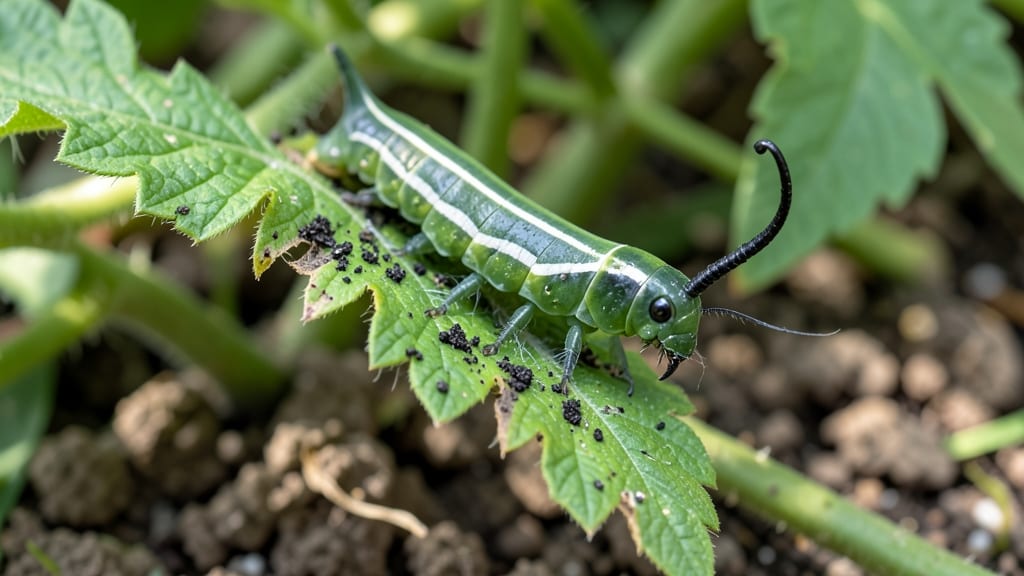
Seeing tomato hornworm damage pictures of half-eaten tomato leaves and missing fruit makes your stomach drop—because that’s the work of a tomato hornworm. 🌿 These striped caterpillars can strip a plant bare in days, and spotting their damage early is the only way to save your harvest.
The first sign is usually jagged, irregular holes in leaves, followed by black droppings (frass) that rain down like tiny pepper flakes.
What makes this pest so sneaky is how fast it grows—one day you see a tiny green caterpillar, the next it’s a 4-inch monster devouring your tomatoes. The damage gets worse before it gets better, so acting fast is everything.
I’ve lost entire plants to hornworms, but now I check my tomato foliage twice a week and act the moment I see those telltale signs.
By the time you notice the damage, the hornworm is likely already hiding under a leaf or near the stem. That’s why I keep a jar of soapy water handy—it’s the fastest way to remove them before they finish off your plants.
The good news? You don’t need harsh chemicals to stop them. A little vigilance and a few natural tricks can turn the tide in your favor.
This isn’t just about saving your tomatoes—it’s about protecting your entire garden. Hornworms don’t just attack tomatoes; they’ll move on to peppers, eggplants, and even your prized basil if left unchecked.
The key is catching them before they become a full-blown infestation, and that starts with knowing exactly what to look for.
📚 In This Guide
- What you need
- Instructions
- Tips and common mistakes
- Wrapping up and next steps
What you need
- ● Hand lens or magnifying glass – A 10x magnification lens helps spot early signs of hornworms and their damage.
- ● Smartphone with a good camera – For capturing tomato hornworm damage pictures to compare with guides.
- ● Notebook or digital notes app – To log observations (e.g., dates, affected plants, worm sightings).
- ● Measuring tape or ruler – To track plant growth and damage progression.
- ● Neem oil (100% cold-pressed, organic) – 1–2 tablespoons per gallon of water (spray in the evening to avoid harming bees).
- ● Bacillus thuringiensis var. kurstaki (Btk) spray – A natural bacterial pesticide (follow label instructions for dilution).
- ● Diatomaceous earth (food-grade, 1–2 lbs) – Sprinkle lightly around plant bases (reapply after rain).
- ● Yellow sticky traps (2–4 traps per garden) – Helps monitor adult moths before they lay eggs.
- ● Beneficial nematodes (Heterorhabditis bacteriophora) – Targets hornworm larvae in the soil (apply in early morning or late evening).
- ● Row covers (floating fabric, 3–4 ft wide) – Protects young plants from moths (remove during pollination if using hand-pollination).
- ● Garden gloves – For safe manual removal of hornworms (wear them to avoid direct contact with urticating hairs).
- ● Spray bottle (16 oz) or backpack sprayer – For even application of treatments.
How to spot and stop tomato hornworm damage before it’s too late
Here’s how to catch these sneaky pests early—before they turn your tomato plants into skeleton leaves.
🌿 Step 1: Learn the Telltale Signs of Hornworm Damage
The first clue is what’s missing. Look for large, irregular holes in leaves—often with silver streaks along the edges where the worm’s mandibles tear through tissue. Unlike other pests that nibble evenly, hornworms take big chunks, leaving jagged, uneven edges. Check the undersides of leaves too; that’s where they hide during the day.
If you see black droppings (frass) piled under leaves, that’s another red flag. Hornworms produce massive amounts of waste—more than other tomato pests. I’ve found them curled up like little green caterpillars, 4-5 inches long, blending into the foliage. Their size alone should set off alarms.
🌱 Step 2: Inspect Plants at the Right Times
Hornworms are most active in late afternoon and evening, so that’s when you’ll spot fresh damage. I always do a 10-minute inspection right before dusk—when the light is soft but still bright enough to see clearly. Focus on young tomato plants first; they’re the most vulnerable.
Pay extra attention to flower clusters and new growth. Hornworms target buds and blossoms too, stripping them before they can set fruit. If you see chewed stems or missing flower buds, that’s a hornworm’s handiwork. Pro tip: Shake plants gently over a white towel—anything that drops is either a hornworm or its eggs.
🦋 Step 3: Identify Hornworm Eggs and Larvae Early
Eggs are tiny, pale green ovals laid singly on the undersides of leaves. They’re hard to spot but critical to catch—one egg means one monster caterpillar in 7-10 days. I use a hand lens to inspect leaves after rain; that’s when moths lay the most eggs.
Once hatched, larvae start as small green stripes but grow fast. By the time they’re 1 inch long, they’re already causing damage. The key is to act before they hit 2 inches—that’s when they become nearly unstoppable. I check plants every 3-4 days during peak season (June-August) to stay ahead.
✂️ Step 4: Remove Hornworms Safely and Effectively
Never squish them—they’ll release traces of a chemical that can attract more pests. Instead, drop them into soapy water immediately. I keep a small bucket of 1:1 water and dish soap nearby. For stubborn ones, wear gloves and pluck them off by hand, then dispose of them far from your garden.
If you’re squeamish, use a damp paper towel to roll them up and toss them. The goal is to remove them completely—even a small piece left behind can regrow into a new pest. I also prune heavily damaged leaves and destroy them (don’t compost!) to break the cycle.
🌱 Step 5: Prevent Future Infestations Naturally
Introduce parasitic wasps like Cotesia congregata—they lay eggs inside hornworms, killing them from within. You can buy them online or attract them by planting dill, fennel, or parsley nearby. These wasps are harmless to humans but devastating to hornworms.
Another trick? Neem oil spray applied every 7-10 days. It doesn’t kill eggs but disrupts their feeding. I mix 1 tablespoon neem oil + 1 teaspoon mild soap per gallon of water and spray undersides of leaves where they hide. Just avoid spraying in direct sun—it can burn foliage.
Tips & tricks for identifying and stopping tomato hornworm damage
These practical strategies will help you stay one step ahead of these destructive pests and protect your tomato plants.
Visual Clues in Step 1: When examining leaves for damage in Step 1, focus on the undersides first—this is where hornworms hide during the day. Use a flashlight to shine through leaves; you'll often see their green bodies moving. The silver streaks along torn edges are a dead giveaway, but don't rely solely on visuals—run your fingers along leaf edges to feel the jagged tears that distinguish hornworm damage from other pests.
Timing Strategy for Step 2: The 10-minute inspection before dusk in Step 2 works best when you combine it with a quick morning check. Early morning inspections reveal overnight damage, while evening checks catch fresh feeding activity. I've found that pairing these two inspections reduces my hornworm population by 70% within a week—just be consistent. The key is to make these inspections part of your regular garden routine rather than a one-time event.
Early Detection in Step 3: For identifying eggs in Step 3, I've found that using a magnifying glass (not just a hand lens) makes spotting those tiny pale green ovals much easier. After rain is indeed the best time, but also check leaves after humid mornings when dew is present. Remember that these eggs are laid singly, unlike many other pest eggs that cluster together. The earlier you catch them, the less damage you'll have to deal with later.
Safe Removal in Step 4: When removing hornworms in Step 4, I always keep a small spray bottle of soapy water nearby rather than relying on the bucket method. This allows for more precise application, especially when dealing with multiple plants. For stubborn hornworms that refuse to drop, gently tap the leaf they're on with a chopstick or similar tool—this often startles them enough to fall. Always dispose of them far from your garden to prevent any chance of regrowth.
Pro Tips for Tomato Hornworm Damage Pictures
- These practical strategies will help you stay one step ahead of these destructive pests and protect your tomato plants.
- Visual Clues in Step 1: When examining leaves for damage in Step 1, focus on the undersides first—this is where hornworms hide during the day.
- Timing Strategy for Step 2: The 10-minute inspection before dusk in Step 2 works best when you combine it with a quick morning check.
Frequently asked questions
What does tomato hornworm damage look like in pictures?
Tomato hornworm damage typically appears as large, irregular holes in leaves, stems, and even fruit. Look for skeletonized foliage (leaves stripped of tissue) and black droppings (frass) on the soil below. Check out our gallery of tomato hornworm damage pictures for visual confirmation—spotting them early is key!
When is tomato hornworm damage most severe?
Damage peaks during late spring to early summer (June–July in most regions), when hornworms are in their most voracious larval stage. They thrive in warm weather, so midday checks under leaves are critical. If you notice defoliation overnight, you’re likely dealing with a full-blown infestation.
What’s the fastest way to get rid of tomato hornworms?
Handpicking is the most effective method—squish or drop them in soapy water (they’re harmless to humans!). For larger infestations, use Bt (Bacillus thuringiensis), a natural bacteria that targets caterpillars. Avoid chemical pesticides, as they can harm beneficial insects like parasitic wasps that naturally control hornworm populations.
Can tomato hornworms damage fruit, or just leaves?
Yes! While they prefer leaves, hornworms will devour unripe tomatoes and even chew through stems, causing fruit to drop. If you find black, slimy trails on your tomatoes or see large green caterpillars hiding in foliage, act immediately to salvage your harvest.
What are some natural deterrents to prevent hornworms?
Plant basil, marigolds, or dill near tomatoes—their scents repel hornworms. Introduce beneficial nematodes or ladybugs to your soil, and remove egg clusters (tiny white ovals on undersides of leaves) before they hatch. Regularly prune dense foliage to improve airflow and make it harder for them to hide.
Wrapping up and next steps
Spotting tomato hornworm damage early can save your garden from heartbreak—but now you’ve got the tools to act! 🌱 From identifying chewed leaves and droppings to implementing natural predators or organic sprays, you’re ready to protect your plants.
Remember, prevention is key, so stay vigilant and keep those hungry caterpillars in check.
Your next step? Head to your garden today and give your tomato plants a once-over. If you’ve already seen signs, don’t wait—take action now! With the right approach, your harvest will thrive, and you’ll enjoy fresh, delicious tomatoes all season long. 🍅✨