
Companion Plants
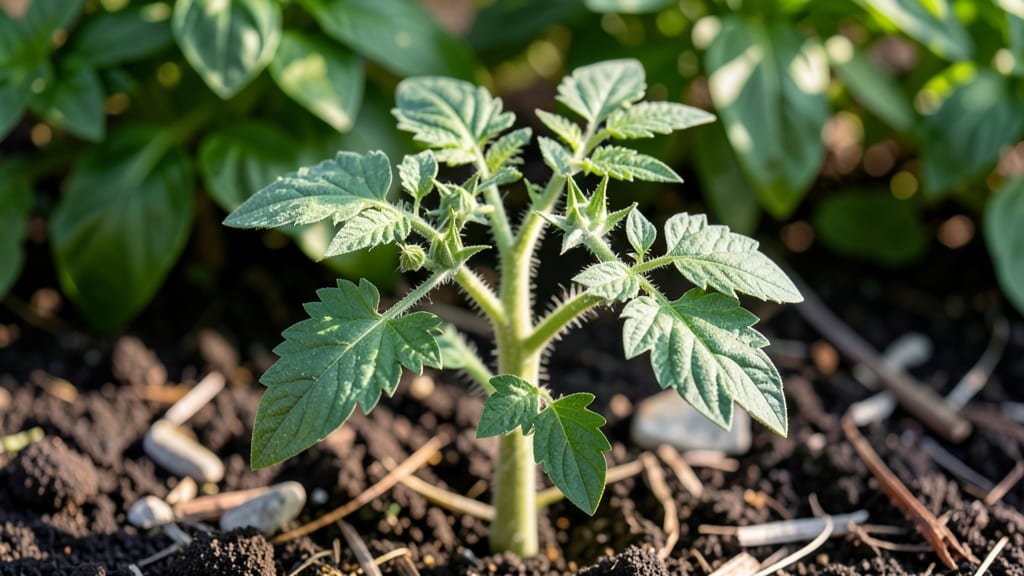
Young tomato plants start with tiny, oval-shaped leaves that look like miniature versions of mature foliage—except these are softer, brighter green, and grow in a tight spiral. 🌱 The first true leaves (not the seedling's initial cotyledons) appear after germination, and healthy ones feel slightly fuzzy, not waxy or curled.
I once mistook mine for purslane weeds until I spotted those telltale tomato leaf veins running parallel like tiny rivers.
By the 4-6 leaf stage, you'll notice the classic tomato leaf shape: serrated edges and a slightly pointed tip, though still small enough to fit on a quarter. Unhealthy seedlings often show yellowing (chlorosis) or stunted growth—signs of overwatering or poor light.
My first batch looked like this until I moved them to a sunny windowsill, and within a week, they perked up with vibrant new growth.
When ready for transplanting, seedlings should be 3-4 inches tall with sturdy stems and leaves that don’t wilt when touched. The roots will have filled their container, and you’ll see tiny hairs along the stems where new growth is pushing out.
This is when they’re strong enough to handle the shock of moving to garden beds or larger pots.
For visual learners, compare them to dandelion seedlings (which have jagged, lobed leaves) or purslane (which sprawls instead of standing upright). A quick photo search of "tomato seedling vs. weed" can save hours of confusion—trust me, I’ve spent too many mornings pulling "weeds" that were actually future heirloom tomatoes.
Understanding Young Tomato Growth
If you’re staring at your seedling tray wondering, "Why does my tomato plant look like this?", the answer lies in the plant’s natural development stages—and sometimes, external factors. Young tomato plants undergo rapid changes as they transition from fragile sprouts to sturdy seedlings.
Below, we break down the key reasons behind their appearance, from genetics to environmental quirks.
🌱 Tomatoes are born with a "recipe" in their DNA.
Tomato plants inherit leaf shape, size, and growth patterns from their parent varieties.
For example: - Determinate tomatoes (like 'Celebrity' or 'Roma') grow bushy with compact leaves, often forming a rounded shape. - Indeterminate tomatoes (like 'Sungold' or 'Beefsteak') produce vining growth with larger, more elongated leaves that keep stretching upward.
Why it matters: If your seedlings have tiny, jagged leaves (like fern fronds), they’re likely following their genetic code. But if they’re abnormally small or stunted, something else might be at play.
☀️ Too little or too much light throws off growth.
Tomato seedlings crave sunlight—but not too much too soon. Here’s how light affects their look: - Leggy seedlings (long stems, pale leaves) = Not enough light.
Plants stretch toward any available source, weakening their structure. - Yellowing or crispy leaves = Too much direct sun (especially in hot climates). Young leaves lack the protective wax coating of mature plants. - Red or purple stems/leaves = Low light stress.
The plant produces anthocyanins (pigments) to protect itself.
Actionable fix:
- Use grow lights (12–16 hours/day) if natural light is weak.
- Hardening off (gradually exposing seedlings to outdoor conditions) prevents shock when transplanting.
💧 Water is life—but too much or too little stunts growth.
Tomato seedlings are sensitive to soil moisture.
Watch for these signs: | Issue | Appearance | Cause | |---------------------|----------------------------------------|------------------------------------| | Mushy stems | Soft, collapsing seedlings | Overwatering (root rot) | | Wilting leaves | Droopy, gray-green leaves | Underwatering (stress) | | Yellow lower leaves | Bottom leaves turn yellow first | Overwatering or poor drainage |
Pro tip:
- Water at the soil level (not overhead) to avoid fungal diseases.
- Use well-draining soil (mix potting soil with perlite or sand).
❄️🔥 Tomatoes are tropical plants—they hate extremes.
Young tomato plants thrive in 60–85°F (15–30°C). Outside this range, they show distress:
- Cold damage (below 50°F/10°C):
- Pale, translucent leaves (like "glass" leaves).
- Stunted growth (metabolism slows).
- Heat stress (above 90°F/32°C):
- Curling or bleached leaves (protein breakdown).
- Flower drop (even before fruiting).
Solution:
- Start seeds indoors if your climate is too cold.
- Provide shade cloth in scorching heat.
🌱 Tomatoes are hungry—and picky eaters.
If your seedlings look unusually small, dark green, or deformed, check these nutrients:
- Nitrogen (N) deficiency:
- Pale yellow leaves (oldest leaves first).
- Fix: Use a balanced fertilizer (like 10-10-10) or compost.
- Phosphorus (P) deficiency:
- Purple stems/leaves (especially in cool soil).
- Fix: Add bone meal or superphosphate.
- Magnesium (Mg) deficiency:
- Yellow patches between leaf veins (like a "net").
- Fix: Apply Epsom salt (1 tbsp per gallon of water).
Warning: Over-fertilizing can burn seedlings! Start with half-strength solutions.
🐜 Tiny invaders can reshape your plants overnight.
Even young tomatoes aren’t safe from pests and pathogens:
- Aphids or spider mites:
- Sticky leaves, curled edges, or white webbing.
- Fix: Spray with soapy water or introduce ladybugs.
- Damping-off (fungus):
- Seedlings collapse at the soil line.
- Fix: Improve air circulation, avoid overwatering, and use fungicide dust.
- Viral infections (e.g., mosaic virus):
- Mottled, distorted leaves.
- Fix: Remove infected plants immediately to prevent spread.
🌿 Relocating seedlings is like a mini-survival test.
When you move seedlings from trays to soil, they may:
- Drop leaves (normal stress response).
- Grow slowly (root systems adjust).
- Develop "cauliflower" leaves (if roots were damaged).
How to minimize shock:
- Acclimate first (harden off for 7–10 days).
- Water deeply after transplanting.
- Avoid fertilizing for 1–2 weeks (roots need to recover).
Fixing Common Tomato Plant Issues
Now that you know what healthy young tomato plants look like—and what to watch for—let’s tackle the fixes. Whether your seedlings are leggy, stunted, or showing signs of disease, these solutions are practical, easy to follow, and designed to get your plants thriving.
Below, we’ve mapped common problems to their fixes, along with prevention tips to keep your garden on track.
Cause: Too little light, overcrowding, or inconsistent watering. Fix:
- 🔥 Move to brighter light immediately—place seedlings near a sunny window or under grow lights (12–16 hours/day). South-facing windows or a sunny porch work well.
- 🍳 Thin out seedlings if they’re overcrowded. Keep only the strongest 2–3 plants per pot or cell tray, snipping weaker ones at the soil line with clean scissors.
- 👨🍳 Adjust watering—keep soil moist but not soggy. Bottom-watering (placing pots in a tray of water for 10–15 minutes) encourages stronger roots.
- ⏰ Harden off gradually before transplanting. Start by exposing seedlings to outdoor conditions for 1–2 hours/day, increasing time over 5–7 days.
💡 Prevention Tip: Use reflective surfaces (like aluminum foil on the sides of seed trays) to maximize light exposure, even in low-light spaces.
Cause: Overwatering, nutrient deficiency, or root-bound plants. Fix:
- 🌡️ Check soil moisture—stick your finger an inch deep. If it’s damp, hold off on watering. Tomato plants prefer consistent moisture, not saturation.
- 📊 Fertilize lightly with a balanced, water-soluble fertilizer (10-10-10 or 5-5-5) at half-strength. Yellowing lower leaves often signal nitrogen deficiency, but avoid overdoing it—too much fertilizer can burn roots.
- 🔪 Repot or transplant if roots are circling the bottom of the pot. Use a larger container (at least 5–7 inches deep) with well-draining soil mixed with compost.
- ✨ Boost air circulation by spacing plants 18–24 inches apart to prevent fungal issues like damping-off.
💡 Prevention Tip: Add a thin layer of mulch (straw or shredded leaves) around seedlings to retain moisture and regulate soil temperature.
Cause: Fungal infections (early blight, powdery mildew), aphids, or spider mites. Fix:
- 🔥 Remove infected leaves immediately and dispose of them in the trash (not compost). Avoid wetting foliage when watering—water at the base instead.
- 🍳 Spray with neem oil (1 tsp neem oil + 1 quart water + a drop of dish soap) for fungal diseases and soft-bodied pests. Reapply every 5–7 days until symptoms clear.
- 👨🍳 Introduce beneficial insects like ladybugs or lacewings to control aphids naturally. Aphids cluster on new growth, so inspect undersides of leaves regularly.
- 🌡️ Space plants properly (18–24 inches apart) to improve airflow and reduce humidity, which fungi love.
💡 Prevention Tip: Rotate crops annually—never plant tomatoes in the same spot two years in a row—to break the cycle of soil-borne diseases.
Cause: Temperature stress, transplant shock, or insufficient nutrients. Fix:
- 🔥 Ensure ideal temperatures—tomato seedlings thrive between 65–80°F. If nights dip below 50°F, use row covers or move pots to a sheltered spot.
- 🍳 Transplant carefully—bury stems up to the first set of leaves to encourage deeper root growth. Use loamy, well-draining soil mixed with compost.
- 👨🍳 Add phosphorus-rich fertilizer (like bone meal) at transplanting to boost root development. Follow up with a potassium-rich fertilizer (like banana peel tea) once flowers appear.
- ⏰ Avoid disturbing roots—water deeply but infrequently once transplanted to encourage roots to spread.
💡 Prevention Tip: Use mycorrhizal fungi (available as a powder) when transplanting to help roots absorb nutrients more efficiently.
Final Pro Tip: Keep a garden journal to track watering, fertilizing, and pest issues. Noticing patterns early can save your seedlings before problems escalate! 🎯
Frequently asked questions
How can I tell if my tiny tomato seedlings are real plants or weeds?
Real tomato seedlings have oval-shaped leaves with serrated edges and parallel veins, while weeds like purslane have thick, fleshy leaves or sprawling growth. Look for the classic tomato leaf shape—even at the seedling stage, the veins run parallel like tiny rivers. Dandelion seedlings have jagged, lobed leaves, while tomato leaves are smoother and more uniform.
What’s the difference between the first leaves (cotyledons) and true tomato leaves?
The first leaves (cotyledons) are round and smooth and appear right after germination—they’re not true tomato leaves. True tomato leaves grow after these and have serrated edges and a more distinct shape. These are the leaves you’ll see when identifying young tomato plants, as they’re the first sign of the mature plant’s characteristics.
Why do my tomato seedlings look stunted or pale?
Stunted or pale seedlings usually mean not enough light or overcrowding. If they’re stretching upward (leggy) or have pale leaves, move them to a sunny window or under grow lights for 12–16 hours/day. Thin out seedlings if they’re too close together—keep only the strongest 2–3 plants per pot to avoid competition for nutrients.
When are young tomato plants ready to transplant?
Seedlings are ready when they’re 3–4 inches tall, have 4–6 true leaves, and their roots are filling the container. The stems should be sturdy, and the leaves shouldn’t wilt when touched. Harden them off first by gradually exposing them to outdoor conditions for 7–10 days before transplanting to avoid shock.
Can I save a tomato seedling with yellowing leaves?
Yellowing leaves often signal overwatering or nutrient deficiency. Let the soil dry out slightly between waterings and fertilize lightly with a balanced fertilizer (like 10-10-10) at half-strength. If the yellowing is severe or the stems are mushy, the seedling may be too far gone—remove it to prevent spreading disease to healthy plants.