
Planting
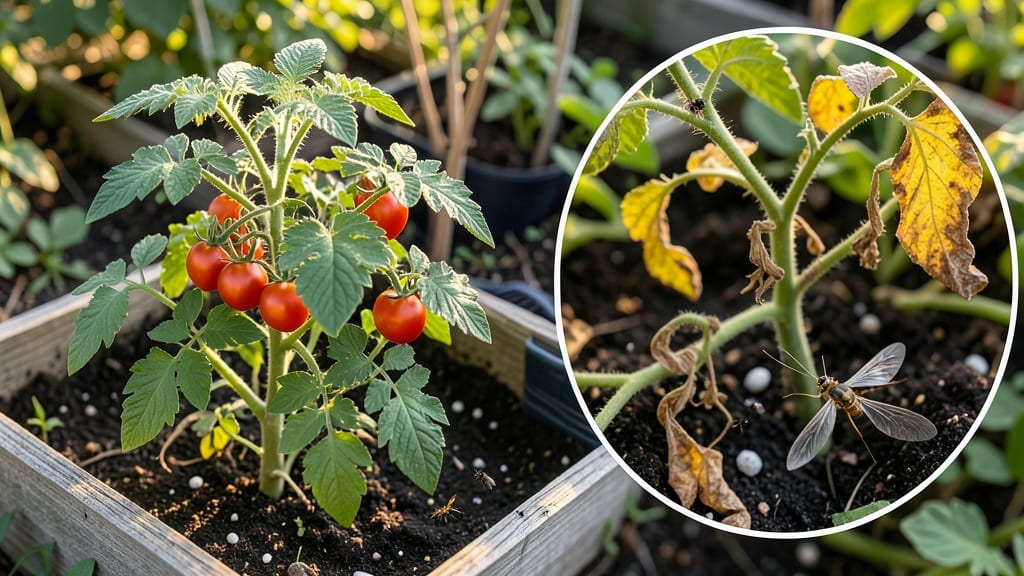
Those pesky tiny flies on your tomato plant aren't just annoying—they're thrips or fungus gnats, and they can stunt growth or spread disease if left unchecked. 🌱 I've battled them for years, and the yellow sticky trap method stops them in their tracks within days, without harsh chemicals.
These flies thrive in moist, organic soil, so the first step is cutting back on overhead watering and letting the top inch of soil dry between waterings.
A simple yellow sticky trap (available at garden centers) catches adults before they lay eggs, while a 30-second daily check keeps numbers in control.
By week two, you'll see fewer flies buzzing around your plants, and new leaves will emerge clean and healthy. The key is consistency—keep traps up until you stop seeing new flies, usually 10-14 days of vigilance.
For stubborn cases, add a thin layer of sand or perlite to the soil surface to deter larvae, and consider companion planting with basil or marigolds to repel future visitors. Prevention is easier than cleanup!
Root Causes Of Tiny Tomato Invaders
If you’ve spotted tiny flies buzzing around your tomato plants, you’re likely dealing with one of nature’s most persistent pests. These tiny invaders—often fungus gnats or whiteflies—don’t just annoy; they damage roots, sap nutrients, and weaken your plants.
Understanding why they appear is the first step to reclaiming your garden. Let’s break down the science behind their unwelcome visits.
Fungus gnats thrive in damp, soggy soil because their larvae need moisture to survive. If your tomato plants are watered too frequently or sit in poorly draining soil, you’re creating the perfect breeding ground.
These pests lay eggs in the top layer of moist soil, where larvae hatch and feast on young roots. Result? Stunted growth, yellowing leaves, and a weakened plant struggling to absorb nutrients.
Why it happens:
- Excessive watering: Overwatering keeps soil perpetually damp, signaling gnats that it’s time to reproduce.
- Poor drainage: Containers without drainage holes or compacted garden soil trap water, mimicking a swampy ecosystem.
- Frequent rainfall: If your region gets heavy, consistent rain, fungus gnats may multiply uncontrollably.
Actionable insight: Let the top inch of soil dry out between waterings. Use well-draining potting mix and containers with drainage holes to disrupt their life cycle.
Whiteflies and fungus gnats are attracted to decaying plant matter, compost piles, and thick mulch layers.
If your garden has fallen leaves, rotting vegetation, or overly rich compost near your tomato plants, these pests see it as an all-you-can-eat buffet. Larvae burrow into decomposing material, while adult flies lay eggs in the organic layer, ensuring the next generation has a ready food source.
Why it happens:
- Compost proximity: Fresh compost emits heat and moisture, mimicking a tropical environment—ideal for gnat reproduction.
- Mulch buildup: Thick layers of straw or wood chips create a dark, humid microclimate where pests thrive.
- Leaf litter: Decaying leaves harbor fungus gnat larvae, which then migrate to nearby plants.
Actionable insight: Keep compost bins at least 10 feet away from tomato plants. Rake away leaf litter and thin mulch layers to reduce hiding spots.
Healthy tomato plants naturally repel pests, but stressed or nutrient-deficient plants become easy targets. Over-fertilizing with nitrogen, underwatering, or poor sunlight exposure weakens roots and foliage, making them vulnerable to tiny fly infestations.
Pests like whiteflies also target plants under heat stress or drought conditions, as their weakened state emits chemical signals attracting flies.
Why it happens:
- Nutrient imbalances: Too much nitrogen promotes lush foliage but weak roots, inviting fungus gnats.
- Sunlight deprivation: Shady spots make plants less resilient, attracting whiteflies seeking shelter.
- Pest cycles: Once a plant is infested, its distress signals (like increased sugar content in leaves) attract more flies.
Actionable insight: Balance fertilization with a low-nitrogen, high-phosphorus approach to strengthen roots. Ensure plants get 6–8 hours of sunlight daily and monitor for early signs of stress (e.g., yellowing leaves).
Tiny flies are opportunistic and exploit seasonal changes. Warm, humid conditions (especially in spring and summer) accelerate their life cycles, allowing populations to explode in weeks. Greenhouses and indoor growing setups can also create perpetual warm, moist environments, giving pests year-round breeding advantages.
Why it happens:
- Greenhouse effect: Enclosed spaces trap heat and humidity, mimicking a tropical climate.
- Sudden temperature shifts: Cool nights followed by hot days create condensation, attracting flies.
- Indoor growing: Overhead watering or misting systems keep soil damp, signaling gnats to reproduce.
Actionable insight: Improve airflow with fans and avoid overhead watering. In greenhouses, use shade cloth to moderate temperatures and reduce humidity spikes.
Once you identify the root cause, you can targetedly disrupt the conditions these pests rely on. The next step? Learn how yellow sticky traps and cultural fixes can turn the tide against these tiny troublemakers.
Practical Ways to Stop Garden Pests
Now that you know what’s buzzing around your tomato plants, it’s time to take action! Tiny flies like fungus gnats and whiteflies may seem small, but they can wreak havoc on your harvest. The good news?
With the right approach, you can eliminate them fast and keep your plants thriving. Below are targeted solutions based on the most likely culprits, along with prevention tips to stop future infestations.
Fungus gnats thrive in moist soil, so the first step is cutting off their breeding grounds.
🍳 Flood the Soil (Oxygen Deprivation Trap)
Fungus gnats lay eggs in damp soil—starve them of air to kill larvae.
- Step 1: Water your tomato plant thoroughly, then let it sit for 10–15 minutes until the top 1–2 inches of soil are soggy.
- Step 2: Use a spray bottle or watering can to flood the soil surface (about ½ inch deep) for 3–5 days in a row.
- Step 3: After flooding, let the soil dry slightly between treatments to prevent root rot.
- Why it works: Larvae suffocate without oxygen, and adults avoid laying eggs in dry conditions.
🕷️ Yellow Sticky Traps (Adult Fly Catch)
Hang yellow sticky cards near your plants to catch adult fungus gnats before they reproduce.
- Where to place: Hang traps 1–2 feet above the soil (fungus gnats are weak fliers).
- How often: Replace traps every 3–5 days when saturated with flies.
- Pro tip: 💡 DIY trap hack – Coat a yellow card with vegetable oil or petroleum jelly for a stronger hold.
🌡️ Soil Drying & Mulching (Long-Term Fix)
Prevent future infestations by keeping soil dry and well-draining.
- Use perlite or sand to improve drainage in potted tomatoes.
- Apply a thin layer of coarse sand or diatomaceous earth on the soil surface (reapply after rain).
- Avoid overwatering—only water when the top inch of soil is dry.
Whiteflies are sap-sucking pests that multiply fast. Knock them out with these methods:
👨🍳 Soap Spray (Instant Kill)
A homemade insecticidal soap spray disrupts their waxy outer layer.
- Mix: 1 tsp mild liquid soap (like Castile) + 1 quart water in a spray bottle.
- Spray: Coat both sides of leaves (focus on undersides where they hide).
- Repeat: Apply every 3–5 days until flies are gone.
- ⚠️ Warning: Test on a few leaves first—some plants are soap-sensitive.
🥘 Neem Oil Treatment (Systemic Repellent)
Neem oil disrupts their life cycle and deters future eggs.
- Mix: 1 tbsp neem oil + 1 tsp honey or dish soap (as an emulsifier) + 1 quart water.
- Spray: Apply early in the morning or late evening (avoid direct sun—it burns leaves).
- Frequency: Every 5–7 days for 2–3 weeks.
🔪 Reflectant Mylar Tape (Confusion Tactics)
Whiteflies hate shiny surfaces—trick them with reflective barriers.
- How to do it: Wrap mylar tape or aluminum foil around the base of the plant or hang strips above leaves.
- Why it works: The glare disorients them, making it harder to find plants.
🌿 Beneficial Insects (Natural Predators)
Introduce whitefly-eating allies to your garden:
- Ladybugs (release 50–100 per plant).
- Lacewings (their larvae devour whiteflies).
- Parasitic wasps (like Encarsia formosa—available at garden centers).
The best defense? A healthy plant in a pest-unfriendly environment.
- 🌱 Keep plants healthy – Weak tomatoes attract pests. Prune for airflow, fertilize with balanced organic nutrients, and remove yellowing leaves (a fungus gnat magnet).
- 🚫 Avoid overwatering – Water deeply but infrequently (early morning is best).
- 🧹 Clean up debris – Remove fallen leaves, weeds, and old plant matter where flies hide.
- 🌿 Rotate crops – Don’t plant tomatoes (or other nightshades) in the same spot yearly—pests build up in the soil.
- 🌡️ Use row covers – Floating row covers (lightweight fabric) block adult flies from reaching plants.
Final Thought: Tiny flies may seem harmless, but they steal nutrients, spread disease, and stunt growth. With flooding for fungus gnats, sticky traps for whiteflies, and neem oil sprays, you can regain control in days.
And once your plants are pest-free? Your tomatoes will thank you with bigger, juicier harvests! 🍅💪
Frequently asked questions
Are tiny flies on my tomato plant harmful?
Yes, they can cause serious damage! Fungus gnats and whiteflies feed on plant sap and lay eggs in soil, leading to stunted growth, yellowing leaves, and weakened roots. Left unchecked, they can even transmit diseases. Act fast with yellow sticky traps and soil drying to prevent long-term harm.
How do I tell if it's fungus gnats or whiteflies?
Fungus gnats are dark, mosquito-like flies that hover near soil, while whiteflies are tiny, white moth-like insects that cluster on leaf undersides. Check both the soil surface and leaves—if you see both, you likely have a mixed infestation. Use sticky traps near soil for gnats and reflective surfaces for whiteflies.
Will yellow sticky traps work for both types of flies?
Yellow sticky traps catch fungus gnats and whiteflies, but they work best for gnats since they're attracted to yellow. For whiteflies, combine traps with soapy water sprays or neem oil—whiteflies are more mobile and may avoid traps. Replace traps every 3-5 days for maximum effectiveness.
Can I use chemical pesticides safely on tomato plants?
Chemical pesticides can harm beneficial insects and contaminate edible fruit. Instead, opt for organic solutions like neem oil, insecticidal soap, or beneficial nematodes. If you must use chemicals, choose pyrethrin-based sprays (derived from chrysanthemums) and apply only when flowers are closed to protect pollinators. Always follow label instructions carefully.
How long until I see results from these methods?
With consistent treatment, you should see a noticeable reduction in flies within 3-5 days. For severe infestations, it may take 10-14 days to fully eliminate them. Monitor daily and replace traps/retreat as needed. Patience is key—don't give up after just a few days!