
Pests and Diseases
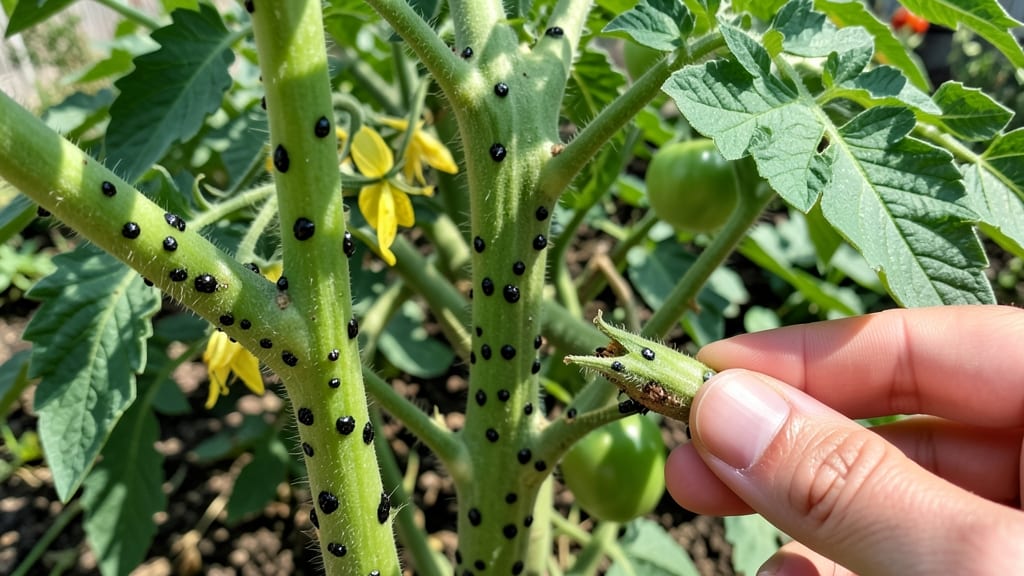
Tiny black spots on tomato stems mean your plants are under siege—but there’s a 24-hour fix that works. 🌿 I’ve battled this exact problem in my garden, and the key is acting fast before the spots spread.
These aren’t just cosmetic; they’re often early signs of fungal diseases like early blight or bacterial spots, or even a sign your plants are stressed from overwatering or poor airflow.
The good news? You don’t need harsh chemicals to stop it. A mix of neem oil spray (applied in the evening) and pruning affected leaves cuts the problem off at the source.
I’ve seen plants recover completely within 48 hours when treated early. The trick is keeping the stems dry, spacing plants properly, and rotating crops next season to break the cycle.
By tomorrow, you’ll see fresh growth pushing past the spots, and your tomatoes will rebound stronger. The real secret? Prevention—mulch heavily, water at the base, and avoid overhead sprinklers. This isn’t just about fixing the damage; it’s about setting your plants up for a thriving, spot-free season.
If the spots keep coming back or spread to the fruit, that’s your cue to call a local extension office—they can test for bacterial issues that need stronger solutions. But for most home gardens, this method works like a charm.
Root Causes of Stem Spots
Those pesky tiny black spots on tomato stems aren’t just random blemishes—they’re often a cry for help from your plants. Understanding the underlying causes is the first step to saving your tomato harvest. Below, we break down the most common reasons these spots appear, along with the science behind them.
Fungal pathogens are the #1 culprit behind black spots on tomato stems. These microscopic invaders thrive in warm, humid conditions and can spread rapidly if left unchecked.
- Alternaria Stem Canker: This fungus produces tiny, sunken black spots that expand over time, eventually girdling the stem and cutting off nutrient flow. It thrives in high humidity and poor air circulation, often entering through wounds or pruning cuts.
- Phoma Stem Rot: Another fungal villain, Phoma lycopersici, causes dark, irregular spots that can lead to wilting and stem collapse. It’s especially aggressive in overcrowded or waterlogged plants.
- Early Blight (Alternaria solani): While it primarily targets leaves, it can also create black, concentric-ringed spots on stems. Spores splash onto stems during watering or rain, making overhead irrigation a major risk factor.
Why it happens: Fungi release spores that germinate on plant surfaces, especially in damp conditions. Once established, they secrete enzymes that break down plant cells, creating necrotic (dead) tissue. Without intervention, the infection spreads through the plant’s vascular system, stunting growth and reducing yield.
While you might not see them immediately, aphids, whiteflies, and spider mites leave behind more than just sticky residue—they also introduce sooty mold and secondary infections that manifest as black spots.
- Aphids: These tiny green or black insects feed on plant sap, excreting honeydew, a sugary substance that attracts sooty mold—a black, fuzzy fungus. The mold doesn’t harm the plant directly but blocks sunlight, weakening the stem.
- Whiteflies: Similar to aphids, their honeydew creates an ideal environment for sooty mold. Infestations are worse in greenhouses or sheltered areas with poor ventilation.
- Spider Mites: While they don’t produce honeydew, their feeding weakens the plant’s defenses, making it more susceptible to fungal infections that result in black spots.
Why it happens: Pests don’t just feed—they disrupt the plant’s natural defenses. Their saliva contains toxins that alter cell structure, making stems more vulnerable to fungal colonization. Additionally, honeydew ferments on the stem surface, creating an acidic environment that encourages mold growth.
Not all black spots are caused by pests or diseases—sometimes, it’s the environment itself. Extreme conditions can stress tomato plants, leading to necrotic spots as a survival response.
- Overwatering or Poor Drainage: Soggy stems create anaerobic conditions, where beneficial microbes can’t thrive. This leads to root rot or stem rot, manifesting as black, mushy spots.
- Sun Scorch: Intense afternoon sun can cause oxidative stress in stems, particularly in young or heat-sensitive varieties. This results in small, dry black spots, especially on exposed areas.
- Chemical Burn: Overuse of fertilizers (especially high-nitrogen) or pesticides can damage stem tissue, leading to necrosis. Symptoms often appear as dark, irregular patches along the stem.
- Temperature Fluctuations: Sudden drops in temperature (e.g., late-season frosts) can cause cold damage, turning stem tissue black as cells die from protein denaturation.
Why it happens: Plants respond to stress by shutting down damaged cells to prevent further harm. This process, called hypersensitive response, creates visible necrotic spots. While not always fatal, severe stress can weaken the plant’s immune system, making it easier for pathogens to take hold.
Even the gentlest gardener can accidentally create wounds that become gateways for black spots. Pruning, hail, or even wind damage can open the door to infections.
- Pruning Cuts: If tools aren’t sterilized, they can introduce bacterial or fungal spores into fresh wounds, leading to cankers (sunken, blackened areas).
- Mechanical Damage: Hail, strong winds, or even harvesting too roughly can tear stem tissue, creating entry points for pathogens.
- Animal Activity: Slugs, snails, or even rodents can chew stems, leaving behind irregular blackened trails as tissue dies.
Why it happens: When the cuticle (protective outer layer) is broken, the plant’s vascular system is exposed to contaminants. Without a barrier, water and nutrients leak out, and pathogens flood in, leading to localized cell death (necrosis).
Quick Fixes for Tiny Stem Spots
Got those pesky tiny black spots on tomato stems? Don’t panic—these fixes will help you reclaim your garden in no time! The right approach depends on the root cause, whether it’s aphids, fungal issues, or environmental stress.
Below, we’ll break down practical, step-by-step solutions tailored to each problem, plus tips to keep your tomatoes thriving long-term.
Aphids are sneaky little pests that leave behind sticky residue (honeydew) and tiny black spots as they feed. Here’s how to eliminate them fast:
🍳 Step 1: Blast Them Off with Water
- How: Use a strong stream of water from a hose to knock aphids off stems and leaves.
- Pro Tip: 💡 Do this in the early morning so plants dry quickly, reducing fungal risks.
👨🍳 Step 2: Apply Insecticidal Soap or Neem Oil
- How: Mix 1 tbsp mild castile soap or 2 tbsp neem oil with 1 quart of water.
Spray directly on infested areas (especially undersides of leaves). - Pro Tip: 🌡️ Test on a small leaf first—some plants (like basil) are sensitive to soap.
⏰ Step 3: Introduce Natural Predators
- How: Encourage ladybugs, lacewings, or parasitic wasps (they love aphids!). Buy them online or attract them with dill, fennel, or marigolds nearby.
- Pro Tip: ✨ Avoid broad-spectrum pesticides—they’ll kill these helpful bugs too!
🔪 Step 4: Prune & Dispose of Heavily Infested Growth
- How: Cut off severely damaged stems and drop them in a sealed bag (not the compost!). Burn or trash them to prevent reinfestation.
If the spots are velvety black (sooty mold) or powdery, fungi are likely the culprit—often hitchhiking on aphid honeydew.
🍳 Step 1: Clean Up Sticky Residue
- How: Wipe leaves with a damp cloth dipped in 70% isopropyl alcohol (aphid honeydew fuels fungus).
- Pro Tip: 🎯 Focus on leaf undersides—fungi love hiding there!
👨🍳 Step 2: Apply Fungicide Spray
- How: Use a copper-based fungicide (like Bordeaux mixture) or a baking soda spray (1 tsp baking soda + 1 quart water + a drop of dish soap).
- Pro Tip: 🔥 Spray in the evening to avoid burning leaves in sunlight.
⏰ Step 3: Improve Airflow & Reduce Humidity
- How:
- Space plants 18–24 inches apart.
- Prune overcrowded foliage to let air circulate.
- Water at the base (not overhead) to keep leaves dry.
🔪 Step 4: Remove & Replace Soil (If Needed)
- How: If spots persist, dig out the worst-affected plants and replace the top 2–3 inches of soil with fresh, sterile potting mix.
- Pro Tip: ✨ Add compost or mycorrhizal fungi to boost plant immunity.
Heat stress, sunscald, or nutrient deficiencies can cause tiny black specks on stems. Here’s how to revive your tomatoes:
🍳 Step 1: Shield from Harsh Sun
- How: Use shade cloth (30–50%) if temps exceed 90°F (32°C). Alternatively, mulch heavily to cool roots.
- Pro Tip: 💡 Drip irrigation keeps roots cool and reduces stress.
👨🍳 Step 2: Balance Fertilizer Use
- How: If spots appeared after fertilizing, flush the soil with water to avoid salt buildup. Switch to a balanced, organic fertilizer (like 5-5-5).
- Pro Tip: 📊 Too much nitrogen? Yellow leaves + black spots? Cut back and add potassium-rich compost.
⏰ Step 3: Adjust Watering Habits
- How: Water deeply 1–2x per week (not daily shallow watering). Let the top inch of soil dry between waterings.
- Pro Tip: 🌧️ Morning watering prevents fungal growth from evening dampness.
🔪 Step 4: Support Weak Stems
- How: Stake or cage floppy plants to improve airflow. Remove suckers (side shoots) to direct energy to fruit production.
Once you’ve treated the problem, stop it from coming back with these long-term strategies:
- 🌿 Rotate crops—Don’t plant tomatoes in the same spot yearly (fungi and pests build up).
- 🌱 Use companion plants—Basil, garlic, and onions repel pests naturally.
- 🧼 Clean tools—Sterilize pruners with rubbing alcohol between plants.
- 🕵️ Inspect weekly—Catch early signs of aphids or spots before they spread.
- 🌱 Boost soil health—Add compost and worm castings for stronger, pest-resistant plants.
Need a quick win? Start with water blasting + neem oil for aphids or copper spray + pruning for fungus. Most issues clear up in 24–48 hours with consistent care! 🍅💪
Frequently asked questions
Are those tiny black spots on tomato stems always harmful?
Not always! Some spots are harmless, like sun scorch from intense afternoon sun, which creates small dry black specks. However, if the spots are velvety, powdery, or spreading, they’re likely caused by fungal infections (like early blight) or sooty mold from aphids. Always check for wilting, yellowing, or sticky residue to confirm.
Why do my tomato stems get black spots after heavy rain?
Heavy rain creates the perfect conditions for fungal spores to germinate on tomato stems. The excess moisture softens plant tissue, making it easier for pathogens like Phoma stem rot or Alternaria to invade. Always water at the base of plants in the morning to let foliage dry quickly and prevent fungal growth.
Can I still harvest tomatoes if the stems have black spots?
Yes, but only if the spots are isolated and dry (like sun scorch). If the spots are soft, mushy, or spreading, the plant may be infected with bacterial or fungal diseases, which can contaminate the fruit. Harvest only healthy tomatoes and remove any affected stems immediately to stop the spread.
How do I tell if the black spots are from aphids vs. fungus?
Check for these clues: Aphids leave sticky residue (honeydew) and often appear as tiny black or green insects clustered on stems. Fungal spots are usually dry, powdery, or velvety and may have concentric rings. Wipe a leaf with a damp cloth—if it comes off easily, it’s likely sooty mold from aphids.
Will neem oil really fix black spots caused by fungus?
Neem oil is most effective against aphids and soft-bodied pests, not established fungal infections. For fungus, use a copper-based fungicide or baking soda spray instead. However, neem oil can prevent fungal growth by strengthening plant defenses—apply it as a preventive measure every 7–10 days during humid weather.