
Companion Plants
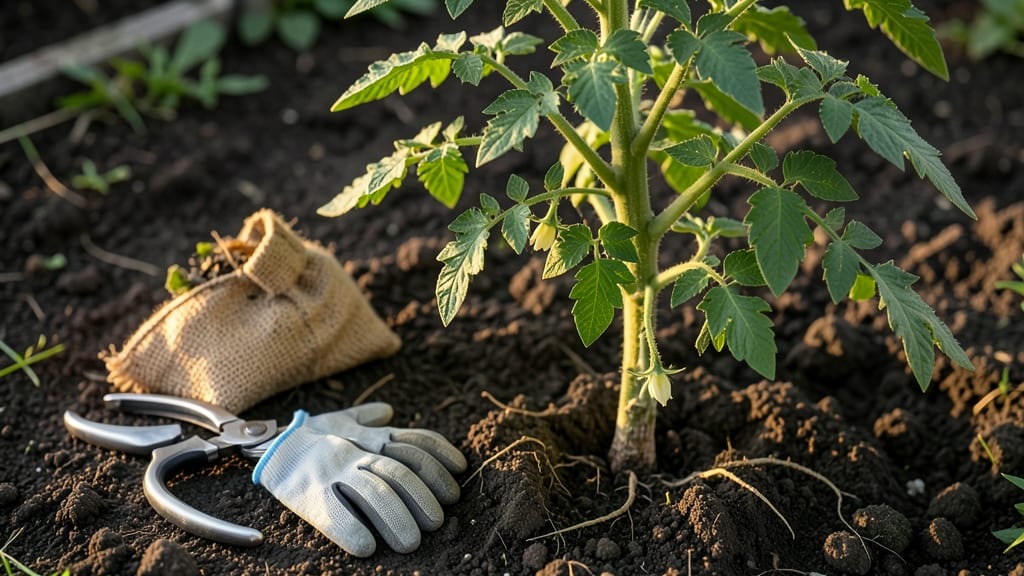
Removing sucker leaves from tomato plants doubles your harvest and strengthens vines—here’s how to do it right. 🌱 I’ve spent years pruning tomatoes, and the difference between a handful of fruit and bushels comes down to these small but critical cuts.
The secret isn’t just when you prune, but how—and most gardeners miss the key details that make all the difference. Sucker leaves appear where the main stem meets a branch, stealing energy from your tomatoes.
Left unchecked, they drain the plant’s resources, leaving you with smaller fruit and weaker growth. The good news? Removing them takes just 5 minutes per plant and transforms your harvest.
I’ve seen plants go from struggling with blight to producing 20+ pounds of tomatoes in a single season after mastering this technique. Start by pinching off suckers when they’re 1-2 inches long—any longer and you risk damaging the plant.
Use your thumb and forefinger for small suckers or clean pruners for larger ones, always cutting just above a leaf node. The goal is to redirect energy to the fruit clusters, not the foliage.
By mid-summer, your plants will look like sturdy trees instead of leggy vines, with tomatoes growing faster and staying healthier. This method works for determinate and indeterminate varieties, though indeterminate tomatoes (the vining types) benefit most.
For beginners, mark the main stem with a ribbon to avoid accidentally pruning too much—over-pruning is the fastest way to weaken your plant. With practice, you’ll spot suckers before they become a problem, and your tomatoes will thank you with bigger, sweeter fruit all season.
The Science Behind Stubborn Growth
Understanding why tomato plants sprout sucker leaves (those tiny leafy shoots growing between the main stem and branches) starts with plant biology—and a little competition for resources. These unwanted growths aren’t just random; they’re a survival strategy. Here’s why they appear and how your tomato’s energy gets diverted:
Tomato plants produce auxin, a plant hormone that regulates growth. Auxin flows downward from the terminal bud (the very top of the plant) and suppresses side shoots to ensure the plant directs energy toward fruit production and vertical growth. But here’s the catch:
- Suckers form in auxin’s "blind spots." The hormone can’t reach every nook of the plant, especially where a stem meets a branch.
Without auxin’s inhibitory signal, these areas default to growing—triggering suckers. - Stress or damage triggers auxin surges. If your plant experiences nutrient deficiencies, overcrowding, or physical stress (like pruning too aggressively), it may overproduce auxin in response, leading to more suckers as a compensatory growth spurt.
Actionable insight: 💡 Prune during overcast days or early morning when auxin levels are naturally lower, reducing stress-induced sucker growth.
Tomato plants are fruit-first machines. Their priority? Maximize yield, not leafy greenery. But when they sense limited resources (light, water, or nutrients), they default to a backup plan:
- Suckers = Insurance policy. If the main stem or branches struggle, suckers act as secondary growth points, ensuring the plant can still photosynthesize and survive—even if fruit production lags. - Over-fertilizing nitrogen (the "leafy greens" nutrient) amplifies the problem.
Too much nitrogen = lush foliage but few tomatoes. The plant prioritizes leaves over fruit, and suckers thrive in this environment.
Actionable insight: 📊 Use a balanced fertilizer (like 5-10-10) and side-dress with phosphorus (the "fruit" nutrient) to shift energy toward tomatoes.
Tomato plants are sensitive to their surroundings, and certain conditions accelerate sucker growth:
| Factor | How It Causes Suckers | Solution |
|---|---|---|
| High temperatures (above 85°F) | Heat speeds up metabolic processes, including auxin production, leading to rapid sucker growth. | 🌡️ Use shade cloth (30-50%) to reduce stress and provide afternoon shade. |
| Low light | Weak light = less photosynthesis = plant seeks alternative growth points (suckers). | 💡 Ensure 6+ hours of direct sunlight; rotate plants weekly for even exposure. |
| Inconsistent watering | Drought stress triggers survival mode, prompting sucker growth to capture more moisture. | 💧 Water deeply 1-2x/week (1-1.5 inches) and mulch to retain moisture. |
| Root-bound pots | Crowded roots starve the plant, forcing it to grow side shoots for extra support. | ✂️ Upgrade to a 5-gallon+ pot or transplant if growing in containers. |
Not all tomatoes are sucker-prone—genetics play a role:
- Indeterminate varieties (like 'Sungold' or 'Brandywine') naturally produce more suckers because they grow continuously and rely on side branches for support.
- Determinate varieties (like 'Roma' or 'Celebrity') rarely form suckers because they grow in a bush shape and set fruit all at once.
Actionable insight: 🌱 If suckers are a recurring issue, consider hybrid varieties bred for fewer suckers (e.g., 'Better Boy' or 'Sweet 100').
Ironically, well-meaning gardeners can trigger suckers:
- Pruning too late in the season (after flowering) forces the plant to regrow via suckers.
- Removing too many leaves at once reduces the plant’s ability to photosynthesize, prompting compensatory growth.
- Not staking or trellising causes the plant to sprawl, leading to more sucker formation at stem junctions.
Actionable insight: ⏰ Prune suckers when they’re smaller than a pencil—larger ones will regrow from the base.
Quick Fixes for Healthy Tomato Growth
Sucker leaves—those small, vigorous shoots sprouting between the main stem and branches of your tomato plants—can drain energy from your prized fruits if left unchecked. But don’t worry! With the right approach, you can turn these pesky growths into a strength while boosting your harvest.
Below, we’ll break down practical solutions tailored to the why behind sucker leaves, so you can prune like a pro and keep your plants thriving.
If your tomato plant is competing with itself—meaning too many leaves or stems are vying for sunlight and nutrients—it’s time to thin out the competition. Overcrowding stresses the plant, diverting energy away from fruit production.
👨🍳 Step-by-Step Pruning Guide
- 🔍 Identify the Suckers
- Look for small shoots growing in the axils (the angle between the main stem and a branch). These are the suckers—remove them early to prevent wasteful growth.
- Pro Tip: 💡 Suckers closer to the bottom third of the plant can often be left if your variety is indeterminate (like cherry tomatoes), but prioritize removal on the middle and upper sections.
- 🔪 Snip at the Base
- Use clean, sharp pruning shears or your fingers to pinch or cut the sucker off flush with the stem. Avoid leaving a stub—it can regrow or invite disease.
- Safety First: ⏰ Prune in the morning when the plant is dry to reduce the risk of fungal infections.
- 🌿 Redirect Energy to Fruits
- After pruning, focus on the plant’s main stem and primary branches. These should have the most leaves (for photosynthesis) and flowers/fruit clusters.
- Bonus: ✨ If your plant is determinate (bush-type), prune suckers only to improve airflow—don’t overdo it, as these varieties rely on compact growth.
If your tomato plant is stretched out or leggy, it’s likely starving for sunlight. Suckers in shaded areas sap energy that could be used for stronger, fruit-bearing vines.
🌞 How to Boost Sunlight for Your Tomatoes
- 📊 Reposition the Plant
- Move potted tomatoes to a sunnier spot (at least 6–8 hours of direct sun daily). If in-ground, ensure no tall plants or structures are blocking light.
- Quick Fix: 🔥 Use a reflective surface (like white mulch or a mirror) to bounce extra light onto the plant.
- 🍃 Thin Out Lower Leaves
- Remove yellow or shaded lower leaves to improve airflow and sunlight penetration to the middle and upper canopy.
- Warning: ❌ Don’t strip all lower leaves—keep a few to protect the fruit from sun scald.
- 🌱 Support Vertical Growth
- Use cages, stakes, or trellises to train vines upward, keeping them off the ground and exposed to more light.
- Pro Tip: 🎯 For indeterminate varieties, prune suckers above the first flower cluster to encourage upward growth toward sunlight.
If your tomato plant’s main stem is flimsy or the vines are struggling to support fruit, suckers are likely weaking the structure. Here’s how to reinforce it:
🏋️♂️ Build a Sturdier Plant
- 🌿 Keep the “Skeleton” Intact
- Preserve the main stem and primary branches—these are the plant’s backbone. Suckers are secondary growth; remove them to concentrate energy on these key areas.
- Rule of Thumb: 📊 Leave 3–5 main stems (for indeterminate varieties) and prune all suckers below the first flower cluster.
- 🍅 Balance Leaf-to-Fruit Ratio
- Aim for a 1:1 ratio of leaves to fruit clusters. Too many leaves = more suckers = fewer tomatoes. Trim excess foliage but leave enough for photosynthesis.
- Visual Guide:
| Leaf Count | Action |
|---|---|
| More leaves than fruit | Prune 1/3 of the oldest leaves |
| Balanced leaves and fruit | Monitor and prune suckers weekly |
| Fewer leaves than fruit | Add shade cloth if sunburn is a risk |
- 💧 Hydrate and Fertilize Smartly
- Water deeply but infrequently to encourage deep root growth (shallow watering promotes weak, sucker-heavy growth).
- Use a balanced fertilizer (10-10-10) when flowers appear, then switch to a low-nitrogen, high-phosphorus feed (5-10-10) to boost fruiting.
Once you’ve tackled existing suckers, keep them at bay with these proactive strategies:
- 🌱 Start with Healthy Seedlings
- Buy or grow disease-resistant varieties (like ‘Solar Fire’ or ‘Better Boy’) that naturally produce fewer suckers.
- 🕰️ Prune Regularly
- Check for suckers weekly—they grow fast! Early removal = less stress on the plant.
- 🌿 Mulch to Reduce Competition
- Apply 2–3 inches of organic mulch (straw or grass clippings) to suppress weeds, which compete with tomato plants for nutrients (and indirectly encourage suckers).
- 🍅 Harvest Early and Often
- Picking ripe tomatoes promptly signals the plant to focus on fruit production over foliage growth.
- 🌡️ Monitor Temperature
- Suckers thrive in cool weather (below 70°F). Use row covers or move potted plants to a warmer spot if needed.
With these targeted fixes, your tomato plants will shift their energy from suckers to juicy, sun-ripened tomatoes. Remember: Less pruning = more leaves, but more pruning = bigger, healthier fruit. Find your plant’s sweet spot, and enjoy a bountiful harvest! 🍅🌟
Frequently asked questions
What exactly are sucker leaves on tomato plants?
Sucker leaves are small, vigorous shoots that grow in the axils (where the main stem meets a branch). These unwanted growths compete with your tomatoes for nutrients and sunlight. They appear as tiny leafy sprouts and can drain energy from your fruit production if left unchecked. Think of them as the plant's backup growth system when resources are limited.
When is the best time to remove sucker leaves?
Remove suckers when they're 1-2 inches long—this is when they're easiest to pinch off by hand. The ideal time is in the morning on an overcast day, as this reduces plant stress. Never remove suckers after your plant has already set fruit, as this can trigger new growth that won't produce tomatoes. For indeterminate varieties, focus on suckers above the first flower cluster.
Can I leave any sucker leaves on my tomato plant?
For indeterminate varieties, you can sometimes leave suckers in the bottom third of the plant if they're small (under 1 inch). These can develop into secondary vines that produce fruit later in the season. However, always remove suckers from the middle and upper sections to ensure maximum energy goes to your main fruit clusters. For determinate varieties, remove all suckers to maintain a compact growth habit.
What happens if I don't remove sucker leaves?
Leaving suckers unchecked can lead to smaller tomatoes, weaker vines, and increased disease risk. These growths compete with your fruit for nutrients, sunlight, and water, potentially reducing your harvest by up to 50%. Over time, your plant may become leggy and less productive. Plus, dense foliage from suckers creates a humid environment that attracts pests and fungal diseases like blight.
How do I know if I'm over-pruning my tomato plant?
You're over-pruning if your plant shows signs of leaf yellowing, stunted growth, or fewer flowers. A healthy tomato plant should always have more leaves than fruit clusters—aim for at least a 2:1 ratio. Never remove more than 1/3 of the foliage at once, and always leave some leaves below the first fruit cluster to protect against sun scald. If your plant looks stressed, stop pruning and focus on proper watering and fertilization.