
Companion Plants
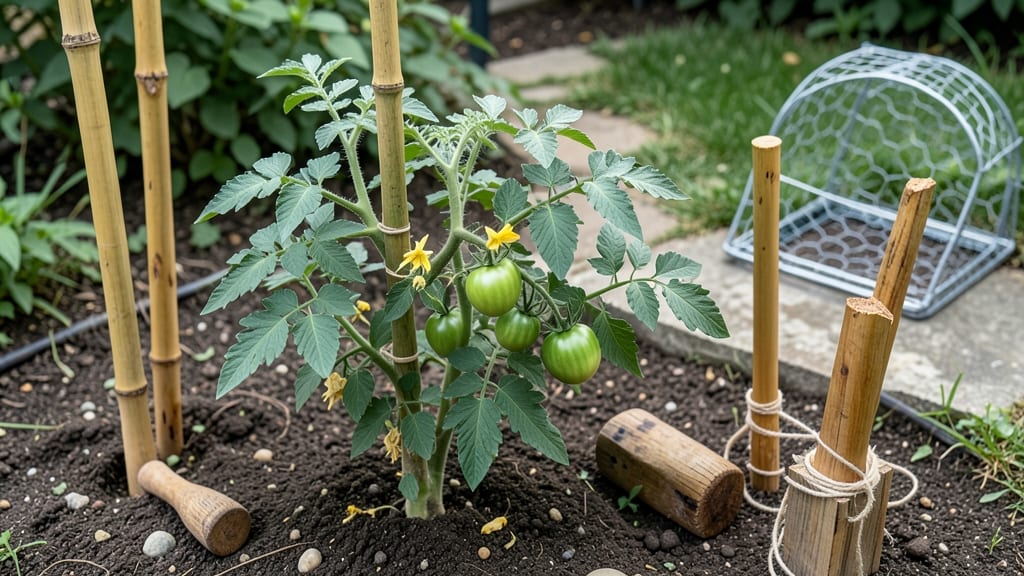
Staking tomato plants with bamboo saves your harvest from snapping vines and sprawling chaos. 🌱 I learned the hard way—last summer, my indeterminate tomatoes flopped onto the ground, bruising fruit and inviting pests. The right bamboo stakes transform those wild vines into productive towers.
You'll need 4-6 foot bamboo stakes (thicker than ½-inch works best) and soft plant ties or twine. Drive stakes 2-3 inches deep beside each plant, then loosely tie the main stem as it grows. The goal is support, not strangulation—tighten ties only when the plant outgrows them.
By midseason, you'll watch those vines climb 8-10 feet high without a single snapped stem. The bamboo stays sturdy even in wind, and you avoid the rot risk of wooden stakes. Plus, the vertical growth maximizes sunlight exposure for bigger, redder tomatoes.
Works for both determinate and indeterminate varieties, and the stakes last 3-4 seasons. Here's how to do it right from day one—no more tomato disasters!
📚 In This Guide
- What you need
- Instructions
- Tips and common mistakes
- Wrapping up and next steps
What you need
- ● Bamboo stakes: 4–6 ft tall (adjust for plant height; 1–2 stakes per plant). Pro tip: Use 3–5 stakes per plant for extra stability if growing in windy areas!
- ● Soft plant ties: 10–20 ft of jute, hemp, or Velcro garden ties (avoid wire or plastic—it can damage stems as plants grow).
- ● Tomato plants: Indeterminate varieties (e.g., ‘Sungold’, ‘Brandywine’, or ‘Cherokee Purple’).
- ● Gloves: A pair of gardening gloves (to protect your hands from thorns and dirt).
- ● Pruners or scissors: Small, sharp pair for trimming excess stakes or ties.
- ● Stake driver or mallet: To gently tap stakes into the ground without damaging roots.
- ● Trellis or tomato cage: For a hybrid support system—combine bamboo stakes with a cage for extra security.
- ● Plant markers: Label stakes with plant names if growing multiple varieties.
- ● Watering can or hose: Keep plants hydrated while staking (waterlogged soil is a no-go!).
How to stake tomato plants with bamboo for strong, snag-free growth
Here's my go-to method for keeping indeterminate tomatoes upright without damaging delicate vines.
🪴 Step 1: Gather the Right Bamboo Stakes and Tools
For each tomato plant, select 3-4 foot tall bamboo stakes—tall enough to support the plant's full height but not so heavy they topple. I like 3/8-inch diameter stakes; they're sturdy yet flexible enough to bend slightly without snapping. You'll also need soft plant ties (nylon or fabric) and scissors to trim any sharp edges.
Check your stakes for splinters or rough spots first. Run your fingers along each one—any jagged edges can damage the tender tomato stems. If needed, use sandpaper to smooth rough spots. This small step prevents unnecessary stress on your plants down the road.
✂️ Step 2: Position and Bury the Stakes Early
Install stakes right when you transplant seedlings, before vines get heavy. Drive each stake 6 inches deep into the soil at a 45-degree angle away from the main stem—this creates a triangle of support that prevents leaning. For 4 plants, you'll need 4 stakes total, spaced 12-18 inches from the plant base.
Don't wait until the plant is toppling to stake it. I've seen tomatoes snap under fruit weight because the stake was added too late. The goal is to guide growth, not correct it after the fact. Gently loosen the soil around the plant first—this helps the stake sink without disturbing roots.
🌱 Step 3: Secure the Main Stem as It Grows
Once the plant reaches 12-18 inches tall, use a soft tie to loosely attach the main stem to the stake. I like to make a figure-eight loop around the stem and stake, then tighten just enough to hold without constricting. Check ties every 5-7 days—vines thicken as they grow, and tight ties can gouge the bark.
Watch for the first flower cluster—this is your cue to start guiding side shoots. When you see suckers (those little shoots in the leaf axils), pinch them off immediately. You want all the plant's energy going into the main stem and fruit, not wandering vines.
💧 Step 4: Adjust and Reinforce as the Plant Matures
By the time your tomatoes are bushy and heavy with fruit, you'll need to add secondary support. Tie the main stem to the stake every 12 inches as it grows, using fresh ties. For extra stability, weave horizontal bamboo trellis pieces between stakes to catch fruit and distribute weight.
Here's the thing—watering matters. Keep soil consistently moist but not soggy, especially during fruiting. I water at the base in the morning so vines dry quickly, reducing disease risk. If the plant starts leaning despite the stake, gently adjust the stake angle and retie—don't force it into place.
⏰ Step 5: Harvest and Remove Supports at Season's End
When the first frost threatens, cut the plant at the base and remove stakes. I compost the healthy plant material (diseased parts go in the trash) and reuse stakes the next season. If you're saving seeds, let a few tomatoes ripen fully on the vine before harvesting.
Don't rush this step. Wait until all green fruit has turned color before pulling stakes—sudden movement can cause unripe tomatoes to drop. I mark my calendar for the first frost date and harvest everything 2 weeks before, just to be safe. With proper staking, you'll have strong, productive plants that support their own weight—and fewer broken stems to lament.
Tips & tricks for staking tomato plants
Real talk: Proper staking transforms indeterminate tomatoes from floppy vines to sturdy producers. Here's what nobody tells you about making it work right.
Stake Selection Matters: Avoid thin, brittle bamboo that snaps under fruit weight. Look for 3/8-inch diameter stakes that bend slightly when pressed—this flexibility absorbs wind without breaking. I've had the best luck with 3-4 foot stakes that reach above the plant's expected height, giving you room to adjust as vines grow. Test each stake by pressing down firmly; if it bends more than 10 degrees, it's too flexible for heavy fruit loads.
Timing is Everything: Install stakes right when transplanting, not when problems appear. I learned this the hard way after watching three plants snap under 3-pound tomatoes because I waited too long. The key is creating a growth habit early—plants adjust naturally to support when guided from day one. Also, bury stakes 6 inches deep at a 45-degree angle to form a natural triangle that prevents leaning.
Tie Technique That Works: Use soft plant ties (nylon or fabric) and make figure-eight loops—not knots—that can be easily adjusted as the stem thickens. I check ties every 5-7 days because vines expand rapidly during fruiting. Pro tip: If you notice reddening or indentation where the tie touches, loosen immediately—this is the plant's way of telling you it's being restricted.
Secondary Support Secret: When your tomatoes reach bushy, heavy-fruited maturity, add horizontal bamboo trellis pieces between stakes to catch fruit and distribute weight. This simple addition prevents the main stem from bearing all the load. I weave these cross-pieces about 12 inches apart up the stake, creating a mini trellis that also makes harvesting easier by keeping fruit off the ground.
Pro Tips for Staking Tomato Plants With Bamboo
- Real talk: Proper staking transforms indeterminate tomatoes from floppy vines to sturdy producers.
- Stake Selection Matters: Avoid thin, brittle bamboo that snaps under fruit weight.
- Timing is Everything: Install stakes right when transplanting, not when problems appear.
Frequently asked questions
Got questions about staking tomato plants with bamboo? You’re not alone! Here are some of the most common concerns—and straightforward answers—to help you grow strong, supported vines without the hassle.
When is the best time to stake tomato plants with bamboo?
Stake your tomato plants early—as soon as you transplant seedlings into the garden (about 2–3 weeks after sowing). For indeterminate varieties, use stakes before they get too tall or top-heavy, which can cause snapping. If you’re late, don’t worry—just stake them as soon as possible and tie gently to avoid damaging stems.
How tall should bamboo stakes be for tomato plants?
For indeterminate tomatoes, aim for stakes that are 6–8 feet tall (or taller if your variety grows aggressively). Shorter stakes (4–5 feet) work for determinate types. Bury one-third of the stake into the soil for stability. Pro tip: Taller stakes = fewer broken branches during heavy fruit loads!
Can I use regular wooden stakes instead of bamboo?
Bamboo is lightweight and flexible, but wooden, metal, or even sturdy plastic stakes work too. Just ensure they’re at least 1–1.5 inches in diameter to prevent bending. If using wood, treat it with a non-toxic sealant to avoid soil contamination. Bamboo’s natural bendiness is a bonus for windy areas!
Why are my tomato stems snapping at the base even with stakes?
Snapping often happens due to overwatering, weak stems, or improper tying. Check your soil moisture—soggy roots weaken plants. Use soft ties (like old T-shirts or horticultural tape) and loosen them as the stem grows. If stems are already weak, prune lower leaves to reduce weight and improve airflow.
Do I need to remove suckers when using bamboo stakes?
Yes! Prune suckers regularly (every 1–2 weeks) to direct energy to fruit production and prevent overcrowding. Suckers grow between the main stem and branches—pinch them off cleanly. This also makes staking easier, as fewer leaves mean less wind resistance. Bonus: Fewer suckers = fewer hidden pests!
Wrapping up and next steps
Staking tomato plants with bamboo is a simple, eco-friendly, and cost-effective way to ensure your indeterminate vines grow strong and healthy—without the risk of snapping under their own weight. 🌱 With just a few basic materials and a little patience, you can transform your garden into a thriving tomato haven while supporting sustainable gardening practices.
Now that you’re ready to stake, take the next step by choosing the perfect tomato varieties for your climate and soil. Experiment with different staking techniques, and soon you’ll be harvesting juicy, vine-ripened tomatoes all season long!