
Pruning
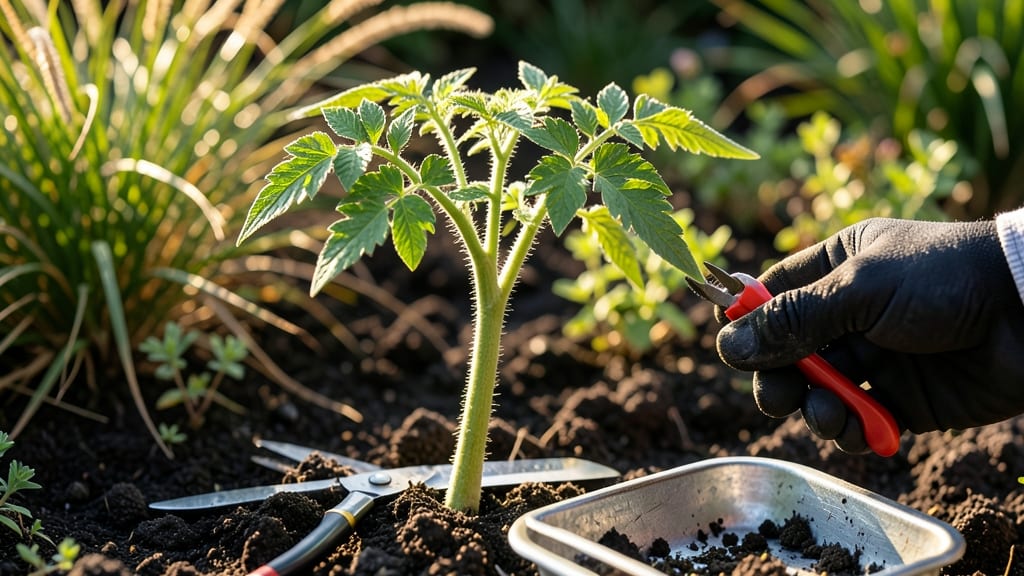
Pruning tomato seedlings isn't just trimming—it's the secret to stronger stems and bigger fruit later. 🌱 I've learned the hard way that skipping this step means leggy, weak plants that struggle to support heavy tomatoes. The right pruning at the right time turns those spindly seedlings into powerhouses.
You'll need just three things: clean pruners, a sunny windowsill or grow light, and patience. The goal is to encourage bushier growth by pinching off the top leaves when the seedling reaches about 6-8 inches tall.
This might sound counterintuitive, but it forces the plant to grow thicker stems and more branches where fruit will form.
Within 2-3 weeks, you'll see new side shoots forming at the joints below where you pinched. These become your future fruit-bearing branches. The plants stay shorter, roots strengthen, and you end up with tomatoes that are larger and more flavorful than if you'd left them unpruned.
Works for both determinate (bush) and indeterminate (vining) varieties, though the approach differs slightly. Here's how to do it right without stunting your plants—plus the mistakes that'll leave you scratching your head come harvest time.
📚 In This Guide
- What you need
- Instructions
- Tips and common mistakes
- Wrapping up and next steps
What you need
- ● Sharp pruning shears or scissors – sterilized (use rubbing alcohol or a 10% bleach solution to clean between cuts). Size: Small, precision pruners (4-6 inches) for delicate seedlings.
- ● Gloves – gardening or nitrile to protect hands from thorns and dirt.
- ○ Disinfectant (optional but recommended) – 70% isopropyl alcohol or hydrogen peroxide (3%) to sterilize tools and prevent disease spread.
- ○ Small container or bucket – For collecting pruned clippings (optional but helpful for composting).
- ● Tomato seedlings – 4-6 weeks old, with at least 2-3 true leaves (not just cotyledons).
- ● Garden twine or clips – To support seedlings if they’re leggy or top-heavy.
- ● Plant tie or soft rawhide strips – For gently staking taller seedlings after pruning.
- ● Compost bin or bag – For repurposing healthy clippings (avoid diseased plants!).
- ○ Magnifying glass (optional) – Helps spot tiny suckers or signs of pests on seedlings.
How to prune tomato seedlings for stronger growth
Tomato plants reward precise pruning with thicker stems and heavier fruit loads—here's how to do it right.
✂️ Step 1: Identify the Main Stem and First True Leaves
Wait until your seedlings have developed 2-3 sets of true leaves (the smaller leaves that appear after the initial seed leaves). These true leaves indicate the plant has enough energy to recover from pruning. The main stem, or central leader, is the primary vertical growth you'll work with.
Gently pinch between your thumb and forefinger just above the second set of true leaves. This forces the plant to branch out, creating a bushier structure that supports more fruit later. If you prune too early, you'll stunt the plant's development before it's ready to handle stress.
✂️ Step 2: Remove Suckers for Better Airflow and Fruit Production
Suckers are the small shoots that grow in the V-shaped junction between the main stem and a branch. These compete with your fruit for energy, so you'll want to remove them regularly. Use clean, sharp pruning shears or your fingers to pinch them off completely at the base.
Start checking for suckers when your plant reaches 12-18 inches tall. Focus on removing suckers below the first flower cluster—they won't contribute to fruit production anyway. If you leave them, you'll end up with a leggy plant that puts energy into foliage instead of tomatoes.
✂️ Step 3: Prune Lower Leaves to Improve Sunlight and Airflow
Once your plant is 3-4 feet tall, begin removing the lower leaves that are touching the ground or heavily shaded. Use your fingers or pruners to make a clean cut just above a leaf node (the small bump where leaves and stems meet). This prevents disease and allows sunlight to reach the lower fruit clusters.
Don't overdo it—leave enough leaves to maintain photosynthesis. A good rule is to remove leaves only up to the first flower cluster. If you strip too many leaves, your plant will struggle to produce enough energy for fruit development.
✂️ Step 4: Maintain the Plant's Shape Throughout the Season
Continue pruning suckers and lower leaves every 1-2 weeks as your plant grows. For indeterminate varieties (which grow continuously), keep pruning to encourage branching and airflow. For determinate varieties (which grow to a fixed size), focus on removing only the lowest leaves and diseased foliage.
Watch for signs of stress like yellowing leaves or stunted growth—these indicate you're pruning too aggressively. A well-pruned tomato plant should have a balanced canopy with open space between branches, allowing sunlight to penetrate and fruit to ripen evenly.
Tips & tricks for pruning tomato seedlings
Strategic pruning transforms leggy seedlings into robust plants—here's how to avoid common pitfalls while maximizing fruit production.
The Timing Secret: Don't rush pruning! The 2-3 sets of true leaves milestone in Step 1 is non-negotiable. I've seen gardeners pinch too early, and their plants never recovered—watch for those true leaves first. They're your signal that the plant has enough energy to handle branching without stress. For indeterminate varieties, this early pruning sets up that bushy framework we all want.
Sucker Removal Strategy: When your plant hits 12-18 inches tall in Step 2, start your sucker patrol. Here's what I learned the hard way: suckers below the first flower cluster are the real culprits. I used to remove all suckers indiscriminately, and my plants became overcrowded with branches that never produced fruit. Focus on those lower ones first—they're just stealing energy from your tomatoes. Use your fingers for small suckers; pruners for stubborn ones.
Leaf Pruning Wisdom: At the 3-4 feet tall stage in Step 3, think of yourself as a garden surgeon. Remove only leaves touching the ground or blocking airflow, cutting just above the leaf node. I always leave at least one leaf above each fruit cluster to maintain photosynthesis. The golden rule: never strip above the first flower cluster. One year, I went too far and my plants produced tiny, underripe tomatoes. Lesson learned—balance is everything.
Maintenance Routine: That 1-2 week pruning schedule in Step 4 is your secret weapon. I set a calendar reminder because I'm guilty of neglecting this. For indeterminate varieties, keep pruning suckers all season—they'll keep appearing. For determinate types, focus on disease prevention. And here's a pro move: always prune in the morning when foliage is dry. Wet leaves + pruning = disease risk.
Pro Tips for Pruning Tomato Seedlings
- Strategic pruning transforms leggy seedlings into robust plants—here's how to avoid common pitfalls while maximizing fruit production.
- The Timing Secret: Don't rush pruning!
- Sucker Removal Strategy: When your plant hits 12-18 inches tall in Step 2, start your sucker patrol.
Frequently asked questions
When is the best time to start pruning tomato seedlings?
Begin pruning once your seedlings have developed at least 2-3 sets of true leaves (not the initial seed leaves). This usually happens 4-6 weeks after germination. Pruning too early can stress young plants, while waiting too long may lead to overcrowded stems.
How often should I prune my tomato seedlings?
Prune every 1-2 weeks during the seedling stage to encourage bushier growth. Once plants are transplanted outdoors and start flowering, reduce pruning to once every 2-3 weeks or as needed to remove suckers. Consistency is key—avoid aggressive trimming all at once.
Can I use scissors or should I pinch suckers by hand?
Both work! Pinching by hand is gentler and reduces risk of disease, but clean, sharp scissors (sterilized with rubbing alcohol) are fine for larger suckers. Avoid tearing stems—always cut just above a leaf node or where the sucker meets the main stem for clean healing.
What if I accidentally prune too much? Will my plant recover?
Tomato seedlings are resilient! If you’ve over-pruned, don’t panic. Stop further trimming and focus on watering deeply and providing balanced fertilizer (high in phosphorus) to help roots and new growth rebound. Most plants recover within 2-3 weeks if the main stem remains intact.
Does pruning affect fruit production?
Pruning increases fruit size and yield by redirecting energy to fewer, healthier branches. However, over-pruning (removing too many leaves or stems) can reduce photosynthesis. Aim to leave 6-8 main stems on indeterminate varieties and prune lightly on determinate (bush) types to avoid stunting growth.
Wrapping up and next steps
Mastering the art of pruning tomato seedlings is your secret weapon for a thriving garden! 🌱 By focusing on strategic cuts—removing suckers, balancing growth, and supporting stems—you’ll encourage bushier plants and juicier, more abundant fruit.
Remember, consistency and patience are key; your efforts will pay off in a bountiful harvest.
Ready to put your new skills to work? Start with your youngest seedlings today and watch them transform into productive powerhouses. Happy pruning—your future tomato feasts are waiting! 🍅✨