
Pruning
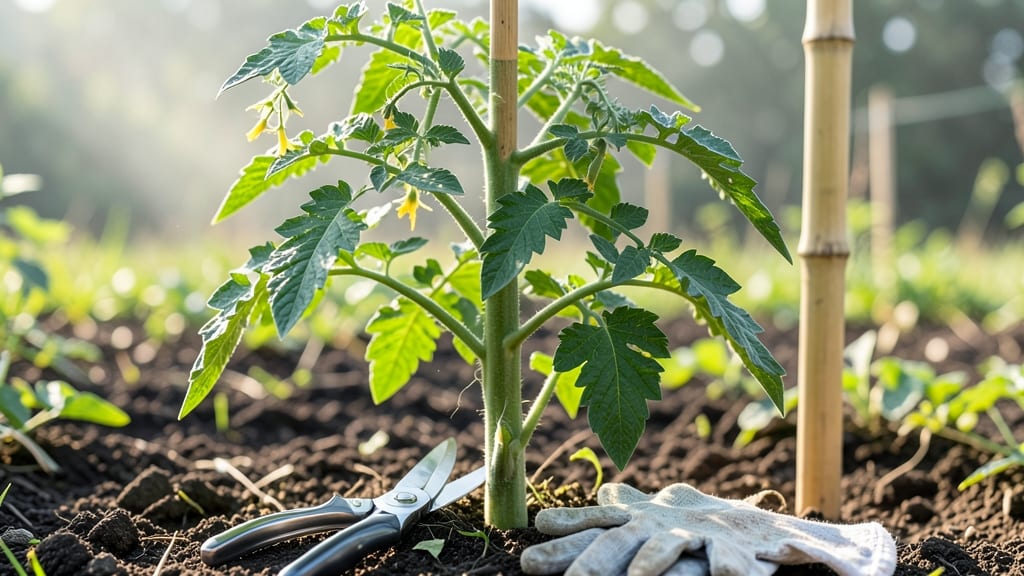
A well-pruned tomato plant produces three times more fruit than one left to sprawl wild. ✂️ I’ve watched my unpruned vines struggle with disease and weak stems, while pruned plants stand strong, bearing heavy clusters of ripe tomatoes all season.
The difference isn’t just in yield—it’s in the plant’s health, too.
You’ll need sharp pruning shears, a sturdy stake or cage, and 10 minutes every few days during peak growth. The goal is simple: remove suckers (those little shoots between stems and leaves) and trim crowded foliage to improve airflow.
This isn’t about making your plant look neat—it’s about directing energy where it counts: into stronger stems and bigger fruit.
By mid-summer, your plant will look like a well-behaved bush instead of a tangled mess. The air circulates better, diseases like blight retreat, and the fruit ripens faster. You’ll end up with heavier tomatoes and fewer green shoulders—plus, the plant stays upright, making harvesting a breeze.
This method works best for indeterminate varieties like ‘Sungold’ or ‘Brandywine,’ but even determinate tomatoes benefit from light pruning. The key is consistency—skip a week, and you’ll lose ground. Start now, and you’ll be feasting on homegrown tomatoes until frost.
📚 In This Guide
- What you need
- Instructions
- Tips and common mistakes
- Wrapping up and next steps
What you need
- ● Pruning shears – Bypass-style (sharp, clean cuts) or felco pruners (for thick stems). 1 pair (sterilized with rubbing alcohol).
- ○ Gloves – Garden-grade (cut-resistant, breathable). 1 pair (optional but recommended for thorny varieties like Roma).
- ● Disinfectant – Rubbing alcohol (70%+) or bleach solution (1:9 ratio). Small bottle (for sterilizing tools between cuts).
- ● Garden twine or plant ties – Jute or nylon, 10–20 ft (to support pruned plants).
- ● Stake or trellis – 5–6 ft tall (for indeterminate varieties; 3–4 ft for determinate). 1–2 per plant.
- ● Mulch – Straw, wood chips, or grass clippings (to retain moisture and suppress weeds). 2–3 inches around the base.
- ● Fertilizer – Balanced (10-10-10) or tomato-specific (post-pruning boost). Small bag.
- ○ Plant growth regulator – Optional for aggressive varieties (e.g., Seaweed extract to control sprawl).
- ● Notebook & pen – To track pruning dates and plant progress! 📝
How to prune a tomato plant for maximum fruit production
Strategic pruning transforms a bushy mess into a high-yielding tomato powerhouse. Here's how I keep my plants producing all season long.
✂️ Step 1: Identify and Remove Suckers Early
Suckers are the small shoots that grow in the crotch between the main stem and a branch. Pinch them off when they're no bigger than a pencil—this prevents them from draining energy from fruit production. I start checking for suckers 2-3 weeks after transplanting, when the plant reaches about 12 inches tall.
Use your thumb and forefinger to gently squeeze the sucker at its base. It should come away cleanly without tearing surrounding growth. If you wait too long, suckers develop into thick stems that require pruning shears, which can damage the plant. Real talk: I've let suckers grow too big before, and the plant struggled to set fruit for weeks afterward.
🌿 Step 2: Prune Lower Leaves to Improve Airflow
Remove all leaves from the bottom 12-18 inches of the plant using clean, sharp pruning shears. This prevents soil-borne diseases from splashing onto leaves and improves airflow. Focus on leaves that touch the ground or hang over the soil—these are the first to develop fungal issues.
Leave a few leaves near the base if your plant is small, but aim to create a bare stem up to the first flower cluster. You'll notice the plant's energy shifts upward once you clear this space. I like to do this step every 2 weeks during peak growing season to keep the plant healthy and productive.
☀️ Step 3: Thin Fruit Clusters for Larger Tomatoes
When flower clusters form, leave only 2-3 flowers per cluster (the largest, healthiest ones) and pinch off the rest. Overcrowded fruit competes for nutrients, resulting in smaller, less flavorful tomatoes. I start this step when flowers open and continue throughout the season as new clusters form.
Use your fingers to gently twist off excess flowers—no need for shears. You'll see the remaining fruit swell noticeably within 2-3 weeks of thinning. This is the moment that matters: patience here pays off with beefsteak-sized tomatoes instead of a bush full of tiny cherries.
⏰ Step 4: Adjust Pruning as the Season Progresses
After the first flush of fruit sets, shift focus to maintaining the plant's shape. Prune any branches growing toward the ground or crossing other stems. For indeterminate varieties, keep the main stem strong by removing weak side shoots that form above the first flower cluster.
Toward late summer, reduce pruning to only removing diseased or dead leaves. The plant needs all its energy for ripening existing fruit. You'll know you're doing it right when the plant looks balanced—no leggy growth, no crowded branches, and a steady stream of new flowers forming above the fruit clusters.
🌱 Step 5: Clean Up After Harvest Season
Once frost threatens or your plant stops producing, give it a final prune. Cut back the entire plant to 6 inches tall to encourage any remaining fruit to ripen. Remove all plant debris from the garden to prevent disease overwintering.
Don't skip this step—I've seen tomato blight survive in old plant matter and ruin the next season's crop. Store any saved seeds from your best tomatoes in a dry, cool place for next year's garden. With this method, I've had plants produce well into October in my climate zone.
Tips & tricks for perfect tomato pruning
These small adjustments make all the difference between a struggling plant and a tomato bonanza.
Timing is Everything: I can't stress enough how critical those 2-3 weeks after transplanting are for sucker removal. This is when your plant is establishing its main structure—don't wait until you see thick stems that'll require shears. I check every 5-7 days during this window, especially if my plants are growing fast in warm weather. The goal is to keep energy flowing upward to fruit production, not into unnecessary side growth.
Tool Selection Matters: Use clean, sharp pruning shears for the lower leaves (Step 2) and your fingers for suckers and flower thinning. I've ruined perfectly good plants with dull shears that tear instead of cut cleanly. For suckers, your fingers give you the perfect control to pinch without damaging the main stem. Pro tip: Dip your shears in rubbing alcohol between cuts to prevent disease spread—this simple step has saved my plants from blight multiple times.
Visual Cues for Perfect Pruning: When thinning fruit clusters in Step 3, look for flowers that are already opening—these will produce fruit first. The largest, healthiest flowers get priority, but also consider their position. Flowers on the outer edges of the cluster often get better sunlight and air circulation. After thinning, you should see space between remaining flowers—this isn't just about quantity, it's about giving each tomato room to grow to its full potential.
Seasonal Adjustments: The shift from aggressive pruning to maintenance in Step 4 is crucial. Once your plant has its first flush of fruit, I switch to a "less is more" approach. Focus on removing only diseased leaves and branches that would shade the fruit. The plant's energy now needs to go into ripening what's already there, not supporting new growth. This is when I notice the biggest difference in fruit size and quality—my tomatoes develop that rich, complex flavor when the plant isn't distracted by new shoots.
Pro Tips for Well Pruned Tomato Plant
- These small adjustments make all the difference between a struggling plant and a tomato bonanza.
- Timing is Everything: I can't stress enough how critical those 2-3 weeks after transplanting are for sucker removal.
- Tool Selection Matters: Use clean, sharp pruning shears for the lower leaves (Step 2) and your fingers for suckers and flower thinning.
Frequently asked questions
Got questions about keeping your tomato plants well-pruned and thriving? Here are some of the most common ones—and their answers!
When is the best time to prune a tomato plant?
Prune indeterminate tomato plants regularly throughout the growing season—especially after the first fruit sets. For determinate varieties (bush tomatoes), minimal pruning is needed, mostly to remove diseased or crowded leaves. Best times: Early morning or late afternoon to avoid stressing the plant. Skip pruning during extreme heat or drought.
How much should I prune a tomato plant?
For indeterminate tomatoes, aim to remove 1/3 of the foliage to improve airflow and sunlight penetration. Focus on:
- Suckers (side shoots between main stem and branches)
- Lower leaves touching the soil
- Yellow or diseased leaves
Can I prune tomato plants too much?
Yes! Over-pruning can stress the plant, reduce fruit production, or expose it to pests/sunburn. Signs you’ve gone too far:
- Stunted growth or wilting
- Fewer flowers/fruit
- Excessive sap oozing (a sign of shock)
Will pruning my tomato plant increase yield?
Strategic pruning boosts productivity by:
- Improving air circulation (reduces disease like blight)
- Directing energy to fruit production instead of excess foliage
- Preventing overcrowding that competes for sunlight/nutrients
What can I do if my tomato plant looks sad after pruning?
If your plant seems weak or stressed post-pruning, try these fixes:
- Water deeply (1-2 inches per week) to help recovery.
- Apply a balanced fertilizer (like 10-10-10) to replenish nutrients.
- Provide shade cloth if pruning in hot weather.
- Monitor for pests (like hornworms) that may target stressed plants.
Wrapping up and next steps
A well-pruned tomato plant isn’t just about aesthetics—it’s your secret weapon for bountiful, healthier harvests all season long! 🌱 By mastering strategic trimming, you’re not only boosting air circulation and sunlight exposure but also directing energy where it matters most: fruit production.
Whether you’re a seasoned gardener or just starting out, every snip brings you closer to a tomato treasure trove.
Now that you’re armed with the know-how, roll up your sleeves and get pruning! Start with one plant, observe how it responds, and let your confidence (and harvest) grow. Happy gardening—and may your tomatoes be plentiful! 🍅✨