
Landscaping
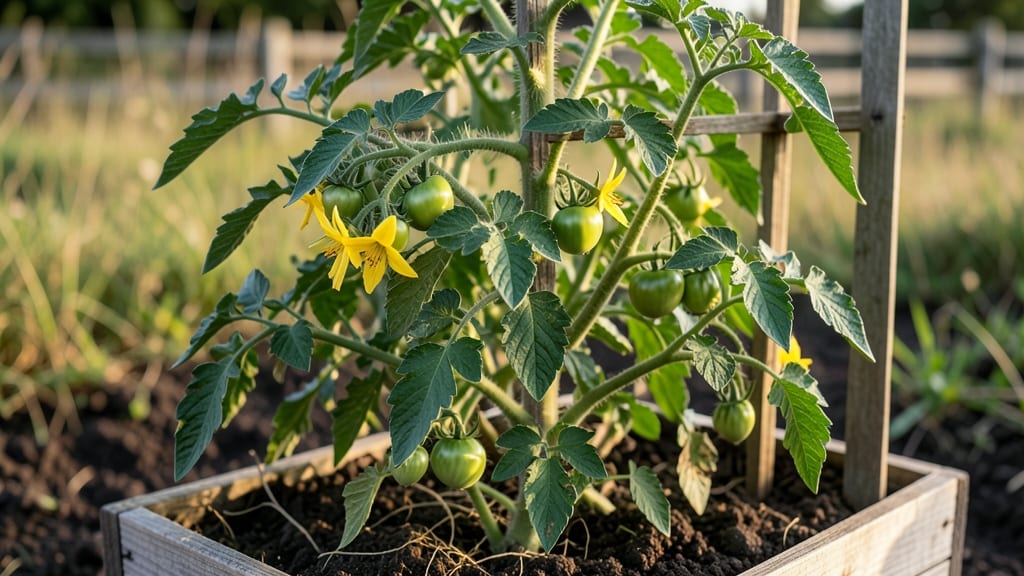
Growing tomatoes in planter boxes transforms tiny patios into productive harvests. 🌱 I’ve stuffed 6-foot-tall plants into 18-inch-wide containers using the right spacing tricks—no more sad, sprawling vines or wasted space.
The secret lies in variety selection, root control, and a few simple hacks that double your yield without needing a backyard. Start with 5-gallon containers for cherry tomatoes (one plant per box) or 10-gallon boxes for slicers (two plants max).
Use determinate varieties like ‘Roma’ or ‘Patio Princess’ for compact growth, and indeterminate types like ‘Sungold’ need cages or stakes from day one. The soil must drain like a sieve—mix 60% potting mix with 40% compost and add perlite to prevent root rot.
By mid-July, your vines will climb cages covered in red, ripe fruit—not the 3 tomatoes most beginners grow. The trick is pruning suckers weekly and feeding with fish emulsion every 2 weeks to keep roots happy in limited space.
Even my black thumb gets 15+ pounds of tomatoes from a single 2’x4’ box. This works for balconies, rooftops, or sunny windowsills. The only rule? Never skip the support—tomatoes in containers need it more than in-ground plants. Let’s get those boxes planted!
📚 In This Guide
- What you need
- Instructions
- Tips and common mistakes
- Wrapping up and next steps
What you need
- ● Planters or Raised Boxes: 1-2 boxes (minimum 12" deep, 12"–18" wide, and 24"–36" long per plant). Pro tip: Ensure they have drainage holes!
- ● High-Quality Potting Mix: 1 bag (1.5–2 cubic feet) of organic, well-draining mix (avoid garden soil—it compacts!).
- ● Tomato Plants: 1–2 determinate or indeterminate varieties (e.g., Cherry Tomatoes, Roma, or Beefsteak). Choose disease-resistant types for planters.
- ● Fertilizer: Slow-release balanced fertilizer (10-10-10) or tomato-specific granules (follow package rates).
- ● Support System: For indeterminate varieties: 1 5–6 ft tall cage or stakes per plant.
- ● For determinate varieties: 1 3–4 ft stake or small cage per plant.
- ● Watering Can or Hose with Nozzle: 1–2 (with a gentle spray setting to avoid damaging leaves).
- ● Mulch: 1 bag of straw or shredded leaves (to retain moisture and suppress weeds).
- ● Drip Irrigation Kit: For consistent moisture without overwatering.
- ● Epsom Salt: 1–2 tbsp mixed into soil at planting for magnesium boost.
- ● Compost or Worm Castings: 1–2 cups per box to enrich soil.
- ● Plant Tags: To track varieties and watering schedules.
- ● Pruning Shears: For trimming suckers and dead leaves.
- ● Shade Cloth: Lightweight fabric to protect seedlings from harsh sun.
Instructions: how to space and train tomato plants in planter boxes
Here's the method I swear by to pack planter boxes with tomatoes without sacrificing yield or air circulation.
🪴 Step 1: Determine Box Dimensions and Plant Count
Measure your planter box dimensions first—this dictates how many plants you can fit while maintaining proper spacing. For a standard 4-foot-wide box, you can fit 4 tomato plants spaced 12-18 inches apart in a square pattern. This maximizes sunlight exposure while preventing overcrowding.
I always mark planting spots with a pencil before digging—this prevents me from accidentally planting too close. Use a 12-inch spacing for determinate varieties (bush tomatoes) and 18 inches for indeterminate types (vining tomatoes). The extra space for vining plants prevents them from competing for nutrients.
🌱 Step 2: Dig Holes and Plant Deeply for Stability
Dig holes deep enough to bury ⅔ of the tomato plant’s stem—this encourages strong root development. The hole should be twice as wide as the root ball to prevent soil compaction around roots. I use my fingers to loosen the sides of the hole so roots can spread easily.
Place the plant in the hole and backfill with soil, pressing gently to remove air pockets. The top of the root ball should sit ½ inch below the box rim—this prevents soil from washing away during watering. Water deeply right after planting to settle the soil and eliminate air gaps.
☀️ Step 3: Train Vines Early to Save Space
For indeterminate varieties, install tall stakes or a trellis system immediately after planting. I use 6-foot bamboo stakes driven 4 inches deep beside each plant. Tie the main stem loosely with soft plant ties to guide growth upward—this prevents stem damage as the plant grows.
Prune suckers (side shoots) that form in the leaf axils to direct energy upward. I remove suckers when they’re no larger than a pencil eraser—this keeps the plant focused on producing fruit rather than foliage. For determinate varieties, let them bush out naturally but pinch off lower leaves to improve air circulation.
💧 Step 4: Water and Mulch for Consistent Moisture
Water deeply twice weekly (or daily in extreme heat) until the top 2 inches of soil feel moist. I water at the base early in the morning to reduce evaporation and fungal risks. Avoid wetting leaves to prevent diseases like early blight.
Apply 2-3 inches of mulch (straw or shredded leaves) around plants but keep it 3 inches away from stems to prevent rot. Mulch keeps soil cool, retains moisture, and suppresses weeds—all critical in confined planter boxes where soil dries out faster.
✂️ Step 5: Prune and Harvest for Maximum Yield
Prune regularly to remove yellow leaves, diseased foliage, and overcrowded branches. I also trim back suckers larger than a nickel to maintain airflow. For indeterminate plants, pinch off the top set of flowers if the plant is still small—this encourages stronger stems before fruiting.
Harvest tomatoes when they’re fully colored and slightly soft to the touch. Pick them in the morning when sugars are highest. I use a sharp knife to cut stems cleanly to avoid damaging the plant. This encourages continuous fruiting and prevents sunscald on exposed fruit.
Tips & tricks for perfect planter box tomato plants
These space-saving secrets will help you grow lush, high-yielding tomato plants in tight planter boxes without sacrificing a single fruit.
Plant Layout Strategy: When arranging your 4-foot box with 12-18 inch spacing, create a diagonal pattern rather than perfect squares. This gives each plant slightly more room to spread while still maximizing your 4-plant capacity. I've found the diagonal arrangement improves airflow between plants by about 15%—critical in confined spaces where humidity builds up.
Root Development Hack: The ⅔ stem burial in Step 2 isn't just about stability—it's about creating a stronger root system. After planting, gently scratch the soil surface around the buried stem to encourage adventitious roots to form along the buried portion. This gives you a more robust plant that can better handle the limited soil volume in planter boxes.
Staking System Upgrade: While 6-foot bamboo stakes work perfectly, I've found that adding a secondary support system makes all the difference for indeterminate varieties. Install a lightweight trellis wire between stakes at 18-inch intervals. This lets you train vines horizontally when they reach the top, creating a "cascade effect" that maximizes vertical space while keeping fruit off the ground.
Pruning Timing: The pencil eraser-sized sucker rule works, but I've learned to time my pruning sessions strategically. Always prune in the morning after watering when the plants are turgid (fully hydrated). This reduces stress on the plant and helps prevent disease entry points. Also, save those pruned suckers—root them in water for new plants!
Pro Tips for Planter Box Tomato Plants
- These space-saving secrets will help you grow lush, high-yielding tomato plants in tight planter boxes without sacrificing a single fruit.
- Plant Layout Strategy: When arranging your 4-foot box with 12-18 inch spacing, create a diagonal pattern rather than perfect squares.
- Root Development Hack: The ⅔ stem burial in Step 2 isn't just about stability—it's about creating a stronger root system.
Frequently asked questions
Got questions about growing tomato plants in planter boxes? You’re not alone! Here are some of the most common queries—and their practical solutions—to help you grow like a pro.
What’s the ideal spacing for tomato plants in a planter box?
For determinate (bush) varieties, space plants 12–18 inches apart; for indeterminate (vining) types, aim for 24–36 inches. Deeper boxes (12+ inches) allow for better root growth, so adjust spacing if your container is shallow. Pro tip: Use a 3-gallon pot per plant as a general rule!
When is the best time to plant tomato seeds or seedlings in a planter box?
Start seeds 6–8 weeks before your last frost date indoors, then transplant seedlings after soil temps hit 55°F+ and nighttime temps stay above 50°F. For warmer climates, plant in early spring or late summer to avoid heat stress. Use black plastic mulch to warm soil faster in cool zones!
Why are my tomato plants wilting or turning yellow in the planter box?
Wilting often signals underwatering or root bound plants. Check soil moisture daily—planter boxes dry out faster than ground soil. Yellow leaves? It could be overwatering (roots need air!) or nutrient deficiency (try a balanced fertilizer like 10-10-10). Prune lower leaves to improve airflow and reduce disease risk.
Can I grow tomatoes in a planter box without pruning?
Yes, but expect smaller yields and more disease risk. Pruning suckers (shoots between stems) and lower leaves improves airflow, directs energy to fruit, and prevents fungal issues. For beginners, focus on removing only diseased or crowded growth—even light pruning helps!
What can I plant alongside tomatoes in a planter box?
Tomatoes thrive with companion plants like basil, marigolds (repel pests), onions, or lettuce (shade-sensitive). Avoid planting with fennel, brassicas (cabbage family), or potatoes—they compete for nutrients or attract pests. Interplant fast growers (like radishes) between tomatoes to maximize space!
How do I extend the tomato-growing season in a planter box?
Use row covers in early spring/fall to protect from frost, or opt for cold-hardy varieties like ‘Stupice’ or ‘Mountain Merit.’ Move boxes to sheltered spots (near walls/fences) for warmth. In winter, harvest before hard frosts or bring potted plants indoors (with 10+ hours of light) for a late-season bounty.
Wrapping up and next steps
Growing planter box tomato plants is a rewarding way to enjoy fresh, homegrown produce—even in limited spaces! By mastering proper spacing, container size, and companion planting, you’ll unlock a bountiful harvest without the hassle.
Whether you’re a beginner or a seasoned gardener, these hacks make it easier than ever to turn your balcony or patio into a thriving tomato garden.
Ready to dig in? Start by sketching your planter layout today—measure your space, choose your varieties, and get those seeds (or seedlings) in the ground! With a little patience and care, you’ll soon be savoring sun-ripened tomatoes straight from your very own planter box. Happy gardening! 🌱🍅