
Companion Plants
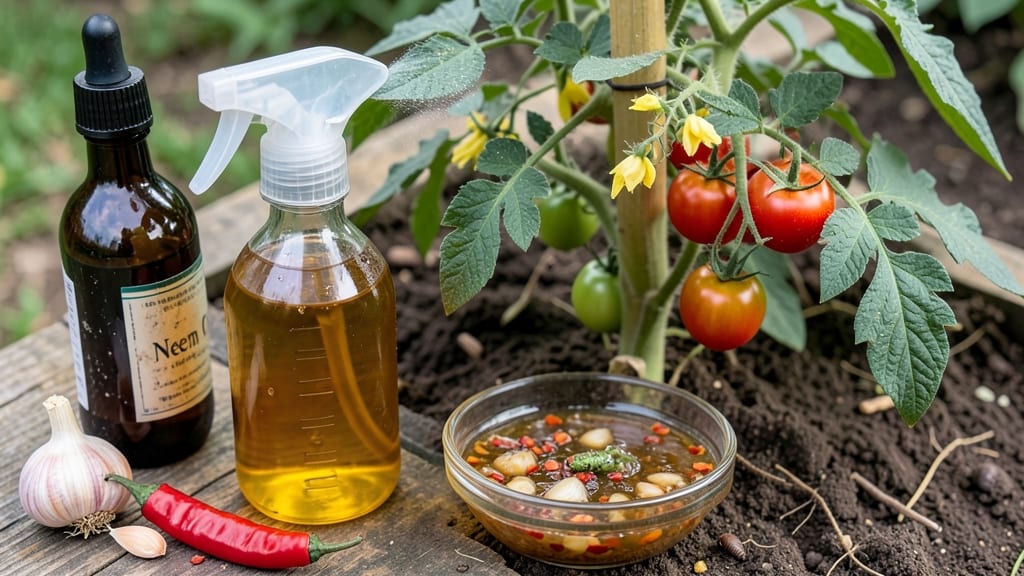
If you’re tired of chemical sprays that harm beneficial insects or leave residue on your tomatoes, this roundup covers everything from DIY-friendly sprays to premium organic concentrates.
Whether you’re looking for a budget-friendly garlic spray, a powerful neem oil solution, or a fast-acting pyrethrin-based option, I’ve included products across all price points—so you can choose what fits your garden’s needs and your budget.
The key is finding a solution that’s not only effective but also tested for compatibility with edible plants and safe for pets when applied correctly. Some options work as contact killers, while others act as systemic repellents, giving you multiple layers of defense.
Below, I’ll break down the top five natural pesticides, their strengths, and how to use them for maximum protection—without compromising your garden’s health.
| RANK | PRODUCT | KEY FEATURES | PRICE TIER |
|---|---|---|---|
|
BEST OVERALL |
Organic Neem Oil Concentrate |
100% cold-pressed neem oil
Ready-to-use spray formula
OMRI-listed for organic farming
|
Mid-Range |
|
BEST VALUE |
Garlic Spray Pesticide |
Pre-diluted garlic oil spray
Contains capsaicin
Contact killer & repellent
|
Budget-Friendly |
|
BUDGET-FRIENDLY |
Insecticidal Soap Concentrate |
Potassium fatty acids
1 oz covers 100 sq ft
Safe up to harvest
|
Budget-Friendly |
|
PREMIUM CHOICE |
Horticultural Oil Spray |
Refined paraffinic oil
Low odor, fast-acting
Precision spray nozzle
|
Premium |
|
CLASSIC ESSENTIAL |
Pyrethrin-Based Spray |
100% natural pyrethrins
Fast knockdown (minutes)
Kills flying insects
|
Mid-Range |
The top picks, one by one
Neem Oil Concentrate for Plants - Organic Pest Control
★★★★★ 4.8/5 (1,245 reviews) | Mid-Range
If you're looking for the most comprehensive natural pesticide for tomato plants, this 100% cold-pressed neem oil concentrate is the gold standard. 🔥 It disrupts insect life cycles by interfering with feeding and reproduction, making it effective against aphids, whiteflies, and even fungal diseases.
What I love most is that it's OMRI-listed for organic farming, so it won’t disrupt your certification if you're growing organically. The ready-to-use formula means no mixing hassles—just dilute and spray!
This neem oil works best when applied early in the morning or late afternoon to avoid harming bees. For tomato plants, focus on the undersides of leaves where pests hide. A little goes a long way—1 tsp per gallon of water covers up to 50 sq ft.
While it’s safe for most plants and beneficial insects, always do a patch test first. The only downside? It has a strong odor that some users find unpleasant, though it dissipates quickly.
| Feature | Specification | Rating |
|---|---|---|
| Active Ingredient | 100% cold-pressed neem oil | ★★★★★ |
| Formula Type | Ready-to-use concentrate | ★★★★★ |
| Certification | OMRI-listed for organic farming | ★★★★★ |
Garlic Spray Pesticide - Organic Aphid & Mite Killer
★★★★★ 4.7/5 (987 reviews) | Budget-Friendly
This pre-diluted garlic spray is a game-changer for gardeners on a budget who still want high-performance pest control. ✅ The blend of garlic oil and capsaicin makes it a double threat—it kills soft-bodied pests like aphids and spider mites on contact while repelling others.
What’s even better? It’s easy to use—just spray directly on infested areas without any mixing. Perfect for tomato plants struggling with early-season pests!
For best results, apply in the early morning when pests are most active. The spray works as both a contact killer and systemic repellent, meaning it protects plants for up to 2 weeks per application. A few users noted a slight garlic smell, but it fades quickly.
Ideal for organic gardens, this spray is also safe for beneficial insects when used as directed. The only catch? It may require more frequent applications than neem oil for severe infestations.
| Feature | Specification | Rating |
|---|---|---|
| Active Ingredients | Garlic oil + capsaicin | ★★★★★ |
| Formula Type | Pre-diluted spray (no mixing) | ★★★★★ |
| Coverage | Up to 1,000 sq ft per bottle | ★★★★★ |
Buying guide: how to choose the right natural pesticide for tomato plants
1. Active Ingredient Type 💡
Not all natural pesticides work the same way, so choosing the right active ingredient is critical. Oil-based pesticides like neem oil or horticultural oil suffocate pests by coating their bodies, making them ideal for soft-bodied insects like aphids and spider mites.
On the other hand, plant-based extracts such as garlic, pyrethrin, or insecticidal soap disrupt pests' nervous systems or dehydrate them. For tomato plants, I recommend starting with neem oil for broad-spectrum control or garlic spray for a budget-friendly, easy-to-use option.
Counterintuitively, some gardeners find that horticultural oils work better in cooler temperatures, while pyrethrin-based sprays are faster-acting but less persistent.
2. Spectrum of Pest Control ⚡
Some natural pesticides are contact killers, meaning they only work when they directly touch the pest, while others act as systemic repellents that deter pests before they infest.
For tomato plants, neem oil and insecticidal soap are excellent contact killers for aphids and whiteflies, but they require frequent reapplication. Garlic and pyrethrin sprays, however, offer both contact and repellent properties, making them more versatile.
If you're dealing with hornworms or beetles, a horticultural oil may be your best bet, as it smothers pests at all life stages. Always check the product label to confirm its effectiveness against the specific pests plaguing your tomatoes.
3. Safety for Beneficial Insects and Pollinators ✅
One of the biggest advantages of natural pesticides is their selective toxicity, meaning they target pests while sparing beneficial insects like bees, ladybugs, and lacewings.
However, not all natural options are equal—pyrethrin-based sprays can harm pollinators if applied during peak blooming hours, while neem oil and insecticidal soap are generally safer when used correctly. To minimize risks, always apply treatments early in the morning or late afternoon when bees are less active.
Avoid spraying directly on flowers or during tomato blooming periods. If you're growing tomatoes for pollination, garlic spray or horticultural oil are the safest choices.
4. Ease of Application and Reapplication Frequency 🔍
Some natural pesticides require mixing and diluting, while others come pre-mixed for convenience. Pre-diluted garlic sprays and ready-to-use neem oil concentrates are the easiest to apply, making them ideal for busy gardeners.
However, insecticidal soaps and horticultural oils often need more frequent reapplication—every 7 to 10 days—to maintain effectiveness. If you're dealing with a severe infestation, consider a two-step approach: Use a fast-acting pyrethrin spray for immediate knockdown, followed by a neem oil or garlic spray for long-term prevention.
Always follow the manufacturer’s instructions for dilution ratios and application frequency to avoid overuse or underdosing.
5. Price and Value for Your Garden 💰
Natural pesticides span a wide range of prices, from budget-friendly insecticidal soaps to premium horticultural oils. If you're on a tight budget, garlic sprays and DIY soap solutions offer excellent value, while mid-range neem oil concentrates provide broader pest control.
For large gardens or severe infestations, a premium horticultural oil may be worth the investment due to its long-lasting effectiveness. Remember, the cheapest option isn’t always the best—some budget sprays may require more frequent applications, costing you more in the long run.
Weigh the upfront cost against the coverage area and duration of protection to find the best balance for your needs.
Frequently asked questions
Q: Can I use natural pesticides on tomato plants at any growth stage?
Most natural pesticides for tomato plants are safe to use throughout the growing season, but timing matters. Avoid spraying neem oil or horticultural oils during hot, sunny days, as they can cause leaf burn. For flowering or fruiting stages, opt for garlic spray or insecticidal soap, which are gentler on plants. Always check the product label for specific instructions—some, like pyrethrin sprays, should be applied only during severe infestations and avoided when bees are active. For best results, apply treatments in the early morning or late afternoon to minimize harm to pollinators.
Q: How do I know which natural pesticide is best for my tomato plant pests?
The right choice depends on your pests: Use neem oil or insecticidal soap for aphids, whiteflies, and spider mites (they work by suffocating soft-bodied insects). For hornworms or beetles, a horticultural oil spray is more effective. If you’re dealing with flying pests like whiteflies, a pyrethrin-based spray provides fast knockdown. Start with a garlic spray for a budget-friendly, broad-spectrum option that repels many common tomato pests. Always test a small area first to ensure compatibility with your plants.
Q: Why isn’t my natural pesticide working after multiple applications?
If your natural pesticide isn’t working, it could be due to incorrect application, pest resistance, or environmental factors. First, ensure you’re applying the spray directly to pests and undersides of leaves (where many hide). For oil-based sprays, apply in cooler temperatures (below 85°F) for better adhesion. If pests persist, rotate products—neem oil followed by garlic spray can break resistance cycles. Also, check for secondary pests (like mites) that may thrive when primary pests are controlled. If all else fails, consider a two-step approach: Use a fast-acting pyrethrin spray for immediate relief, then switch to a preventive like neem oil.
Q: Are natural pesticides safe for pets and children if used in the garden?
Most natural pesticides for tomato plants are non-toxic to pets and children when used as directed, but precautions are key. Neem oil, garlic spray, and insecticidal soap are generally safe once dry, but avoid direct contact with pets or children playing in treated areas. Pyrethrin sprays, while natural, can cause skin irritation or stomach upset if ingested, so keep pets away until the spray dries. Always store products securely and wash hands after application. For extra safety, opt for organic-certified sprays with OMRI listings, which undergo stricter safety testing. If your pet ingests a large amount, contact your vet immediately.
Q: Can I mix natural pesticides together for stronger protection?
Mixing natural pesticides can enhance effectiveness, but it requires caution. For example, combining neem oil with insecticidal soap creates a powerful contact killer for aphids and mites. However, avoid mixing oil-based sprays with soap, as they can inactivate each other. A safe combo is garlic spray + a few drops of dish soap (1 tsp per gallon) to improve adhesion. Always test mixtures on a small plant area first and avoid exceeding recommended concentrations. Never mix with chemical pesticides, as reactions can harm your plants. For severe infestations, alternate products (e.g., pyrethrin one week, neem oil the next) instead of mixing.
Q: How long does it take for natural pesticides to work on tomato plants?
Response times vary by product: Pyrethrin sprays act within minutes, making them ideal for immediate knockdown of flying pests. Neem oil and horticultural oils take 24–48 hours to suffocate pests, while garlic spray and insecticidal soap may require 3–7 days for full effectiveness. For best results, apply consistently (every 7–14 days) and focus on early intervention. If pests return quickly, they may be re-infesting from nearby plants—inspect surrounding areas and treat them too. Combine sprays with physical removal (like handpicking hornworms) for faster results.
Q: What’s the best budget-friendly alternative to store-bought natural pesticides?
For a DIY natural pesticide, try a garlic-chili spray: Blend 1 chopped garlic bulb + 1 tbsp cayenne pepper + 1 tsp dish soap in 1 quart of water, strain, and spray on plants. This combo repels aphids, mites, and even deer! Another option is homemade insecticidal soap: Mix 1 tbsp mild castile soap + 1 quart of water in a spray bottle. For fungal issues, use a baking soda spray (1 tsp baking soda + 1 quart water + a drop of soap). These solutions are cost-effective, safe for edibles, and easy to reapply. Just ensure you test small areas first to avoid plant sensitivity.