
Vegetables
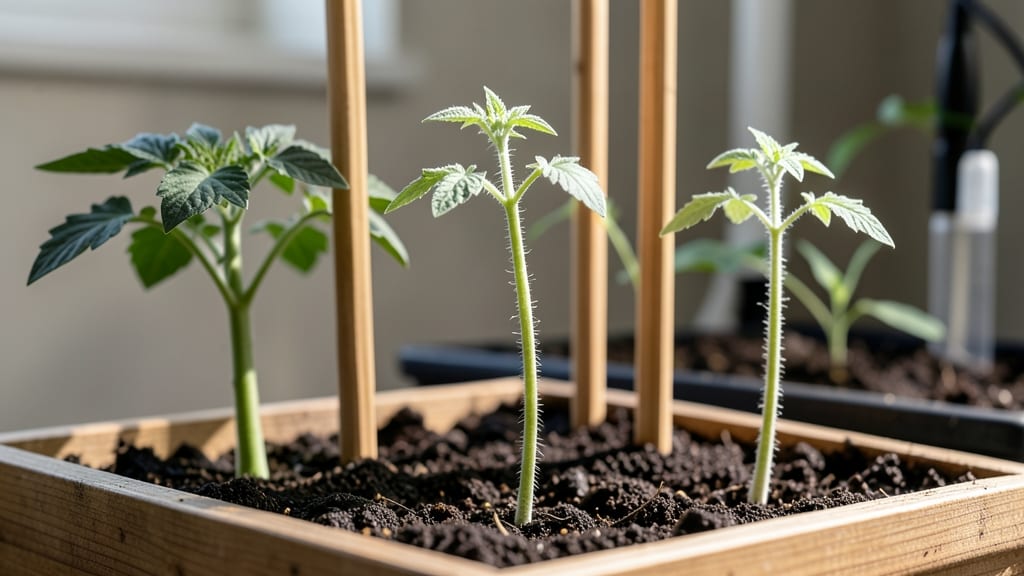
Leggy tomato seedlings stretch toward the light like starving children—because they are. 🌱 The problem starts with weak stems, yellowing leaves, and plants that flop over before you can transplant them, wasting months of effort.
I’ve nursed dozens of these sad seedlings back to health, and the fixes are simpler than you’d think: light, depth, and a little patience. The root cause is almost always too little light or inconsistent care—seedlings stretch toward any available light source, creating weak stems that can’t support themselves.
Overcrowding and uneven watering make it worse, leaving you with plants that look more like twigs than tomato starters. But here’s the good news: you can reverse this within 7-10 days with the right adjustments.
What you’ll end up with are sturdy, dark green seedlings ready for transplanting—no more flopping stems or sad little plants. The key is acting fast: bury them deeper, move them closer to light, and adjust your watering routine.
I’ll walk you through each step so you never lose another batch to legginess again. This method works for any tomato variety, whether you’re growing heirlooms or hybrids, and applies to seedlings started indoors or under grow lights. Let’s get those stems strong!
The Real Culprits Behind Weak Seedlings
When your tomato seedlings stretch tall and wobbly like overgrown noodles, it’s usually a sign that they’re not getting enough light or are overcrowded.
These issues trigger a survival response: seedlings lean toward any available light source (a phenomenon called etiolation) and grow weak stems to support their rapid, upward reach. Below, we break down the most common causes—and why they happen—so you can fix the problem before your plants become floppy disasters.
Tomato seedlings need 12–16 hours of light daily to grow sturdy and healthy. When they don’t get enough, they start stretching toward the nearest light source (usually a window or grow light) in a desperate bid for energy. This causes:
- Elongated stems (the classic "leggy" look)
- Pale, weak leaves (due to reduced chlorophyll production)
- Thin, brittle stems that snap easily when handled
Why it happens: Seedlings rely on photosynthesis to produce energy. In low light, they prioritize stem growth over leaf development because stems can physically reach light faster than leaves can expand. This is an evolutionary shortcut—but it’s not ideal for your garden!
Pro tip: If you’re growing seedlings indoors, use a grow light (LED or fluorescent) placed 2–4 inches above the seedlings and keep it on for 14–16 hours a day. Rotate trays daily to ensure even growth. 💡
When seedlings are planted too closely together, they compete for light, nutrients, and space. This competition forces them to stretch upward to escape shade from neighbors, leading to leggy, weak growth. Overcrowding also:
- Slows root development (since roots can’t spread freely)
- Increases humidity around seedlings (promoting damping-off disease)
- Weakens stems due to nutrient starvation (roots can’t absorb enough from the soil)
Why it happens: In nature, plants grow toward sunlight to maximize energy. But in a crowded tray, the "winner" (the tallest seedling) hogs the light, while others etiolate in response. This creates a vicious cycle: the more crowded they are, the more they stretch—and the weaker they become. 🔄
Pro tip: Thin seedlings to 1–2 inches apart as soon as they sprout their first true leaves. If you’re using a seedling tray, consider pricking out (gently transplanting) seedlings into larger pots once they have 2–3 sets of leaves. ✨
Tomato seedlings are fast-growing but have a limited window before they become too leggy to recover. If left in their starter trays for 4–6 weeks without proper light, they’ll outgrow their roots’ ability to support them, leading to:
- Extremely tall, thin stems that can’t support the plant’s weight
- Yellowing leaves (a sign of nutrient exhaustion)
- Poor transplant shock resistance (weak roots struggle to adapt to outdoor conditions)
Why it happens: Seedlings have a critical growth phase where they need balanced light, nutrients, and space. If they’re kept in small containers too long, their roots become root-bound, and their stems grow too quickly for the root system to keep up.
This mismatch causes the classic "leggy" collapse. ⚖️
Pro tip: Aim to transplant seedlings outdoors 2–3 weeks after their last true leaves appear (usually when they’re 4–6 inches tall). If they’re already leggy, bury them deeper when transplanting to encourage new root growth along the stem. 🌱
Now that you know why leggy seedlings happen, the next step is how to fix them—without starting over! Stay tuned for our 3-step rescue plan to save your tomato babies. 🍅💪
Fixing Tall, Weak Tomato Stems
Now that you know why your tomato seedlings stretch like over-caffeinated ballerinas, let’s roll up our sleeves and fix them—before they topple over like Jenga towers. 🌱💪 The good news? Most solutions are quick, cheap, and involve minimal effort (or just a little creativity).
Below, we’ve mapped out practical fixes for each common cause, plus prevention tips to keep your plants sturdy and thriving.
Fix: Move seedlings to a sunnier spot immediately—ideally 6+ hours of direct sunlight daily. If you’re indoors, supplement with a grow light (LED or fluorescent) placed 2–4 inches above the seedlings for 14–16 hours/day.
How to Do It:
- 🔥 Scout the brightest spot in your home or garden (south-facing windows or a greenhouse are ideal).
- 👨🍳 Rotate trays daily so seedlings grow straight (not lopsided).
- 🌡️ If using a grow light, keep it close but avoid burning leaves (test with your hand—it should feel warm but not hot).
- ⏰ Gradually acclimate seedlings to outdoor light by moving them outside for 1–2 hours/day, increasing time over a week.
Prevention Tip: 💡 Start seeds under grow lights if natural light is weak, or use a seedling heat mat (70–75°F) to speed up growth and reduce legginess.
Fix: Thin seedlings and upgrade their homes to larger containers (at least 3–4 inches in diameter) with well-draining soil.
How to Do It:
- 🔪 Use scissors or your fingers to gently snip or pull out weaker seedlings, leaving the strongest 1–2 per pot.
- 🍳 Transplant into bigger pots with fresh seedling mix (add perlite or vermiculite for aeration).
- 🌱 Bury stems deeper (up to the first true leaves) to encourage root growth from the stem (this stabilizes them).
- ✨ Water lightly after transplanting to avoid shock.
Prevention Tip: 🌱 Sow seeds 1/4 inch deep and space them 1–2 inches apart in trays to avoid future crowding.
Fix: Adjust your watering habits and improve soil conditions to prevent weak, waterlogged stems.
How to Do It:
- 🌡️ Check soil moisture—stick your finger 1 inch deep. Water only if it’s dry.
- 💧 Water at the base (not overhead) to avoid fungal issues and leggy growth from damp foliage.
- 🍲 Mix in perlite or sand (20% of the soil) to improve drainage if your mix is too dense.
- ⏰ Water in the morning so excess moisture evaporates by night.
Prevention Tip: 💡 Use self-watering pots or drip irrigation for consistent moisture without overdoing it.
Fix: Regulate heat sources and harden off seedlings before moving them outside.
How to Do It:
- 🔥 Keep daytime temps between 70–80°F and nighttime temps above 55°F.
- 🌡️ Avoid placing seedlings near heat vents, radiators, or direct sunlight (which can overheat soil).
- ⏰ If nights are chilly, use a row cover or move pots indoors temporarily.
- 🌱 Harden off seedlings by exposing them to outdoor temps gradually (start with 1 hour/day, increasing over 7–10 days).
Prevention Tip: ✨ Use a seedling heat mat (70–75°F) for the first 2 weeks to jumpstart growth, then transition to cooler temps.
Fix: Add balanced fertilizer (low in nitrogen) and boost root health with compost tea or worm castings.
How to Do It:
- 📊 Use a 5-10-10 or 3-4-6 fertilizer (low nitrogen to prevent leafy, weak growth).
- 🥗 Mix in 1 tbsp of compost or worm castings per gallon of soil for natural nutrients.
- 💧 Water with a seaweed extract solution (1 tsp per gallon) for a gentle nutrient boost.
- ✨ Avoid over-fertilizing—more isn’t better! Stick to every 2–3 weeks once seedlings have 2–3 true leaves.
Prevention Tip: 💡 Start with sterile seedling mix (not garden soil) to avoid nutrient imbalances.
If your seedlings are already top-heavy and flopping, don’t panic—you can prune and save them!
How to Do It:
- 🔪 Snip the leggy stems just above a leaf node (where leaves grow).
- 🌱 Plant the cuttings in moist soil—roots will regrow in 1–2 weeks!
- 🍳 Support remaining stems with toothpicks or small stakes to keep them upright.
- ⏰ Move to a brighter spot immediately to encourage bushier growth.
Prevention Tip: 🎯 Always pinch off the top set of leaves when seedlings are 3–4 inches tall to encourage branching.
- 🍳 Bury deeper – Plant seedlings halfway up their stems to trigger new root growth.
- 🌱 Use a pop bottle trellis – Cut a plastic bottle in half, slide it over the seedling, and fill with water to weigh it down.
- ✨ Weight them down – Place a small rock or pebble near the base (gently!) to stabilize weak stems.
Remember: The key is prevention—once you’ve fixed the legginess, keep an eye on light, spacing, and soil conditions to avoid future flops. With these tweaks, your tomato seedlings will go from wobbly sticks to sturdy, fruit-bearing powerhouses in no time! 🍅💪
Frequently asked questions
Why do my tomato seedlings get so tall and weak?
Leggy seedlings happen when they don't get enough light (they stretch toward any available source) or are crowded, causing them to compete for resources. This creates weak stems that can't support the plant's weight. The good news is you can fix this by moving them to a brighter spot or providing grow lights for 14-16 hours daily.
Can I save leggy tomato seedlings before transplanting?
Bury the stems deeper when transplanting (up to the first true leaves) to encourage new root growth. You can also prune the leggy tops just above a leaf node and plant those cuttings - they'll often regrow roots in 1-2 weeks. For immediate support, use toothpicks or small stakes to keep them upright while they recover.
How close should grow lights be to seedlings?
Keep grow lights 2-4 inches above seedlings to prevent burning while providing strong light. Test by holding your hand near the light - it should feel warm but not hot. Rotate trays daily so all seedlings get even light exposure. LED or fluorescent grow lights work best for tomato seedlings.
What's the best way to prevent leggy seedlings next time?
Start with proper light (12-16 hours daily), thin seedlings to 1-2 inches apart, and use larger containers (3-4 inches diameter). Pinch off the top set of leaves when seedlings reach 3-4 inches to encourage bushier growth. For indoor starts, use a seedling heat mat (70-75°F) for the first 2 weeks to speed up growth.
Will leggy seedlings still produce tomatoes?
Yes, but they may need extra support and care. The plants can still grow and produce fruit, though they might be slightly later to mature. Focus on strengthening their stems through deeper planting and proper light exposure. With good care, leggy seedlings can recover and produce a normal harvest.