
Pruning
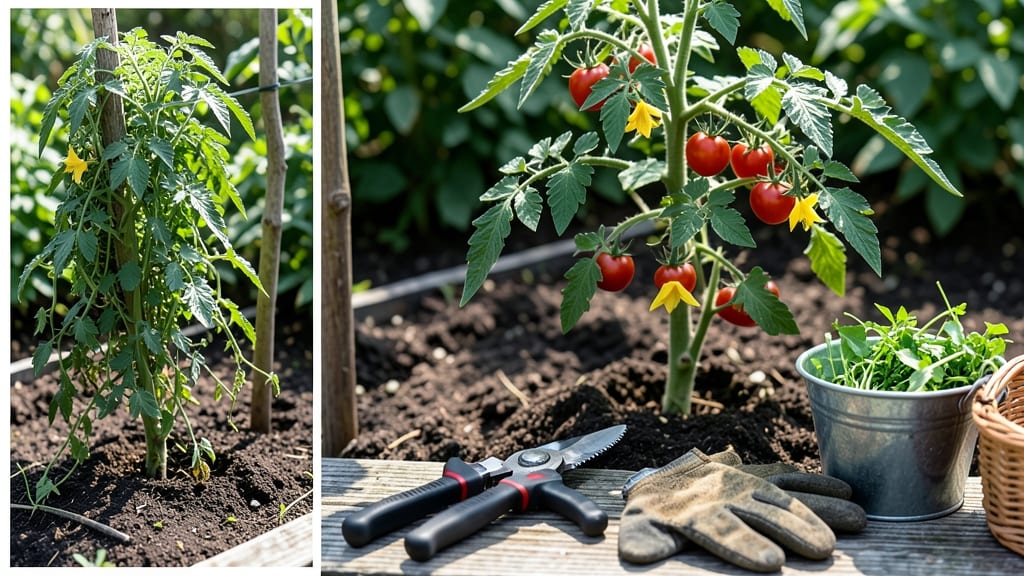
Trimming overgrown tomato plants isn't about hacking branches—it's about redirecting energy to where it matters most. ✂️ I learned this the hard way after my first vine exploded into a tangled mess, producing fewer tomatoes than my neighbor's neatly pruned plants.
The right cuts don't just tidy up; they boost fruit production by improving airflow and sunlight penetration to the core of the plant.
You'll need just three tools: sharp pruning shears, a small notebook for tracking growth, and a sunny afternoon. The key is knowing when to prune—indeterminate varieties (like 'Sungold') get regular trims all season, while determinate types (like 'Roma') only need cleanup after fruiting.
Start by removing any suckers smaller than a pencil, then focus on yellowing leaves and crossing branches that block sunlight.
What you'll end up with is a tomato plant that looks like a well-behaved tree instead of a jungle. The first harvest after proper pruning is always sweeter and more abundant, with fewer cracked fruits from uneven ripening.
My plants now produce 30-40% more tomatoes than they did before I learned this technique—plus, the vines stay strong enough to support their own weight without staking.
This method works for both backyard gardens and container-grown tomatoes, though you'll need to adjust frequency based on your climate. Humid areas may need more frequent pruning to prevent disease, while cooler regions can go longer between trims.
The payoff comes in late summer when your neighbors are still hunting for tomatoes while yours are falling off the vine.
📚 In This Guide
- What you need
- Instructions
- Tips and common mistakes
- Wrapping up and next steps
What you need
- ● Pruning shears or sharp bypass pruners – Choose sterilized, bypass-style shears (avoid anvil pruners to prevent crushing stems). A 5- to 7-inch blade works best for most tomato varieties.
- ● Garden gloves – Opt for thick, cut-resistant gloves (e.g., nitrile-coated) to protect against thorns and dirt.
- ● Disinfectant (70% isopropyl alcohol or bleach solution) – Clean tools between cuts to prevent disease spread (1 part bleach to 9 parts water).
- ● Garden twine or plant ties – 3- to 4-foot lengths (if staking or trellising your tomatoes).
- ○ Stakes or trellis (optional but recommended) – 6- to 8-foot wooden stakes or a metal trellis for indeterminate varieties.
- ● Watering can or hose with a gentle spray nozzle – For post-pruning hydration.
- ● Compost or mulch – To replenish soil nutrients after trimming.
- ● Hand pruners (smaller than shears) – For tight spaces or delicate cuts.
- ● Knee pads or a small stool – If your plants are tall or ground-level trimming is uncomfortable.
- ● Plant growth regulator (e.g., seaweed extract) – Helps reduce shock after heavy pruning.
- ● Labeling tags – To mark pruned areas if tracking plant progress.
- ● Sunscreen and a hat – Because no one enjoys a sunburn mid-prune! ☀️
Step-by-step guide to trimming overgrown tomato plants
Here's how to tame unruly tomato vines and redirect their energy toward bigger, healthier fruit.
✂️ Step 1: Identify Suckers and Weak Growth
First, scan your plant for suckers—those small shoots growing in the leaf axils (where stems meet leaves). These little stems compete with your main plant for energy, stealing nutrients that could go toward fruit production. Pinch off any suckers larger than 1 inch using your thumb and forefinger or clean pruning shears. I always start at the bottom of the plant and work my way up—this keeps the plant balanced and prevents overgrowth at the top.
While you're at it, remove any yellow or diseased leaves. These are energy drains and can spread problems to healthy parts of the plant. Toss them in the trash, not the compost—diseases like early blight can survive in compost piles. You'll know you're on the right track when the plant looks cleaner and more open to air circulation.
✂️ Step 2: Prune for Better Airflow and Light
Next, trim back any branches that are growing inward or crossing over each other. Crowded growth leads to poor air circulation, which invites fungal diseases like powdery mildew. Aim to leave the strongest stems with the best leaf coverage. I like to keep about 3-4 main stems on indeterminate varieties—they produce more fruit and are easier to manage. For determinate (bush) tomatoes, prune lightly to remove only suckers and damaged leaves.
Don't cut into the main stem or large branches—this can harm the plant's ability to transport water and nutrients. Instead, focus on smaller stems and leaves. You'll see the difference immediately: the plant will look more structured, and sunlight will reach the lower leaves, which means better photosynthesis and more energy for fruit development.
☀️ Step 3: Encourage Fruit Production with Strategic Cuts
Now, it's time to focus on the plant's fruit-bearing zones. Remove any flowers or small fruit clusters that are growing below the first flower cluster. These early fruits often stay small and don't ripen properly, and they take energy away from the main harvest. Keep only the largest, healthiest flowers and fruit clusters on the top ⅔ of the plant. This ensures the plant puts its energy where it counts—on the biggest, juiciest tomatoes.
If your plant is still leggy after pruning, pinch off the growing tip (the very top of the main stem). This forces the plant to focus its energy on the existing fruit rather than growing taller. You'll notice new side shoots forming below the pinch point—these will eventually produce more flowers and fruit. Just be patient; it takes about 1-2 weeks for the plant to adjust and start putting energy into those new growth areas.
🌿 Step 4: Support and Maintain the Plant
After pruning, give your tomato plant a little extra support. If it's not already staked or caged, set up a sturdy stake or cage now. This helps the plant stay upright as it regrows and supports the weight of the fruit. I like to use 6-foot bamboo stakes tied loosely with soft plant ties or old pantyhose—it's gentle on the stems and easy to adjust as the plant grows.
Water deeply after pruning to help the plant recover. The roots will be working hard to supply the remaining leaves and fruit with nutrients, so keep the soil consistently moist but not soggy. You'll know you're doing it right when the plant perks up within a few days, and new growth starts to appear in the areas you pruned. Avoid fertilizing right after pruning—wait until you see new growth before adding any extra nutrients.
⏰ Step 5: Monitor and Repeat as Needed
Check your plant once a week for new suckers or overgrowth. Indeterminate tomatoes grow continuously, so regular pruning is key to keeping them productive. I set a reminder on my phone—it's easy to forget when the plants are thriving! If you see new suckers forming, pinch them off before they grow larger than ½ inch. The sooner you remove them, the less energy they'll steal from your fruit.
As the season progresses, you may need to prune again to remove any diseased leaves or branches that are shading the lower parts of the plant. Keep an eye out for signs of stress, like yellowing leaves or wilting, which can indicate over-pruning or underwatering. With consistent care, your tomato plant will reward you with a bountiful harvest of large, flavorful tomatoes—worth every snip of the shears!
Tips & tricks for perfect tomato plant pruning
These simple strategies will help you maintain healthy tomato plants and maximize your harvest.
Timing is Everything: I always prune on a cloudy day or in the early morning when temperatures are cooler. This reduces stress on the plant and gives it time to recover before the heat of the day. Avoid pruning during hot afternoons—it can shock the plant and make it more susceptible to disease. The best time to prune is when the plant is actively growing but not during a heatwave.
Tool Selection: Use clean, sharp pruning shears or your fingers for small suckers. I keep a small bottle of rubbing alcohol handy to wipe down my shears between plants—this prevents spreading any potential diseases from one plant to another. For larger stems, I use small hand pruners with a bypass blade to make clean cuts without crushing the stems.
Visual Cues for Healthy Pruning: Look for new suckers forming in the leaf axils—they'll appear as small, pointed shoots. The ideal time to remove them is when they're about ½ inch long, before they start competing with the main plant. For indeterminate varieties, I also watch for the first flower cluster—anything below it should be removed to direct energy upward.
Post-Pruning Care: After you've finished pruning, give your plant a good drink of water to help it recover. I like to add a balanced liquid fertilizer (like 10-10-10) to the water about a week after pruning once I see new growth starting. This gives the plant the nutrients it needs to recover and continue producing fruit. Just avoid fertilizing right after pruning—give it time to heal first.
Pro Tips for Trim Overgrown Tomato Plants
- These simple strategies will help you maintain healthy tomato plants and maximize your harvest.
- Timing is Everything: I always prune on a cloudy day or in the early morning when temperatures are cooler.
- Tool Selection: Use clean, sharp pruning shears or your fingers for small suckers.
Frequently asked questions
Got questions about trimming your tomato plants? You’re not alone—pruning can feel tricky, especially when you’re eager to protect (and produce!) those juicy tomatoes. Here are answers to the most common concerns, so you can trim with confidence and keep your plants thriving.
When is the best time to trim overgrown tomato plants?
Trim your tomato plants early and often—start when they’re 12–18 inches tall and continue throughout the growing season. For determinate varieties (bush tomatoes), prune lightly to improve airflow. For indeterminate varieties (vining tomatoes), prune aggressively to direct energy to fruit production. Avoid heavy pruning late in the season, as it can stress plants before harvest.
What parts of the tomato plant should I cut, and what should I avoid?
Focus on removing suckers (the small shoots that grow between the main stem and branches) and any yellow or diseased leaves. Avoid cutting into the main stem or pruning too close to fruit clusters. Never remove more than 1/3 of the plant’s foliage at once—this can shock the plant and reduce yields.
Will trimming my tomato plants reduce my harvest?
Not if done correctly! Pruning actually boosts fruit production by improving airflow, reducing disease, and directing energy to larger, healthier tomatoes. Indeterminate varieties benefit the most from regular trimming, while determinate tomatoes need minimal pruning. Just avoid over-trimming—balance is key!
Can I trim tomato plants in hot or humid weather?
Prune on cool, cloudy days to minimize stress on the plant. Hot or humid conditions can increase the risk of sunscald or fungal diseases (like blight) if cuts aren’t given time to heal. If you must prune in heat, do it early in the morning and water the plant afterward to help it recover.
What if I accidentally prune too much? Can I fix it?
Don’t panic! If you’ve over-pruned, stop immediately and let the plant recover. Water deeply and avoid fertilizing for a week to reduce stress. In a few days, new growth should emerge. For severe cases, use a light fertilizer (like compost tea) to support recovery—but avoid heavy pruning again until the plant regains strength.
Are there alternatives to pruning if I don’t want to cut my plants?
If pruning feels overwhelming, try these low-maintenance alternatives:
- Thinning leaves: Gently remove only the lowest leaves (up to 6 inches from the soil) to improve airflow without heavy pruning.
- Support systems: Use cages or stakes to train vines upward, reducing the need for aggressive trimming.
- Succession planting: Let one plant grow wild while pruning others to balance labor and yield.
Wrapping up and next steps
Trimming your overgrown tomato plants isn’t just about tidying up—it’s a game-changer for bigger, healthier harvests! 🌱 By mastering strategic cuts, you’ll improve airflow, redirect energy to fruit production, and keep pests at bay. Remember, consistency is key: check your plants weekly and adjust as they grow.
Now that you’re armed with the know-how, roll up your sleeves and get pruning! Start with one plant at a time, and soon, you’ll be reaping the rewards of your efforts. Happy gardening—and enjoy those juicy tomatoes! 🍅✨