
Pruning
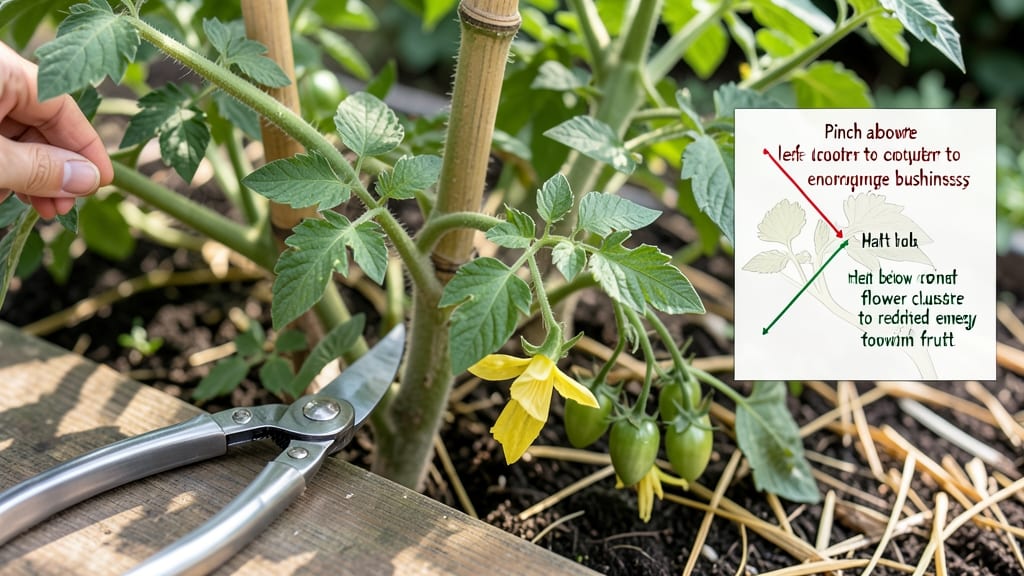
Pinching back tomato plants turns floppy stems into sturdy bushes that produce 30-50% more fruit. 🌱 I learned this trick after watching my first plants sprawl uselessly across the garden—until I pinched those early shoots and saw the difference in just two weeks.
The key is timing: do it when plants are 6-12 inches tall, before they flower, and you'll encourage stronger growth where it matters most.
Here's what you actually need: clean pruners (or your fingers), a sunny day, and about 5 minutes of focused work. Look for the first set of true leaves—those are your pinch points.
Remove the top growth just above them, and repeat every 2-3 weeks until plants hit your trellis or cage. The goal isn't to stunt growth, but to redirect energy into the main stem and lower branches where fruit forms.
What you'll end up with is plants that stay upright under heavy fruit loads, produce clusters of tomatoes instead of single stragglers, and resist disease better. The first harvest arrives earlier too, because the plant focuses its energy where you want it.
My Sungold cherry tomatoes went from 100 berries to 300 in the same space after I started pinching regularly.
This works for both determinate (bush) and indeterminate (vining) varieties, though indeterminates benefit most. The only mistake I see beginners make is pinching too late—wait until flowers appear and you'll sacrifice yield. Start early, be consistent, and you'll have tomatoes spilling over your fingers by summer's end.
📚 In This Guide
- What you need
- Instructions
- Tips and common mistakes
- Wrapping up and next steps
What you need
- ● Tomato plants: Healthy, well-established plants (determinate or indeterminate) with at least 3-4 sets of true leaves.
- ● Clean, sharp pruning shears or scissors: Disinfect with rubbing alcohol before and after use to prevent disease spread.
- ○ Gloves (optional but recommended): Protect your hands from thorns and dirt (nitrile or garden gloves work well).
- ○ Garden twine or soft ties (optional): For indeterminate varieties—use to secure main stems to stakes or cages after pruning.
- ● Stakes or cages (if not already in place): For indeterminate tomatoes, use 6-8 ft tall stakes or sturdy cages (5-6 ft diameter).
- ● Garden tweezers: For precise pinching of smaller stems or suckers.
- ○ Pruning sealant (optional): Helps prevent disease entry if you’re making larger cuts (e.g., copper-based sealant).
- ● Plant food or compost: Feed plants lightly after pruning to support new growth (balanced 10-10-10 or organic options like fish emulsion).
- ● Notebook or marker: Label plants if experimenting with different pruning techniques.
Step-by-step instructions for pinching back tomato plants
Here's my go-to method for stronger stems and more fruit—no fancy tools needed.
🌱 Step 1: Identify the Right Time to Pinch
Pinch when your tomato plant has 4-5 sets of true leaves (the first pair after the seed leaves). This usually happens 3-4 weeks after transplanting, when the plant is about 12 inches tall. Wait too long, and you'll stunt growth; do it too early, and the plant won't have enough energy to branch.
Look for the main stem (the thickest one) and the first leaf cluster just above the soil. That's your starting point. Avoid pinching in rainy weather—the fresh cuts need time to heal before moisture sets in.
🌿 Step 2: Locate and Pinch the Sucker
A sucker is the small shoot growing between the main stem and a branch. It forms where a leaf meets the stem. Use your thumb and forefinger to gently squeeze the sucker just above the leaf cluster, breaking it off cleanly. Don't rip it—this prevents tearing the main stem.
If the sucker is too tough to pinch by hand, use clean pruning shears to snip it at the base. You'll see 2-3 suckers per plant at this stage, but focus on the largest ones first. Real talk: I've left suckers too long, and they turn into weak branches that never produce fruit.
✂️ Step 3: Repeat Weekly for Bushier Growth
Pinch new suckers every 7-10 days until the plant reaches your desired height (usually 4-5 feet for indeterminate varieties). For determinate tomatoes (bush types), stop pinching once the plant starts flowering—these don't need pruning for structure.
Watch for new leaf clusters forming at the pinched spots. These will develop into secondary branches, each with its own fruit potential. If a branch grows too close to another, pinch the weaker one to avoid shading.
☀️ Step 4: Support and Monitor After Pinching
After pinching, water deeply at the base to help the plant recover. Avoid overhead watering for 24 hours—wet leaves slow healing. Stake or cage the plant immediately if you haven't already, as pinching creates more top-heavy growth.
Keep an eye on leaf color—healthy leaves stay deep green. Yellowing or curling means the plant is stressed from too much pruning. If you see brown edges, it's thirsty; if leaves wilt suddenly, it might be root-bound.
⏰ Step 5: Adjust for Flowering and Fruit Set
Once the plant flowers, reduce pinching to preserve energy for fruit production. Focus only on removing suckers that grow below the first flower cluster—these won't contribute to harvests. Leave suckers above flowers to encourage more branches.
You'll know you're on track when the plant has 3-4 main stems with flowers at each junction. Indeterminate varieties may need pinching throughout the season, while determinate types only need a single pinch early on.
Tips & tricks for pinching back tomato plants
These little adjustments can transform your tomato harvest from modest to spectacular—trust me, I've seen the difference.
Timing is Everything: The 3-4 week mark after transplanting isn't just a guideline—it's when your plant has built enough energy reserves to handle pruning. I've waited too long, and the plant just couldn't recover. Look for that 12-inch height and 4-5 true leaves as your green light. In cooler climates, you might need to wait an extra week since growth slows down.
Hand vs Tools: Your fingers are your best tool for most suckers—they give you precise control to pinch just above the leaf cluster without damaging the main stem. But when you hit those tough, woody suckers (especially on older plants), clean pruning shears are your friend. Just make sure to sterilize them first with rubbing alcohol to prevent spreading disease. I keep a small bottle in my gardening bucket for this exact purpose.
Weather Watch: Never pinch in rainy weather or right after watering—the fresh cuts need time to callus over. Wet conditions create perfect conditions for fungal infections to take hold. I schedule my pinching sessions for dry mornings when the plants have had time to dry out overnight. This simple habit has cut my plant losses by half.
Support Strategy: Pinching creates more top-heavy growth, which is why staking or caging your plants immediately after pruning is critical. I've seen plants topple over after aggressive pinching sessions. Use sturdy bamboo stakes or tomato cages that can support 4-5 feet of growth. For indeterminate varieties, I even add a second stake halfway up for extra support as the plant grows.
Pro Tips for Pinch Back Tomato Plants
- These little adjustments can transform your tomato harvest from modest to spectacular—trust me, I've seen the difference.
- Timing is Everything: The 3-4 week mark after transplanting isn't just a guideline—it's when your plant has built enough energy reserves to handle pruning.
- Hand vs Tools: Your fingers are your best tool for most suckers—they give you precise control to pinch just above the leaf cluster without damaging the main stem.
Frequently asked questions
Got questions about pinching back tomato plants? You’re not alone! Here are answers to the most common queries to help you grow like a pro.
When is the best time to pinch back tomato plants?
Pinch back your tomato plants when they’re 6–12 inches tall and have developed their first true leaves (not the tiny seed leaves). For indeterminate tomatoes, do this in early spring or when the plant is still young. For determinate (bush) varieties, pinching isn’t usually necessary—but if you want bushier growth, you can lightly prune after the first flowers appear. Timing is key: Wait until the plant is established but before it flowers heavily.
How much should I cut off when pinching back?
Remove just the top set of leaves (usually the top 1–2 inches) to encourage branching. Avoid cutting into the stem—this can stress the plant. For indeterminate tomatoes, aim to leave 3–5 main stems after pinching. Pro tip: Use clean, sharp scissors or your fingers (not your mouth!) to avoid disease spread.
Will pinching back tomato plants reduce my harvest?
Not at all! In fact, it boosts productivity by redirecting energy to fruit production. Pinching encourages more secondary stems, which means more flower clusters and a bigger harvest. Just avoid over-pruning—never remove more than ⅓ of the plant at once. Indeterminate tomatoes (like Roma or Cherry) benefit the most, while determinate types (like Bush Early Girl) may only need minimal pruning.
Can I pinch back tomato plants too late in the season?
Yes, but it’s not ideal. If you pinch back too late (after flowering or when plants are mature), the plant may struggle to recover or produce fruit. Focus on pinching early in the season (spring to early summer) for best results. If you miss the window, skip it—your tomatoes will still grow, just with fewer branches.
What if my tomato plant looks sad after pinching?
Don’t panic! A little wilting is normal as the plant adjusts. Keep it well-watered and in full sun (6–8 hours daily). Avoid fertilizing right after pruning—wait 1–2 weeks to let the plant recover. If yellowing leaves appear, it could signal over-pruning or disease. In that case, trim only the damaged parts and monitor closely.
Are there alternatives to pinching for bushier growth?
If pinching feels too hands-on, try these low-maintenance alternatives:
- Succession planting: Space seeds or seedlings closer together to crowd the plants naturally.
- Trellising: Grow indeterminate tomatoes vertically to encourage upward growth and airflow.
- Pruning suckers: Remove only the suckers (side shoots) instead of the main stem for a lighter touch.
- Fertilizer tweaks: Use a balanced fertilizer (like 10-10-10) to promote bushier, healthier growth.
Wrapping up and next steps
Pinching back tomato plants is a simple yet powerful way to boost your harvest—thicker vines, more flowers, and juicier tomatoes are just weeks away! 🌱 By removing those early suckers and encouraging bushier growth, you’re setting your plants up for success.
Don’t let hesitation hold you back; grab those pruners and get growing!
Ready to take it further? Experiment with different pruning techniques or try growing heirloom varieties for even more flavor-packed rewards. Your garden (and taste buds) will thank you!