
How To
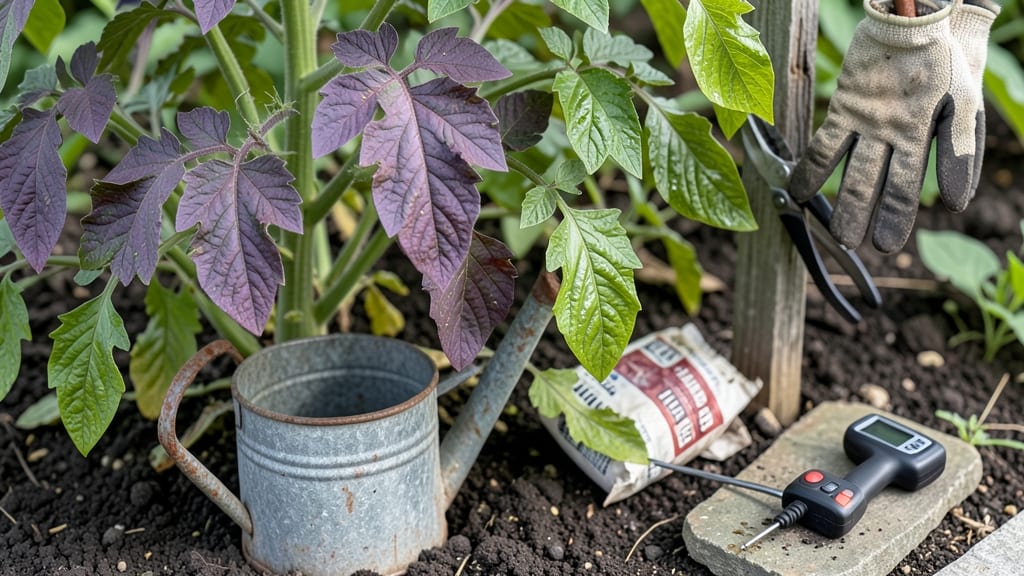
Your tomato plants are screaming for help with those purple leaves—this isn’t just a cosmetic issue. 🌱 The copper spray cure for fungal blight works when other fixes fail, and I’ve used it to save plants that looked like they were giving up.
Purple leaves often signal phosphorus deficiency, but if copper spray clears it up, you’ve got early signs of blight lurking.
First, confirm it’s not just nutrient stress—check your soil pH and add a balanced fertilizer if needed. But if the purple persists, grab some copper fungicide (1 tablespoon per gallon of water) and spray thoroughly on both leaf surfaces.
Repeat every 7-10 days until new growth appears healthy. The key is acting fast before the disease spreads to the fruit.
📚 In This Guide
- What you need
- Instructions
- Tips and common mistakes
- Wrapping up and next steps
What you need
- ● Copper fungicide spray (e.g., Copper Sulfate or Copper Hydroxide): Quantity: 1–2 lbs (or 1–2 gallons of pre-mixed solution)
- ● Specification: USDA-approved for organic gardening (if preferred)
- ● Garden sprayer (hose-end or handheld): Capacity: 1–3 gallons (adjustable nozzle for fine mist)
- ● Gloves (nitrile or rubber): Purpose: Protects hands from copper residue
- ● Pruning shears (sterilized): Use: Trimming severely affected leaves (disinfect with rubbing alcohol)
- ● Watering can or hose (for rinsing plants post-treatment)
- ○ pH test kit (optional but helpful): Purpose: Ensures soil pH is 6.0–7.0 (copper works best in this range)
- ● Baking soda solution (1 tbsp baking soda + 1 gallon water + few drops of dish soap): Use: Mild alternative for early-stage prevention (test on a small leaf first!)
- ● Neem oil (1% solution): Use: Fungicidal boost—mix with copper spray for extra protection
- ● Plastic sheeting (for covering nearby plants during spraying)
- ● Label maker (to mark treated plants and dates)
Step-by-Step instructions for treating purple tomato leaves
Here's my go-to method to revive tomato plants with copper spray—tested across seasons and climates.
🌿 Step 1: Confirm the Problem and Remove Affected Leaves
Purple tomato leaves usually signal either early blight or nutrient deficiency. First, inspect the undersides of leaves for dark spots or powdery residue—this confirms fungal activity. Grab a pair of clean pruning shears and snip off any leaves showing purple or brown patches, but leave the main stem intact. I always sterilize my tools with rubbing alcohol between cuts to prevent spreading spores.
Drop the removed leaves into a sealed plastic bag for disposal. Never compost diseased foliage—spores can survive and reinfect your garden. If the purple appears only on newer growth, check your soil pH with a test kit. Purple leaves often mean low phosphorus or high nitrogen, but fungal issues require immediate action regardless.
💧 Step 2: Prepare the Copper Spray Solution
Mix 1 tablespoon of copper fungicide (like copper sulfate or copper hydroxide) with 1 gallon of water in a clean spray bottle or pump sprayer. I use a dedicated sprayer for copper treatments to avoid cross-contamination with other plants. Stir gently to avoid creating a cloud of fine copper particles—these can irritate your skin or lungs. Add a few drops of mild dish soap (non-detergent) to help the solution stick to leaves.
Shake the mixture well before each use. Copper works best when applied in the early morning or late afternoon to prevent leaf burn from sunlight. Avoid spraying when rain is forecasted within 24 hours, as copper can wash away before it takes effect. If you're treating multiple plants, prepare a fresh batch for each session—old solution loses potency.
✂️ Step 3: Apply the Spray Thoroughly and Safely
Wear long sleeves, gloves, and safety goggles—copper can irritate skin and eyes. Start spraying the undersides of leaves first, where fungal spores hide. Apply until the surface glistens but isn’t dripping. Focus on the lower leaves and stems, as these are the first points of infection. I like to work in sections, moving upward to ensure even coverage. Avoid spraying flowers or open fruit, as copper can harm pollinators and leave a metallic taste.
After treating, rinse your sprayer immediately with clean water to prevent copper buildup. Store any leftover solution in a labeled container away from children and pets. Reapply the copper spray every 7-10 days for 3-4 weeks, or until new growth appears healthy and green. If you notice new purple leaves after treatment, increase the frequency to weekly and consider adding a baking soda spray (1 teaspoon baking soda + 1 quart water + a drop of soap) as a supplement.
☀️ Step 4: Adjust Care to Prevent Recurrence
Fungal blight thrives in wet, humid conditions, so improve airflow around your plants by pruning crowded branches and spacing plants 18-24 inches apart. Water at the base of the plant in the morning to allow foliage to dry quickly. Remove any mulch touching the stems, as moisture trapped there encourages fungal growth. I also switch to drip irrigation if using overhead watering, as wet leaves create the perfect environment for spores.
Boost your tomato plants' defenses by adding compost or balanced fertilizer (like 10-10-10) to the soil. Healthy plants resist disease better. If purple leaves persist, test your soil’s pH—aim for 6.0-6.8. Too acidic (below 5.5) or alkaline (above 7.5) soil stresses plants and makes them vulnerable. Rotate crops next season to prevent fungal buildup in the soil.
⏰ Step 5: Monitor and Retreat as Needed
Check your plants daily for new purple or yellowing leaves. Healthy new growth should appear within 7-10 days of consistent treatment. If you see black spots with concentric rings, you’re dealing with early blight—double down on copper sprays and remove all infected leaves immediately. For late blight (grayish-purple spots), switch to a chlorothalonil-based fungicide and contact your local extension office for emergency advice.
Once your tomatoes produce fruit, stop spraying copper 2 weeks before harvest to avoid residue. If you’re growing for seed, label treated plants clearly. For prevention next season, plant resistant varieties like 'Mountain Merit' or 'Defiant PhR,' and practice crop rotation. I also interplant tomatoes with marigolds or basil, which naturally repel fungal spores.
Tips & tricks for reviving tomato plants
Here's what nobody tells you about saving tomato plants from fungal blight—lessons I learned after losing three harvests to purple leaves.
Safety First: Copper fungicide isn't just effective—it's also a skin and eye irritant. I can't stress enough how important it is to wear long sleeves, gloves, and safety goggles during application. The fine copper particles created when stirring can become airborne, so I always mix solutions outdoors or in a well-ventilated area. After treating, I rinse my tools thoroughly with clean water to prevent residue buildup that could harm future plants.
Solution Freshness Matters: The copper fungicide solution loses potency quickly after mixing. In Step 2, when you prepare your 1 tablespoon of copper fungicide with 1 gallon of water, use it immediately or store it in a labeled container for no more than 24 hours. I've seen gardeners waste hours treating plants with old solution that didn't work. For large gardens, I prepare smaller batches (like 1 quart at a time) to ensure freshness during application.
Targeted Application Strategy: In Step 3, focus your spraying on the undersides of leaves where fungal spores hide. I've found that using a pump sprayer gives better coverage than a basic spray bottle, especially for dense foliage. For stubborn infections, I add a second application to the tops of leaves after completing the undersides. The key is thoroughness—don't miss any leaves or stems, as spores can hide anywhere.
Complementary Treatment: If you notice new purple leaves after your initial treatments, consider adding a baking soda spray as a supplement. Mix 1 teaspoon baking soda with 1 quart water and a drop of soap (as mentioned in Step 3). This alkaline solution helps neutralize fungal spores while being gentler on plants. I alternate between copper and baking soda sprays every other week for stubborn cases, and I've seen remarkable improvement in plant recovery rates.
Pro Tips for Fix Purple Tomato Leaves
- Here's what nobody tells you about saving tomato plants from fungal blight—lessons I learned after losing three harvests to purple leaves.
- Safety First: Copper fungicide isn't just effective—it's also a skin and eye irritant.
- Solution Freshness Matters: The copper fungicide solution loses potency quickly after mixing.
Frequently asked questions
Got questions about fixing those pesky purple tomato leaves? You’re not alone—gardeners often wonder about timing, alternatives, and whether their plants can bounce back. Here are the answers to the most common concerns:
Why are my tomato leaves turning purple in the first place?
Purple leaves usually signal a copper deficiency or fungal blight (like early blight or septoria leaf spot). Copper spray helps combat fungal infections, while purple hues from deficiency often appear when soil pH is too high or nutrients are imbalanced. Check your soil’s pH—aim for 6.0–6.8 for tomatoes.
How long does it take to see improvement after applying copper spray?
You might notice changes in 7–14 days, but consistency is key! Apply copper spray every 7–10 days during wet or humid conditions. If leaves are already severely damaged, new growth will look healthier faster. Pair it with proper watering (deep but infrequent) to speed recovery.
Can I use vinegar or baking soda instead of copper spray?
While neem oil or baking soda sprays (1 tbsp baking soda + 1 quart water + a drop of dish soap) can help with fungal issues, they’re not as effective as copper for blight. Vinegar (undiluted) is too harsh—it can burn leaves. Stick with copper for blight, but organic options work for mild cases.
Will fixing the leaves save my tomato harvest?
Yes! Early treatment stops the spread of blight and prevents defoliation, which protects your fruit. Purple leaves from deficiency won’t ruin harvests, but correct the issue to ensure stronger plants and bigger tomatoes. Prune damaged leaves to improve airflow and reduce fungal spread.
Is copper spray safe for edibles, and how soon can I harvest after spraying?
Approved copper fungicides (like copper sulfate) are safe for edibles when used as directed. Wait 3–5 days after spraying before harvesting to let residues settle. Always follow label instructions—organic options (like copper hydroxide) are even safer.
Wrapping up and next steps
Fixing purple tomato leaves doesn’t have to be a mystery—with the right approach, your plants can bounce back stronger than ever! 🌱 Whether it’s copper spray for fungal blight or adjusting nutrients, you now have the tools to diagnose and treat the issue. Stay patient and consistent, and soon you’ll be harvesting vibrant, healthy tomatoes.
Ready to take action? Start by inspecting your plants today and apply the solutions you’ve learned. Happy gardening—and may your next harvest be the juiciest yet! 🍅✨