
Vegetables
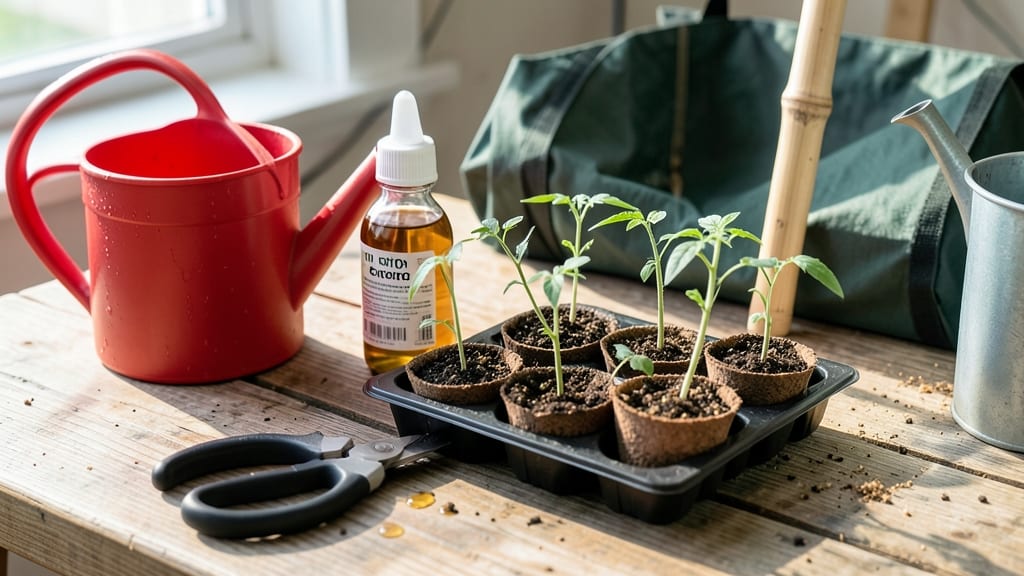
How to fix leggy tomato seedlings—those spindly stems and tiny leaves are a clear cry for help, but with the right care, you can turn them into sturdy plants ready for the garden. 🌱 The problem? Too little light, overcrowding, or inconsistent watering. I’ve nursed dozens of these back to health, and the fixes are simpler than you’d think: prune, transplant, and adjust light in just a few days.
First, identify the cause: seedlings stretched toward light? They need more brightness—move them under a grow light or to a sunnier windowsill. Overcrowded? Thin them so each plant has 2-3 inches of space. The goal is to encourage compact growth, not tall, weak stems that flop when transplanted.
Once you’ve adjusted their environment, give them a little trim: snip the leggy stems just above a leaf node, and they’ll branch out, growing thicker and stronger.
Within a week, you’ll see new growth—stockier, greener, and ready to handle outdoor conditions. The key is acting fast before they become too top-heavy.
Prevent future legginess by starting seeds under bright lights or in a greenhouse, and avoid overwatering. With these tricks, your seedlings will be garden-ready in no time—no more flopping stems or sad, stretched-out plants. Let’s get them growing right!
Root Causes Of Weak Seedling Growth
Leggy tomato seedlings—those tall, spindly stems with sparse leaves—aren’t just a cosmetic issue. They signal deeper problems in your seedlings’ environment, genetics, or care. Understanding the why behind legginess is the first step to preventing it and fixing it fast.
Below, we break down the most common culprits with clear scientific explanations so you can tackle them head-on.
Tomato seedlings are light-hungry—they crave at least 12–16 hours of bright light daily to grow strong. When they don’t get enough, they stretch (etiolate) toward any available light source, like a windowsill or grow light. This causes:
- Weak stems: Cells elongate rapidly but lack lignin (the structural compound that strengthens stems), making them prone to snapping.
- Pale, yellowish leaves: Chlorophyll production drops when light is limited, leading to poor energy storage.
- Delayed flowering: Leggy seedlings divert energy to vertical growth instead of developing buds.
Why it’s worse indoors: Artificial light (like a standard bulb) often emits too little blue spectrum light (400–500 nm), which is critical for compact growth. Seedlings under weak or red-heavy light (like incandescent bulbs) stretch aggressively.
Tomatoes thrive in warm but not hot conditions—ideal daytime temps are 70–85°F (21–29°C). Too much heat or inconsistent temperatures throw off their growth hormones:
- Excessive ethylene production: Heat stress triggers this gas, which promotes stem elongation and weakens cell walls.
- Poor nutrient uptake: High temps speed up metabolism, but roots can’t absorb water/nutrients fast enough, leading to stunted, leggy growth.
- Overcrowding heat: Seedlings packed too closely trap warmth, creating a mini greenhouse effect that accelerates stretching.
Pro tip: If your seedlings are near a heat source (like a radiator or sunny window), their top halves may grow faster than their roots, worsening legginess.
Competition for resources is a silent killer of sturdy growth. When seedlings are sown too close together (e.g., 1 inch apart instead of 2–3 inches), they:
- Stretch for sunlight: Shading from neighbors triggers rapid vertical growth to reach light.
- Develop shallow roots: Roots compete aggressively for nutrients in a small soil volume, leading to weak anchorage.
- Suffer nutrient theft: Some seedlings “steal” resources from others, leaving the rest malnourished and leggy.
Science note: Overcrowding also increases humidity around seedlings, promoting damping-off disease (a fungal infection that attacks weak stems at the soil line).
Leggy seedlings often signal a nitrogen-heavy, micronutrient-deficient soil mix. While nitrogen fuels leafy growth, too much without balance causes:
- Rapid stem elongation: Excess nitrogen promotes soft, fast-growing tissue that can’t support its own weight.
- Weak root development: Seedlings prioritize above-ground growth over root expansion, leaving them unstable.
- Deficiencies in phosphorus/potassium: These nutrients are critical for cell division and energy transfer. Without them, stems stay weak and leaves fail to thicken.
Test your soil: If your seedlings are leggy but have deep green leaves, you’re likely overdoing nitrogen. Amend soil with balanced fertilizer (e.g., 5-10-10) or compost to correct the ratio.
Not all tomato varieties are created equal. Some heirlooms and hybrid types are naturally more prone to legginess due to:
- Fast germination: Seeds that sprout quickly may outpace root development, leading to top-heavy growth.
- Thin stems: Certain varieties (like some cherry tomatoes) have inherently weaker stems and need extra support from day one.
- Old or low-quality seeds: Seeds past their prime may germinate unevenly or produce weaker seedlings.
Solution: If you’re growing a known “leggy” variety, start seeds earlier under strong light or choose compact types like ‘Tiny Tim’ or ‘Patio Princess’ for shorter, stockier growth.
Next up: Once you’ve identified the cause, the fix is easier than you think. Stay tuned for actionable steps to correct legginess and strengthen your seedlings before transplanting! 🌱💪
Quick Fixes for Tall, Weak Seedlings
Now that you know the why behind leggy tomato seedlings, let’s tackle the how with practical, actionable steps. Whether your plants are stretching toward the light or flopping over from weak stems, these solutions will help you nurture sturdy, healthy seedlings ready for transplanting.
The key is acting fast—once stems get too thin, they’re harder to recover.
Problem: Seedlings reach for sunlight, growing tall and spindly with weak stems.
How to Fix It:
- 🔥 Move Them Closer to Light Place seedlings 2–3 inches below grow lights or within 12 inches of a sunny windowsill. If using natural light, rotate trays daily to prevent leaning. Pro tip: 💡 Use a reflective surface (like aluminum foil on the sides of the tray) to bounce light upward.
- 🍳 Adjust Light Duration Seedlings need 14–16 hours of light per day. If using artificial lights, extend the time with a timer. Avoid letting them stretch overnight—this is when legginess worsens.
- 👨🍳 Bury Them Deeper (Gently!) If stems are thin but not broken, plant them deeper by pushing soil up to the first true leaves.
This encourages roots to grow along the buried stem, strengthening the plant. Warning: ✨ Don’t bury too much—only up to the first set of leaves to avoid rot.
Problem: Temperature swings cause uneven growth, making stems weak and prone to snapping.
How to Fix It:
- 🎯 Keep Temps Steady Ideal seedling temps: 65–75°F (18–24°C) during the day, 55–60°F (13–16°C) at night. Use a heating mat (70°F) for germinating seeds, then remove once sprouted. If nights are chilly, cover seedlings with a floating row cover or move them indoors.
- 🌡️ Avoid Drafts Keep seedlings away from doors, AC vents, or fans. A gentle breeze is fine, but strong airflow can stress them.
Problem: Seedlings collapse or bend at the base, often from mishandling or sudden changes.
How to Fix It:
- ⏰ Prop Up Weak Stems Use toothpicks, chopsticks, or mini stakes to gently support floppy seedlings. Insert them alongside the stem (not through it) and tie with a soft twist tie or cloth strip. Pro tip: 🔥 If the stem snaps, bury a healthy section—roots will grow from nodes!
- 💪 Fertilize Lightly (But Right) Leggy seedlings often lack nitrogen, but too much can burn them. Use a balanced fertilizer (like 5-5-5) at half strength once true leaves appear. Avoid high-nitrogen starter fertilizers—they encourage leafy (not sturdy) growth.
- 🌱 Prune Strategically If seedlings have too many leaves, pinch off the bottom set to redirect energy to stem strength. Focus on keeping 3–4 strong leaves at the top.
Once you’ve rescued your current batch, set yourself up for success next time:
- ✨ Start with the Right Containers: Use deep trays (4+ inches) or individual pots to encourage root growth.
- 📊 Use the Right Soil: A light, well-draining mix (like 60% potting soil + 40% perlite/vermiculite) prevents compaction and root stress.
- 🍎 Space Them Properly: Sow seeds ¼ inch deep and 1–2 inches apart to avoid overcrowding (which blocks light).
- 🔄 Harden Off Gradually: Before transplanting, acclimate seedlings to outdoor conditions over 7–10 days by moving them outside for increasing durations.
Remember: Leggy seedlings aren’t a death sentence—they just need a little TLC to bounce back. With the right light, support, and care, your tomatoes will grow into stocky, productive plants ready to take over your garden (and your dinner plate)! 🍅🌿
Frequently asked questions
Can I still save my leggy tomato seedlings if they’ve already flopped over?
Yes! Gently straighten the stems and use toothpicks or mini stakes to prop them up. Bury a healthy section of the stem (where leaves were attached) to encourage new root growth. Within 5-7 days, you’ll often see fresh, sturdier growth emerging from those buried nodes.
How do I know if my seedlings need more light or just better spacing?
Check for these clues: If stems are pale and stretched with small leaves, they need more light. If leaves are yellowing at the bottom and stems are weak but not overly tall, they’re likely overcrowded. Start by spacing them 2-3 inches apart—if they’re still leggy after a week, add light.
Is it okay to transplant leggy seedlings directly into the garden?
Not ideal! Leggy seedlings struggle to support themselves in wind or rain. First, harden them off for 7-10 days (gradually expose to outdoor conditions). Then, plant deeper than usual (up to the first true leaves) and use small cages or stakes for support. Wait until soil temps are at least 60°F to avoid shock.
Will pruning leggy seedlings stunt their future growth?
No—pruning actually helps! Pinching off the top 1-2 inches of leggy stems encourages branching and stronger growth. Focus on cutting just above a leaf node (where new leaves grow). This redirects energy to thicker stems and roots, not just height. Most seedlings bounce back within 3-5 days with bushier growth.
Can I use regular household lights to fix leggy seedlings?
Only if they’re full-spectrum LED grow lights. Standard bulbs (like incandescent or even some CFLs) lack the blue light spectrum seedlings need for compact growth. If you must use what you have, place seedlings within 6 inches of the bulb and keep lights on for 14-16 hours/day. For best results, invest in a $20 LED grow light—it’s a game-changer!