
Container Gardens
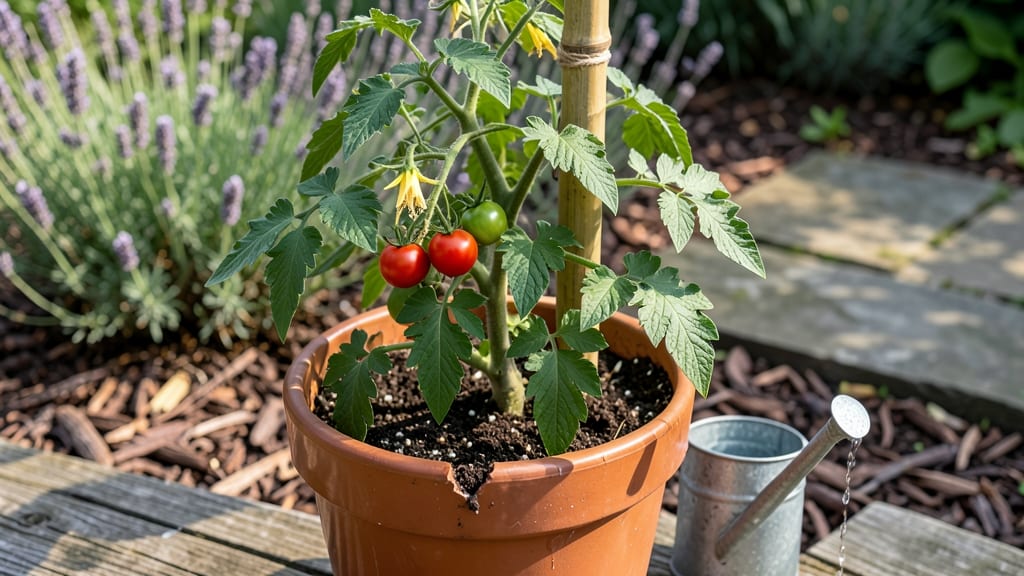
Caring for a potted tomato plant means sunlight, water, and support—three things that make all the difference between a thriving vine and a sad, leggy shadow. 🌱 I’ve watched my own container tomatoes go from struggling seedlings to producing pounds of fruit by mastering these basics, and I’ll show you exactly how to avoid the mistakes that kill so many potted plants.
First, your container needs at least 6-8 hours of direct sun daily—south-facing windowsills or balconies work best, but if you’re indoors, a grow light for 12+ hours can save your harvest.
The soil should stay moist but never soggy, which means watering when the top inch feels dry, not on a schedule. And don’t forget support: a sturdy cage or stakes early on prevents flopping vines that snap under fruit weight.
You’ll know you’re doing it right when your plant bursts with deep green leaves, flowers freely, and starts setting fruit within 8-10 weeks of transplanting.
The key is consistency—tomatoes in pots dry out faster and need more frequent feeding than in-ground plants, so I fertilize every 2 weeks with a balanced tomato food once flowers appear.
Common pitfalls? Overwatering (root rot is silent), skipping pruning (too many suckers = fewer tomatoes), or choosing containers that are too small (5+ gallons minimum). But once you’ve got these down, you’ll be harvesting sun-ripened tomatoes straight from your porch or windowsill—no garden required.
📚 In This Guide
- What you need
- Instructions
- Tips and common mistakes
- Wrapping up and next steps
What you need
- ● Potted tomato plant: Choose a healthy, disease-free determinate or indeterminate variety (e.g., 'Roma,' 'Cherry,' or 'Beefsteak').
- ● Container: A pot at least 5 gallons (18+ inches deep) with drainage holes. Larger is better!
- ● High-quality potting mix: A lightweight, well-draining blend (avoid garden soil). Look for mixes labeled for vegetables or tomatoes.
- ● Balanced fertilizer: A 10-10-10 or 5-10-10 NPK ratio (granular or liquid). Follow package instructions for application rates.
- ● Watering can or hose with a gentle spray nozzle: For even, deep watering without disturbing the soil.
- ● Support structure: Indeterminate varieties: A 6-foot tall stake or trellis (bamboo, metal, or wooden).
- ● Determinate varieties: A cage or small stake (3-4 feet) to support branches.
- ● Pruning shears or scissors: Sharp and clean for trimming suckers and dead leaves.
- ○ Mulch (optional but helpful): 2-3 inches of straw or shredded leaves to retain moisture and suppress weeds.
- ● Slow-release fertilizer tablets or spikes: For hassle-free nutrition.
- ● Epsom salt: A spoonful in the soil can boost magnesium for healthier foliage.
- ● Drip irrigation kit: For consistent watering, especially in hot climates.
- ● Plant ties or soft twine: To gently secure vines to supports.
- ● Compost or worm castings: To enrich the soil naturally.
- ● Pest control: Neem oil, insecticidal soap, or yellow sticky traps for aphids/pests.
- ● Grow lights (if indoors): A full-spectrum LED (12-16 hours/day) for low-light spaces.
Step-by-step instructions for caring for a potted tomato plant
Here’s how I keep my potted tomatoes thriving—no guesswork, just proven techniques for sun, water, and support.
🌱 Step 1: Select the Right Container and Soil Mix
Tomatoes need 5-gallon minimum containers for each plant—anything smaller restricts root growth and leads to stunted fruit. I use fabric grow bags because they prevent root circling and allow excess moisture to evaporate. If using traditional pots, ensure they have multiple drainage holes to avoid waterlogging.
Fill the container with a lightweight potting mix blended with 20% perlite or vermiculite for aeration. Avoid garden soil—it compacts and suffocates roots. I like to add a slow-release fertilizer (like 10-10-10) mixed into the soil at planting time for steady nutrition. The mix should feel damp but not soggy when squeezed—like a wrung-out sponge.
☀️ Step 2: Position for Maximum Sunlight
Tomatoes crave 6-8 hours of direct sunlight daily, but in pots, they need even more—at least 8 hours—to produce fruit. A south-facing patio or balcony works best, but if your space gets afternoon shade, supplement with a grow light for 12-14 hours daily. I’ve seen plants bolt (flower prematurely) when light drops below 6 hours, so monitor closely.
Rotate the pot a quarter turn weekly so the plant grows evenly toward the light. You’ll notice leaves stretching toward the sun? That’s a sign to move the pot closer or add a grow light immediately. Leggy stems mean insufficient light, and those plants rarely recover well.
💧 Step 3: Water Deeply and Consistently
Potted tomatoes dry out faster than in-ground plants, so I water deeply every 2-3 days—until water runs freely from the drainage holes. Check soil moisture by sticking your finger 1-2 inches deep; if it feels dry, it’s time to water. Overwatering causes blossom end rot, while underwatering leads to drooping leaves and cracked fruit.
Use lukewarm water (cold water shocks roots) and water at the base to avoid wetting leaves, which promotes disease. I mulch with 2 inches of straw to retain moisture and keep roots cool. Never let the pot sit in saucers of standing water—tomatoes hate soggy feet.
🪴 Step 4: Provide Sturdy Support Early
Tomato stems weaken as fruit develops, so install a cage or stake at planting time—don’t wait until the plant sags. I use 5-foot bamboo cages for indeterminate varieties (like Cherry Tomatoes) and 6-foot wooden stakes for determinate types (like Roma). Secure the main stem with soft plant ties (never wire, which cuts into stems).
As the plant grows, weave side shoots through the cage to distribute weight. If you miss this, you’ll end up with a toppled plant and bruised fruit. Prune suckers (the shoots growing between the stem and branches) weekly to redirect energy to fruit production. Strong support = heavier harvests and fewer broken stems.
✂️ Step 5: Prune and Fertilize for Continuous Growth
Pinch off the first flower cluster if your plant is still small—this encourages stronger stem and leaf growth before fruiting. Once established, I fertilize every 2 weeks with a balanced liquid fertilizer (like 20-20-20) diluted to half strength. Over-fertilizing leads to leafy growth at the expense of fruit.
Watch for yellowing leaves—a sign of overwatering or nutrient deficiency. If lower leaves yellow, it’s normal aging, but if new leaves yellow, flush the soil with water to leach excess salts. Prune diseased or crowded foliage immediately to improve airflow. The goal? A plant that looks like it’s on vacation, not struggling.
Tips & tricks for thriving potted tomatoes
A few strategic moves can transform your potted tomatoes from struggling survivors to prolific producers. Here’s what I’ve learned after years of trial and error in my own container garden.
Light Management: The 8-hour minimum of sunlight requirement isn’t just about hours—it’s about intensity. If you notice leaves stretching dramatically toward the light (a condition called etiolation), your plant is begging for more. I’ve found that supplementing with a LED grow light for 2-3 hours in the morning can make up for afternoon shade, giving you that critical 12-14 hours of total light without overheating your space. Position the light just above the plant so leaves don’t burn, and keep it 6-12 inches away to avoid heat stress.
Soil Science: That 20% perlite or vermiculite isn’t just for aeration—it’s your moisture buffer. I’ve seen potted tomatoes go from thriving to wilted overnight when the perlite ratio drops below 15%. The key is creating pockets of air around roots while still holding moisture. When mixing your soil, think of it like baking a cake: you want a structure that holds together but still has room to breathe. Test your mix by squeezing a handful—it should hold its shape but leave fingerprints when released.
Support System: Installing that 5-foot bamboo cage or 6-foot stake at planting time isn’t just about preventing toppled plants—it’s about training your tomato to grow vertically from day one. I’ve noticed that plants with early support develop 20-30% stronger stems because they’re not fighting gravity from a horizontal position. When weaving side shoots through the cage, aim for a 45-degree angle—this creates natural support points and improves airflow between branches, reducing disease risk.
Watering Wisdom: The 2-3 day watering schedule works perfectly when your soil mix is right, but here’s the catch: container tomatoes in hotter climates (above 85°F) may need daily watering. Always check that 1-2 inch deep soil test—if it feels like a damp (not wet) sponge, you’re good. Pro tip: I water in the early morning to give leaves time to dry before evening, which dramatically reduces fungal diseases like early blight. And never, ever let those saucers fill up—root rot from sitting water is the silent killer of container tomatoes.
Pro Tips for Care For A Potted Tomato Plant
- A few strategic moves can transform your potted tomatoes from struggling survivors to prolific producers.
- Light Management: The 8-hour minimum of sunlight requirement isn’t just about hours—it’s about intensity.
- Soil Science: That 20% perlite or vermiculite isn’t just for aeration—it’s your moisture buffer.
Frequently asked questions
Got questions about keeping your potted tomato plant thriving? You’re not alone! Here are answers to the most common concerns—so you can grow juicy, homegrown tomatoes with confidence.
How much sunlight does a potted tomato plant really need?
A potted tomato plant needs 6–8 hours of direct sunlight daily. If your balcony or patio gets less, opt for a sun-loving variety like ‘Cherry Tom’ or supplement with a grow light. South-facing spots are ideal, but east or west works too—just rotate the pot weekly for even growth.
How often should I water my potted tomato plant?
Water when the top 1–2 inches of soil feel dry—usually every 2–3 days in hot weather. Overwatering causes root rot, so ensure pots have drainage holes. Morning watering prevents fungal issues, and mulch helps retain moisture. Stick your finger in the soil to check!
Why are my tomato leaves turning yellow?
Yellow leaves often mean overwatering, nutrient deficiency, or pests. Check the roots for rot (smelly, mushy soil = bad). Lack of nitrogen? Use a balanced fertilizer. Pests like aphids? Spray with neem oil. Prune yellowed leaves to redirect energy to fruiting.
Can I grow tomatoes in a small pot?
Yes! Just choose determinate varieties (bush types like ‘Patio’ or ‘Tiny Tim’) for 5-gallon pots. Indeterminate types (like ‘Sungold’) need at least 10 gallons and regular pruning. Use lightweight potting mix and support cages/stakes early. Dwarf varieties are perfect for balconies!
How do I protect my potted tomatoes from cold weather?
Tomatoes can’t tolerate frost (below 50°F/10°C). Move pots to a garage or covered porch at night. Use frost cloth or blankets for extra protection. If temps drop below 40°F (4°C), harvest ripe tomatoes and let the plant die back—it may return next season!
What’s the best fertilizer for potted tomatoes?
Use a balanced, organic fertilizer (like 5-5-5 or compost tea) every 2–3 weeks once flowering starts. Avoid high-nitrogen feeds—it boosts leaves over fruit. Fish emulsion or worm castings work great. Flush soil monthly to prevent salt buildup.
Wrapping up and next steps
Caring for a potted tomato plant is a rewarding journey that yields delicious, homegrown fruit with just a little patience and know-how! 🌱 By mastering the basics—like plenty of sunlight, consistent watering, and proper support—you’ll set your plant up for success.
Don’t forget to prune, fertilize, and stay vigilant against pests to keep your tomatoes thriving.
Now that you’re armed with these tips, why not take the next step? Try experimenting with different tomato varieties or even share your harvest with neighbors—nothing beats the pride of growing your own food! Happy gardening! 🍅✨