
How To
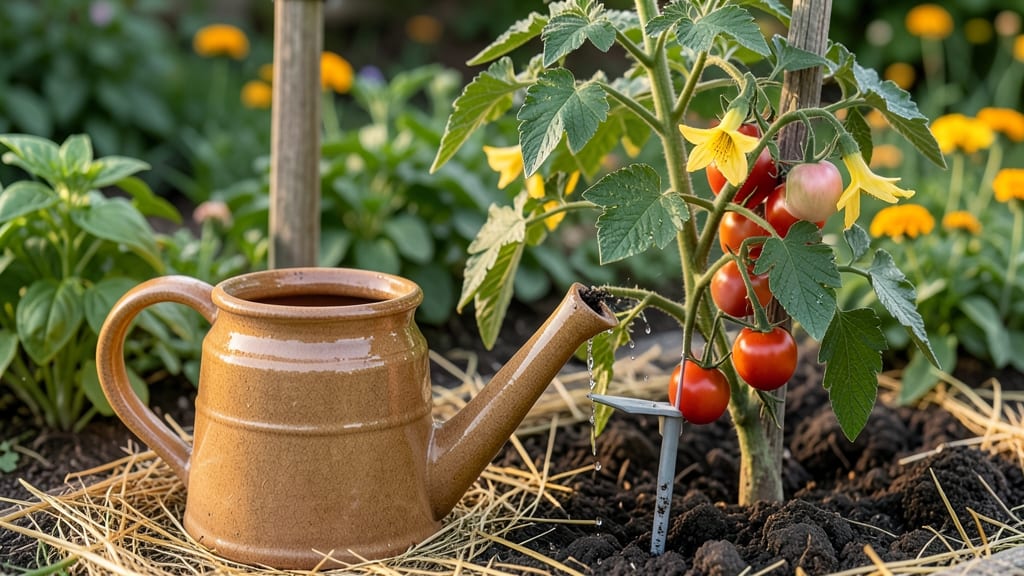
Watering a tomato plant correctly—about 1 to 2 inches of water per week—is the difference between a thriving 🍅 harvest and wasted effort.
Overwatering or underwatering your tomato plants can mean the difference between a bountiful harvest and wasted effort—yet most gardeners struggle to get the balance right.
The key lies in understanding how much water tomato plants truly need at each growth stage, from seedlings to fruiting. Too little, and your plants wilt; too much, and roots suffocate.
In this guide, I’ll break down the exact watering schedule by growth phase, signs of over- or underwatering, and seasonal adjustments to keep your tomatoes happy all season long.
Tomato plant watering schedule by growth stage: seedlings to fruit set
Getting your tomato plant's watering schedule right is everything—especially when moving from delicate seedlings to heavy fruit production. Too much water drowns roots, while too little stresses plants and causes blossom end rot.
The key is matching water volume to each growth phase, from seedling establishment to fruit set, while reading your plant's signals.
Tomatoes thrive on consistent moisture, but their needs shift dramatically as they grow. Seedlings need gentle hydration to avoid damping off, while mature plants demand deep watering to support heavy fruit loads.
Even the soil type (sandy vs. clay) changes how often you water—sandy soils dry faster, while clay holds moisture longer.
Here’s how I adjust my watering based on three critical stages, plus visual cues to avoid common mistakes:
| Growth Stage | Water Frequency | Depth per Watering | Soil Moisture Check | Key Signals |
|---|---|---|---|---|
| Seedlings (1-2 weeks) | Every 2-3 days | ½ inch (1.25 cm) | Top 1 inch dry | Wilted leaves = thirsty; yellowing = overwatered |
| Vegetative (3-6 weeks) | Every 3-4 days | 1-2 inches (2.5-5 cm) | Top 2 inches dry | Stunted growth = underwatered; drooping = overwatered |
| Flowering/Fruit Set (7-10+ weeks) | Every 2-3 days (daily in heat) | 2-3 inches (5-7.5 cm) | Top 3 inches dry | Blossom end rot = calcium deficiency; cracked stems = uneven water |
During the seedling stage, I water lightly but frequently to keep the soil evenly moist. Use a spray bottle or small watering can to avoid disturbing the delicate roots.
The goal is to mimic a consistent rain shower—never letting the soil dry out completely but avoiding soggy conditions that invite fungal diseases like damping off.
As plants enter vegetative growth (weeks 3-6), they develop deeper root systems and need more water. Here, I switch to deep watering—soaking the soil to a depth of 1-2 inches.
Check moisture by sticking your finger 1-2 inches into the soil; if it feels dry, it’s time to water. Morning watering is best to reduce evaporation and fungal risks.
When flowers appear and fruit sets (weeks 7-10+), watering becomes critical. Tomatoes need 1-1.5 gallons per plant weekly during hot weather, delivered as deep soaks.
I monitor soil moisture daily in summer, aiming to keep the top 3 inches consistently moist. Uneven watering causes blossom end rot or cracked fruit—so I use a moisture meter or my finger to gauge needs.
Environmental factors like temperature and humidity also dictate adjustments. In hot, dry climates, I water daily in the early morning, while in humid regions, I reduce frequency to prevent fungal issues. Mulching with straw or shredded leaves helps retain moisture and keeps roots cool.
Container-grown tomatoes dry out faster than in-ground plants. I water potted tomatoes every 2-3 days, ensuring water drains freely to avoid root rot. For in-ground plants, I rely on drip irrigation or soaker hoses to deliver water directly to the root zone, minimizing waste and disease risk.
Watch for visual cues like wilting leaves (underwatered) or yellowing lower leaves (overwatered). Adjust your schedule based on these signals—tomatoes communicate their needs if you pay attention. With the right watering routine, you’ll avoid common pitfalls and enjoy a bountiful harvest.
🌱
Signs of overwatering vs. underwatering tomato plants: what to watch for
Tomato plants are thirsty but delicate—they need consistent moisture, but too much or too little can ruin your harvest. Yellowing leaves, wilting, and blossom end rot are common red flags, but they often mean different problems.
Let’s break down the key visual clues so you can diagnose and fix watering mistakes fast.
In hot, dry climates, underwatering is more likely, while humid or rainy regions often see overwatering. Both extremes stress plants, but the symptoms differ. For example, drooping leaves in the morning (that perk up later) usually mean thirst, while leaves curling inward or mushy stems signal overwatering.
Pay attention to the soil texture too—it’s your best early warning system.
- 🌱 Yellow lower leaves (start at base)
- 🌱 Mushy, black stems at soil line
- 🌱 Blossom end rot on fruit (brown, sunken spots)
- 🌱 Fungal growth (white mold or mildew)
- 🌱 Slow growth despite warm weather
- 💧 Dry, crispy leaf edges
- 💧 Wilting leaves that stay droopy all day
- 💧 Premature fruit drop (small, unripe tomatoes)
- 💧 Cracked stems or soil pulling away
- 💧 Dull, grayish-green leaves
If your tomato leaves turn yellow but stay crisp, it’s likely underwatering. However, if they feel soggy or the plant smells musty, you’re overdoing it. Blossom end rot—those ugly brown spots on the fruit—is a classic overwatering (or calcium deficiency) sign.
The fix? Adjust your watering routine and side-dress with crushed eggshells for extra calcium.
For container-grown tomatoes, the stakes are higher—pots dry out 3x faster than in-ground soil. Check moisture by sticking your finger 1-2 inches deep; if it’s dry, water until it runs out the drainage holes.
In humid climates, water early in the day to prevent fungal diseases like early blight, which thrives in wet foliage.
Long-term, mulching is your best friend. A 3-inch layer of straw or wood chips keeps soil moist, regulates temperature, and reduces evaporation. Pair this with drip irrigation (not overhead watering) to deliver water directly to the roots—this cuts down on waste and disease risk.
Even in drought-prone areas, this combo ensures your plants get steady hydration without stress.
Remember: Tomatoes hate inconsistency. Aim for 1-1.5 inches of water per week, adjusting for rain or heatwaves. When in doubt, check the soil—healthy tomato roots thrive in moist but well-draining soil, not soggy or bone-dry conditions.
With these tips, you’ll spot problems early and keep your plants happy and productive all season. 🌱