
Watering
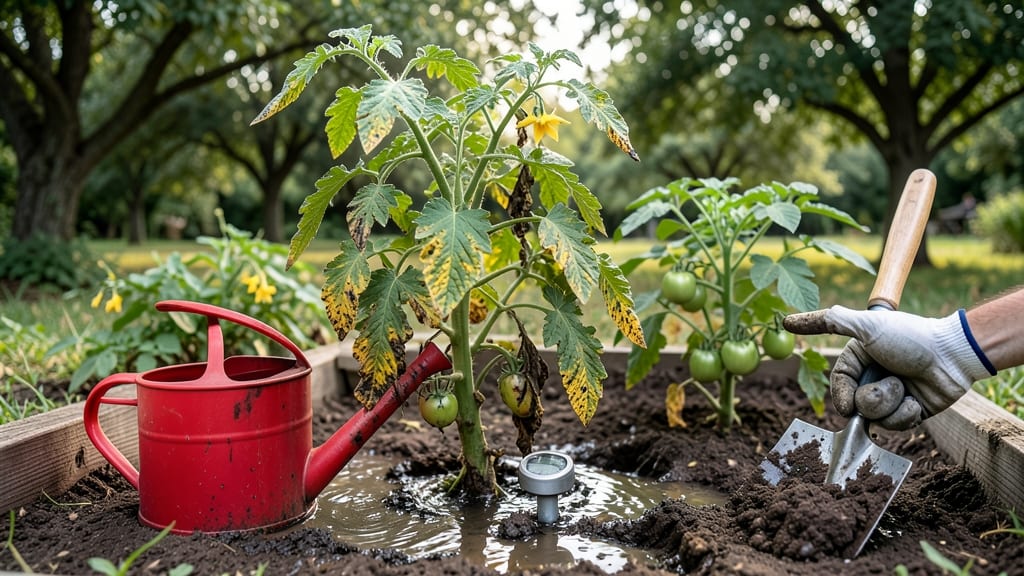
Your tomato plant too much water? Don’t panic—yellowing leaves and wilting are fixable. 🌱 I’ve saved more overwatered plants than I’d like to admit, and the key is acting fast before root rot sets in. The first sign is usually droopy leaves that don’t perk up, even after watering stops.
Start by letting the soil dry out completely—this might take a few days. Check the top inch of soil with your finger; if it’s still damp, hold off. Improve drainage by adding perlite or coarse sand to heavy soil, and consider repotting if your container lacks drainage holes.
Tomato roots need air too, so avoid soggy conditions at all costs.
Within a week, you’ll see new growth as the plant recovers. For long-term fixes, water deeply but less frequently—aim for 1-1.5 inches per week—and mulch to keep moisture even. Overwatered plants often bounce back faster than you’d expect, but prevention is easier than cleanup.
If your plant is severely wilted or smells rotten, it may need pruning to remove damaged roots. Most overwatered tomatoes recover fully, but speed matters—don’t wait until the stems turn mushy. With the right adjustments, you’ll be back to harvesting juicy tomatoes in no time.
Root Causes of Overwatered Tomatoes
When your tomato plant is drowning in water, it’s not just a matter of soggy soil—it’s a cascade of physiological stress that can stifle growth, invite pests, and even kill your plant if left unchecked.
Understanding the why behind overwatering is the first step to fixing the problem. Let’s break down the key factors that turn your garden oasis into a waterlogged nightmare.
Tomatoes thrive in well-draining soil because their roots need oxygen to absorb nutrients efficiently. When soil lacks proper drainage—whether due to heavy clay, compacted earth, or a lack of organic matter—excess water pools around the roots instead of draining away. This creates an anaerobic (oxygen-deprived) environment, which triggers:
- Root rot: Fungal pathogens like Phytophthora and Pythium flourish in waterlogged conditions, rotting roots and cutting off the plant’s water and nutrient supply. Symptoms: Wilting despite wet soil, black or mushy roots, and a foul odor.
- Nutrient lockout: Overwatering leaches essential nutrients (like nitrogen and potassium) out of the root zone, leaving your plant starved even as it sits in a puddle.
- Stunted growth: Without oxygen, roots can’t grow or function properly, leading to yellowing leaves (chlorosis) and weak stems.
Pro tip: 💡 Test your soil’s drainage by filling a container with soil and water, then timing how long it takes to drain. If it takes more than 2 hours, amend with perlite, sand, or compost to improve aeration.
Many gardeners assume tomatoes need constant moisture, but the truth is more nuanced. Overwatering—whether from frequent light waterings, automated sprinklers, or ignoring the plant’s actual needs—disrupts the soil’s moisture balance. Here’s how:
- Surface evaporation vs. deep hydration: Light, frequent watering encourages shallow root growth and evaporates quickly, forcing you to water again sooner. Tomatoes develop deep taproots; they need deep, infrequent watering (1–1.5 inches per week) to encourage resilience.
- Fungal infections: Wet foliage for prolonged periods invites diseases like early blight or late blight, which thrive in humid, waterlogged conditions.
- Salt buildup: Tap water often contains minerals that accumulate in the soil over time. Excess water dilutes these salts, but too much can create a toxic sludge, burning roots and leaves.
Actionable fix: 🎯 Water deeply early in the morning (before 10 AM) to allow foliage to dry by evening. Use a soaker hose or drip irrigation to target the soil, not the leaves.
Even the most attentive gardener can fall victim to overwatering when external factors skew the plant’s needs. Consider these environmental red flags:
- High humidity: Air saturated with moisture slows evaporation, making the soil stay damp longer. In tropical or rainy climates, tomatoes may need less water than in dry, breezy conditions.
- Shade or poor airflow: Plants in shaded spots or crowded gardens transpire less, so excess water lingers. Solution: Prune nearby plants and ensure 6+ hours of sunlight daily.
- Rainfall surprises: A sudden downpour can leave soil waterlogged for days. Fix: Use a rain gauge to track precipitation and adjust your watering schedule accordingly.
Pro tip: 🌡️ Monitor soil moisture with your finger: Stick it 1–2 inches deep. If it’s damp, wait. If it’s dry, water thoroughly.
Tomatoes in containers are especially vulnerable to overwatering because:
- Limited root space: Small pots dry out faster, but they also drain quickly—leading to frequent watering that never lets the soil settle. Roots suffocate in cycles of wet/dry stress.
- No room for amendments: Containers can’t be easily enriched with drainage materials like larger garden beds, trapping excess water.
- Evaporation imbalance: Pots lose moisture quickly in sun but can’t absorb it back, creating a feast-or-famine water cycle.
Fix it fast: ✨ Use containers with drainage holes and upgrade to a 5-gallon minimum for dwarf varieties (10+ gallons for indeterminate types). Elevate pots to improve airflow.
Now that you know the why, the next step is addressing the damage. Stay tuned for our quick fixes to rescue your tomato plant—and save your harvest!
Quick Fixes for Overwatered Tomatoes
If your tomato plants are drowning in too much water, don’t panic—there’s still time to save them! The key is acting fast to correct the damage while giving your plants the right care moving forward.
Below, we’ll break down the most common signs of overwatering and the exact steps to reverse the problem. Plus, we’ll share pro tips to keep your tomatoes thriving long after the crisis is over.
If your tomato leaves are turning yellow (especially the older ones) or wilting despite moist soil, overwatering is likely the culprit. Here’s how to fix it:
- 🔥 Step 1: Stop Watering Immediately
- Let the soil dry out completely before watering again. This helps prevent root rot and fungal diseases.
- 🍳 Step 2: Improve Drainage
- If your pots or garden bed don’t have drainage holes, add them or move potted plants to containers with drainage.
- Mix in perlite, sand, or compost (20-30%) to loosen heavy soil and improve airflow.
- 👨🍳 Step 3: Water Deeply but Less Often
- Water only when the top 1-2 inches of soil are dry. Use a moisture meter or stick your finger in the soil to check.
- Water early in the morning to reduce evaporation and fungal risks.
- 🌱 Step 4: Prune Damaged Foliage
- Trim yellow or mushy leaves to redirect energy to healthy growth. Use clean, sharp scissors to avoid spreading disease.
💡 Pro Tip: Mulch around your plants with straw or wood chips to retain moisture without overwatering—just keep it 2-3 inches away from the stem.
If your tomatoes develop dark, sunken spots (blossom end rot), overwatering—combined with calcium deficiency—is often to blame. Try these fixes:
- 🔥 Step 1: Test and Adjust Soil pH
- Ideal pH for tomatoes is 6.0–6.8. Use a soil test kit or vinegar (for alkaline soil) or sulfur (for acidic soil) to adjust.
- 🥘 Step 2: Add Calcium
- Sprinkle crushed eggshells, bone meal, or calcium-rich fertilizer around the base (not touching leaves).
- ⏰ Step 3: Water Consistently
- Avoid letting soil dry out completely or stay soggy. Aim for 1–1.5 inches of water per week, including rainfall.
- 🎯 Step 4: Use Drip Irrigation
- Water at the base of the plant (not the leaves) to prevent fungal issues and ensure even moisture.
✨ Pro Tip: If you’re using well water, it may lack calcium. Switch to rainwater or add a calcium nitrate supplement for faster results.
If your tomato plant’s stems feel soft or spongy, root rot may have set in. This is an emergency—follow these steps:
- 🔥 Step 1: Remove the Plant (If Potted)
- Gently take the plant out and trim away black, mushy roots with sterilized scissors.
- 🍳 Step 2: Repot in Fresh, Dry Soil
- Use a well-draining mix (50% potting soil, 30% perlite, 20% compost) and a clean pot with drainage holes.
- 👨🍳 Step 3: Let Soil Dry Between Waterings
- Wait until the soil is completely dry before watering again. Reduce frequency to every 3–4 days (or less in humid climates).
- 🔪 Step 4: Apply Fungicide (If Needed)
- Spray with a copper-based fungicide or hydrogen peroxide (3%) to kill fungal pathogens.
💡 Pro Tip: If your plant is beyond saving, take cuttings from healthy stems and propagate them in fresh soil to start over.
Once your tomatoes are back on track, keep these habits to avoid future overwatering:
- 📊 Check Soil Moisture Daily – Use a moisture meter or the finger test (insert 1–2 inches deep).
- 💪 Water at the Right Time – Morning (6–10 AM) is best to reduce evaporation and fungal growth.
- 🥗 Use Self-Watering Systems – Drip irrigation or soaker hoses deliver water directly to roots without oversaturating.
- 🍎 Avoid Over-Mulching – Keep mulch 2–3 inches away from the stem to prevent rot.
- 🎯 Choose the Right Containers – If growing in pots, pick fabric grow bags or terracotta for better airflow.
With these fixes, your tomato plants should bounce back in 1–2 weeks—just give them time to recover! 🍅🌿 For extra insurance, monitor their progress and adjust care as needed. Happy growing!
Frequently asked questions
How do I know if my tomato plant has too much water?
Look for these telltale signs: yellowing leaves (especially lower ones), wilting despite damp soil, or black/mushy stems. If the soil stays soggy for more than 24 hours or smells foul, your plant is definitely overwatered. Check the roots—healthy ones are firm and white, while rotted roots are dark and mushy.
Can I save a tomato plant with root rot from overwatering?
Yes, but act fast! Remove the plant from wet soil, trim away black/mushy roots, and repot in fresh, well-draining mix. Water only when the soil is completely dry (every 3-4 days), and use a fungicide if needed. With proper care, new roots will grow in 2-3 weeks.
How often should I water tomato plants to avoid overwatering?
Aim for 1-1.5 inches of water per week, including rainfall. Water deeply in the morning (6-10 AM) so foliage dries by evening. For containers, check soil moisture daily—water only when the top 1-2 inches are dry. Adjust frequency based on heat/humidity (less in rain, more in dry climates).
What's the best way to improve drainage for overwatered tomato plants?
Add perlite, coarse sand, or compost (20-30%) to heavy soil to loosen it. For containers, ensure drainage holes exist and use a mix of potting soil, perlite, and compost. Elevate pots off the ground and consider fabric grow bags for better airflow. If in-ground, mound soil to create a slight elevation.