
Companion Plants
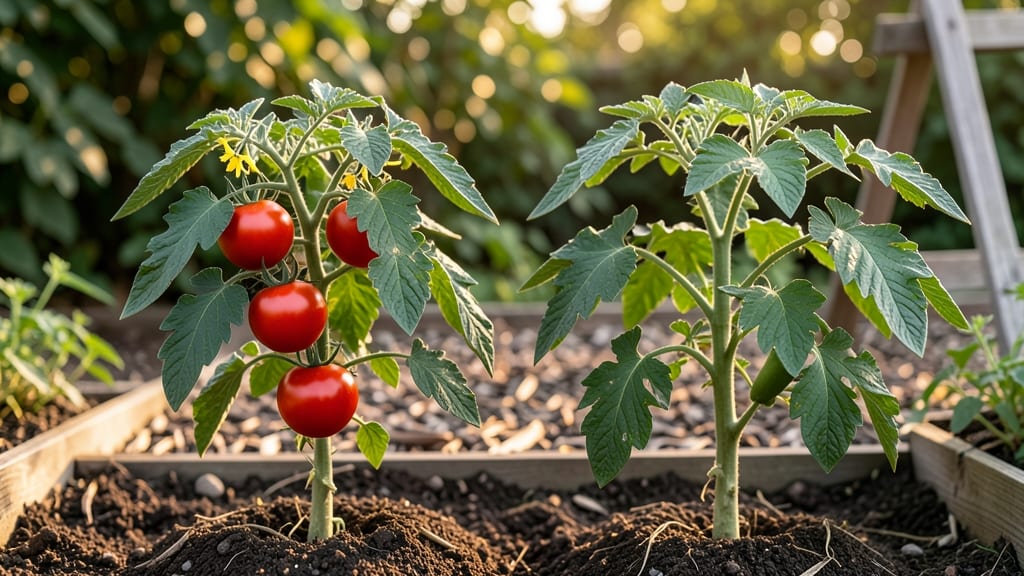
You don't need two tomato plants to produce fruit—most common varieties are self-pollinating, meaning their flowers contain both male and female reproductive parts. While gentle shaking or brushing can improve fruit set, cross-pollination between plants enhances yields and genetic diversity in heirloom types.
Tomatoes rely on wind or insects to transfer pollen between flowers, but their flowers are designed to self-pollinate when conditions are right. 🌱 The key is ensuring proper environmental factors—like consistent sunlight and moderate temperatures—since these directly impact flower development and pollen viability.
Many gardeners find that heirloom varieties, which often have larger flowers, benefit most from cross-pollination, while hybrid varieties tend to be more self-sufficient.
For single-plant setups, I recommend hand-pollination techniques like lightly tapping flower clusters with a small brush or even your finger. This mimics natural wind pollination and can significantly boost fruit production, especially in cooler or indoor growing conditions where pollinators are scarce.
The right growing conditions—like proper spacing and balanced fertilization—play just as crucial a role as having multiple plants.
💡 In This Article
- How Tomato Pollination Works Naturally
- Maximizing Tomato Fruit Production Without Two Plants
How tomato pollination works naturally
Tomato flowers contain both male and female reproductive parts in a structure called a perfect flower, meaning they can self-pollinate without needing another plant.
The male parts, called stamens, produce pollen that lands on the female part, the pistil, which holds the ovary that will develop into fruit. This process is triggered by vibrations—whether from wind, bees, or even gentle shaking—which releases pollen from the stamens onto the pistil's sticky surface.
The success of this process depends heavily on environmental factors. Tomatoes thrive in temperatures between 70-85°F, as extreme heat or cold can damage pollen viability.
Humidity also matters: too much moisture can cause pollen to clump, while dry conditions may reduce its stickiness. 🌡️ In ideal conditions, a single tomato plant can produce 10-20 pounds of fruit per season, proving that cross-pollination isn't strictly necessary for production.
However, heirloom varieties often have larger flowers with more pollen, making cross-pollination more beneficial for maximizing yields.
Here's what happens when pollination fails: flowers may drop off without setting fruit, or the resulting tomatoes might be small and misshapen. This is common in greenhouses or indoor setups where natural pollinators are absent.
The good news is that tomatoes are incredibly resilient—they'll often compensate by producing more flowers to increase the chances of successful pollination. This adaptability is why gardeners can still get a bountiful harvest from a single plant with the right care.
Cross-pollination between plants introduces genetic diversity, which can lead to stronger disease resistance and larger fruit in heirloom varieties. For example, a Brandywine tomato (an heirloom) will produce more uniform, high-quality fruit when pollinated by another Brandywine plant compared to a single isolated plant.
However, hybrid varieties like Celebrity tomatoes are bred to be self-sufficient, making them ideal for small-space growers who can't dedicate multiple plants.
One fascinating detail is how tomato flowers are designed to self-pollinate even without human intervention. Their stamens are positioned to brush against the pistil as the flower opens, a mechanism called autogamy.
This built-in redundancy means that even if you forget to shake your plants, nature has a backup plan. Still, a little human help—like tapping the flowers with a small paintbrush—can dramatically increase fruit set, especially in cooler weather when pollen production slows.
For gardeners working with limited space, understanding this natural process is empowering. It means you don't need to sacrifice yield by growing two plants—just focus on creating the right conditions for your single tomato to thrive.
The key is paying attention to flower health, temperature consistency, and occasional manual assistance when needed. 🌱