
Pruning
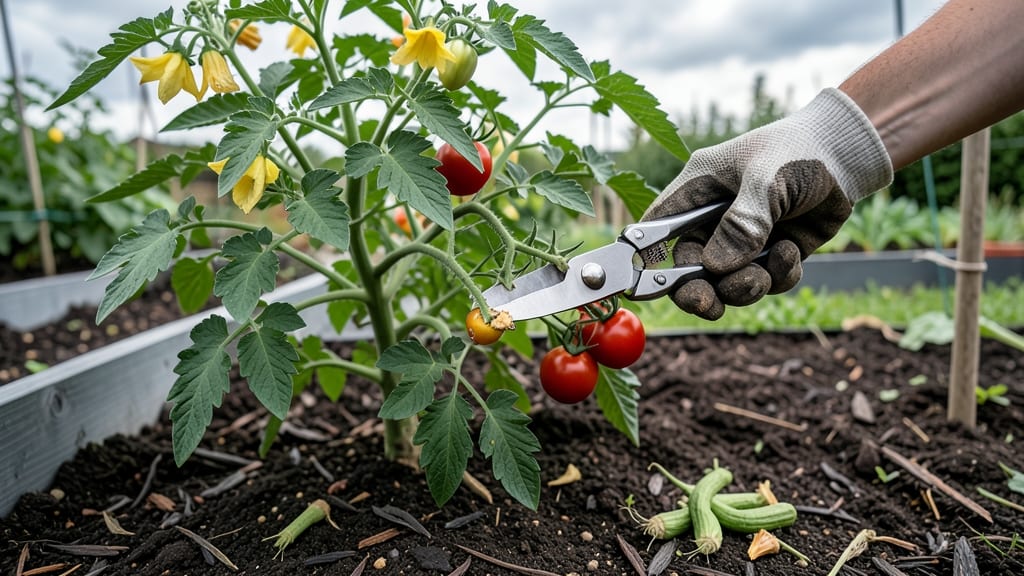
Do you need to trim tomato plants? The answer is a resounding yes—it’s the secret to bigger, healthier fruit (and fewer problems). 🌱 I spent years growing tomatoes without pruning, ending up with leggy plants and half the harvest I could’ve had.
The right cuts redirect energy from wild growth to juicy, ripe tomatoes waiting for your plate. You’ll need sharp pruners, a sunny day (tomatoes hate damp cuts), and about 15 minutes to inspect your plants.
The goal is simple: remove anything stealing energy from fruit production—suckers, diseased leaves, and overcrowded branches. Most gardeners skip this step, but pruned plants yield 20-30% more tomatoes with fewer pests and better air circulation.
Start when plants hit 12-18 inches tall, focusing on suckers (those little shoots between stems and leaves). Pinch them off early, and you’ll see thicker stems and more blossoms. Avoid cutting into main stems—just snip the side growth. The result?
Plants that focus their energy where it counts: on plump, flavorful tomatoes instead of extra foliage. This works for both indeterminate (vining) and determinate (bush) tomatoes, though determinate types need less aggressive pruning.
Whether you’re a first-timer or a seasoned grower, these cuts make all the difference between a decent harvest and a bountiful one. Let’s get those pruners ready!
📚 In This Guide
- What you need
- Instructions
- Tips and common mistakes
- Wrapping up and next steps
What you need
- ● Sharp pruning shears or bypass pruners – Look for sterilized, bypass-style shears (avoid anvil pruners to prevent crushing stems).
- ● Clean, sharp garden scissors or knife – For smaller cuts (e.g., suckers). A backup if your pruners aren’t sharp!
- ● Rubbing alcohol (70% or higher) or bleach solution – 1 part bleach to 9 parts water to sterilize tools between cuts.
- ○ Gloves (optional but recommended) – Nitrile or leather gloves to protect from thorns and sap.
- ● Garden twine or plant ties – For staking or securing pruned plants (if needed).
- ● Pruning saw – For thick, woody stems (rare in tomato plants but useful for older varieties).
- ● Disinfectant spray (e.g., hydrogen peroxide) – To clean cuts and prevent disease.
- ● Mulch (straw or shredded leaves) – To protect soil and retain moisture after pruning.
- ● Label markers – If you’re experimenting with different pruning techniques on multiple plants.
- ● ✅ Healthy tomato plants – Prune only when plants are established (4–6 weeks after transplanting) and disease-free.
- ● ✅ Good weather – Choose a cloudy day or prune in the early morning/evening to reduce stress on the plant.
- ● ✅ Patience! – Pruning is a gradual process—don’t overdo it in one session.
When and how to prune tomato plants for maximum fruit production
Pruning tomato plants isn't just about aesthetics—it's a strategic way to channel energy into fruit production while preventing disease. Here's how to do it right without hurting your harvest.
✂️ Step 1: Identify the Right Time to Start Pruning
Wait until your tomato plants reach 12-18 inches tall before pruning—this ensures they've established a strong root system. I always start when the plant has 5-7 true leaves and one visible flower cluster. Pruning too early stresses young plants, while waiting too long means you miss the window to redirect energy toward fruit production.
Look for suckers—those small shoots growing in the leaf axils (where leaves meet the stem). These are your first targets. They compete with your main stem for nutrients, so removing them early gives your plant more resources to develop larger, healthier fruit. Use clean, sharp pruners to avoid tearing the stem.
✂️ Step 2: Remove Suckers Correctly to Avoid Damage
Pinch or cut suckers off just above the leaf node where they emerge. Never leave a stub—this prevents rot and disease. I twist suckers between my thumb and forefinger for small ones, but for larger ones, I use my pruners. The goal is to make the cut clean and precise, so the plant can heal quickly.
Focus on suckers below the first flower cluster—these are the most aggressive and will drain energy from your developing fruit. Leave suckers above the first cluster alone; they can help support additional branches later. You'll know you're doing it right when you see more flowers and fruit forming within 2-3 weeks of consistent pruning.
✂️ Step 3: Prune Indeterminate Varieties for Airflow and Light
If you're growing indeterminate tomatoes (the vining types that keep producing all season), prune to remove lower leaves that touch the soil. These leaves trap moisture, creating ideal conditions for early blight and other fungal diseases. Strip leaves off up to the first flower cluster, then taper your pruning as you move upward.
Leave 2-3 main stems if your plant is vigorous—this balances support and fruit production. For smaller or less robust plants, stick to one main stem to avoid overburdening the plant. You'll notice better air circulation around the plant, which reduces disease risk and encourages stronger, more flavorful fruit.
🌱 Step 4: Adjust Pruning for Determinate Varieties
Determinate tomatoes (bush types) don’t need heavy pruning—they produce fruit in one flush and stop growing once they set their main crop. Instead, focus on removing diseased or yellowing leaves to keep the plant healthy. Cut back only the lowest leaves that touch the ground, as these are the most prone to rot.
For determinate varieties, pruning is more about maintenance than growth redirection. You’ll see fewer but larger tomatoes on these plants, so avoid over-pruning. If you do prune, do it early in the season to encourage a sturdy framework for fruit-bearing. Never prune after the first fruit sets—this can reduce your harvest.
⏰ Step 5: Time Your Final Pruning for Late-Season Boosts
In late summer, reduce pruning to let the plant focus on ripening existing fruit. Stop removing suckers 4-6 weeks before your first frost date—this gives the plant time to mature its crop. Instead, focus on removing only diseased or pest-damaged foliage to keep the plant productive until the end of the season.
You’ll know you’ve timed it right when your plants slow their vine growth but continue to ripen fruit. This is the plant’s natural shift into its final production phase. If you prune too late, you risk stunting fruit development just as it’s reaching maturity. Watch for color changes in the fruit—this is your cue to let the plant focus on ripening rather than new growth.
Tips & tricks for pruning tomato plants like a pro
Here's what nobody tells you about pruning—these tricks make all the difference between a decent harvest and a bumper crop.
Timing is Everything: The 12-18 inch height guideline in Step 1 is your golden window—any earlier and you stunt root development, any later and you miss prime energy redirection. I've seen gardeners prune too late and watch their plants struggle to recover. Look for that first flower cluster as your cue: it means the plant has shifted focus from leaves to fruit, making pruning most effective.
The Sucker Strategy: When removing suckers in Step 2, focus on the angle of your cut. Always make the snip just above the leaf node where the sucker emerges—this prevents disease entry points. I learned this the hard way after watching pruned stems rot. For stubborn suckers, I use my fingers to gently twist them off while supporting the main stem with my other hand to avoid tearing.
Variety Matters: Determinate tomatoes in Step 4 need a completely different approach than indeterminate varieties. For bush types, resist the urge to prune aggressively—you're not trying to shape them like vines. Instead, think of pruning as light maintenance: remove only the lowest leaves that touch soil and any diseased foliage. This keeps their energy focused on that single fruit flush without overstressing the plant.
Seasonal Adjustments: That 4-6 week window before frost in Step 5 is your late-season lifesaver. I've seen gardeners prune right up until frost and end up with green, unripe tomatoes. The key is watching for color changes in the fruit—when they start turning from green to their mature hue, that's your signal to back off on pruning and let the plant focus on ripening what's already there.
Pro Tips for Do You Need To Trim Tomato Plants
- Here's what nobody tells you about pruning—these tricks make all the difference between a decent harvest and a bumper crop.
- Timing is Everything: The 12-18 inch height guideline in Step 1 is your golden window—any earlier and you stunt root development, any later and you miss prime energy redirection.
- The Sucker Strategy: When removing suckers in Step 2, focus on the angle of your cut.
Frequently asked questions
Got questions about trimming tomato plants? You’re not alone! Here are answers to the most common concerns—whether you’re a first-time gardener or just looking to refine your technique.
Do all tomato plants need pruning?
Not necessarily! Indeterminate varieties (like cherry tomatoes) benefit from pruning to improve airflow and fruit production, while determinate types (like Roma or bush tomatoes) usually don’t need trimming—they produce fruit all at once and grow in compact shapes. Focus on pruning if your plants look crowded or diseased.
When is the best time to trim tomato plants?
Start pruning when plants are about 12–18 inches tall, removing suckers (side shoots) that grow between the main stem and branches. Do it early in the morning to reduce stress on the plant. Avoid heavy pruning late in the season—it can stunt fruit development before harvest. Think of it like giving your plant a haircut: little and often!
What happens if I don’t trim my tomato plants?
Unpruned plants may still produce fruit, but you could face fewer, smaller tomatoes due to limited sunlight and airflow. Overcrowding also increases the risk of diseases like blight or pests like aphids. Plus, pruning directs energy to fruit growth instead of leafy vines. It’s like skipping leg day—you’ll still get results, but not your best!
Can I trim tomato plants too much?
Yes! Over-pruning (removing more than ⅓ of the foliage) can stress the plant, reduce photosynthesis, and lower fruit yield. Leave enough leaves to keep the plant shaded (especially for green tomatoes) and avoid exposing fruit to too much sun, which can cause sunscald. Aim to balance growth and fruit production—think Goldilocks, not Dr. Jekyll.
What should I do with the pruned branches?
Don’t toss them! Use pruned branches to mulch the base of the plant (to retain moisture), compost them, or even propagate new plants if they’re healthy. If disease is present, dispose of them in the trash (not the compost) to prevent spreading. Every part of the plant has a purpose—even the “waste”!
Wrapping up and next steps
So, do you need to trim tomato plants? The answer is a resounding yes—if you want bigger, healthier fruit and a thriving plant! 🌱 Pruning isn’t just about aesthetics; it’s about directing energy where it matters most.
Whether you’re a seasoned gardener or just starting, a little strategic trimming can make all the difference in your harvest.
Now that you’re armed with the when, why, and how, it’s time to grab those shears and get pruning! Start small—even just a few cuts can make a world of difference.
And remember, every expert was once a beginner, so don’t stress over perfection. Happy gardening, and here’s to a bounty of juicy, homegrown tomatoes! 🍅✨