
Companion Plants
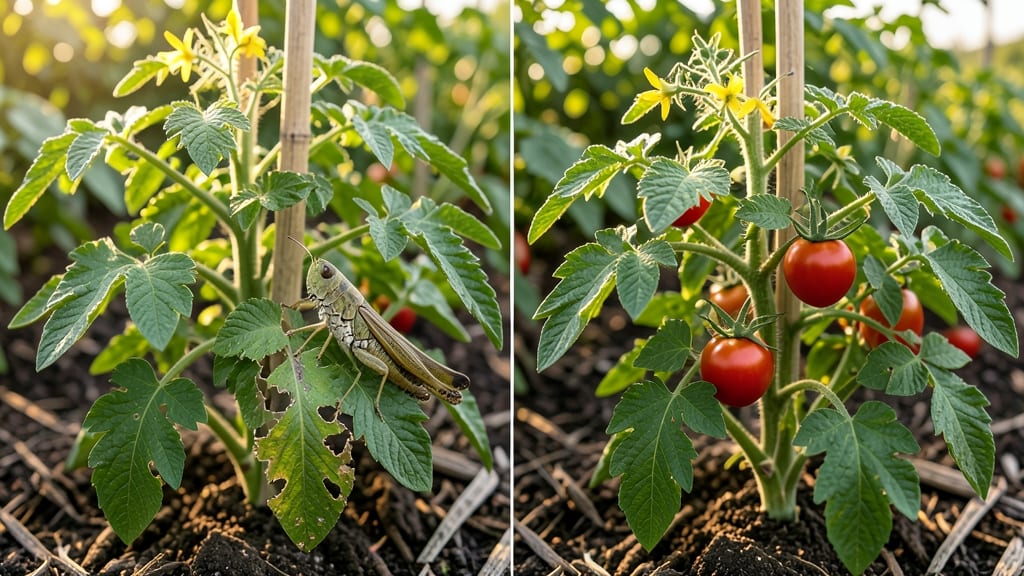
Grasshoppers do eat tomato plants, targeting leaves, stems, and fruits, leaving jagged edges and skeletonized foliage. They’re particularly aggressive during warm, dry weather and can severely stunt plant growth if unchecked.
Grasshoppers are notorious for their voracious appetites, and tomato plants are a prime target because of their tender foliage and juicy fruit. 🌱 These insects use their powerful mandibles to chew through leaves, creating irregular holes that resemble lacework, while their feeding can also cause fruits to develop unsightly scars.
The damage often appears overnight, making it especially frustrating for gardeners who've invested time in cultivating healthy plants. Warm, dry conditions trigger their feeding frenzy, as they seek out stressed plants with higher water content.
To protect your tomato harvest, consider planting companion crops like marigolds or basil, which naturally repel grasshoppers. 💛 For more severe infestations, neem oil or insecticidal soap sprays can be effective when applied in the early evening.
Physical barriers like row covers also work well during the hoppers' most active periods, typically late spring through summer.
💡 In This Article
- How Grasshoppers Damage Tomato Plants and What Triggers Their Feeding
- Natural and Chemical Grasshopper Control Methods for Tomato Gardens
How grasshoppers damage tomato plants and What triggers their feeding
Grasshoppers attack tomato plants using their powerful, scissor-like mandibles that can slice through both soft leaves and tender stems. Their feeding pattern creates jagged edges and skeletonized foliage—where only the leaf veins remain—because they consume everything except the tougher vascular structures.
The damage often starts at the leaf margins and progresses inward, creating a distinctive "windowpane" effect on larger leaves. 🔥 What makes tomatoes particularly appealing is their high water content (about 94% in ripe fruit) and soft, succulent tissue, which provides easy nutrition for these insects.
Their preference for tomatoes isn't random—grasshoppers are drawn to plants that are already stressed by environmental factors. During warm, dry conditions (above 80°F/27°C), tomato plants become more vulnerable because their leaves lose moisture and become less tough.
Grasshoppers can detect these stressed plants through chemical cues, making them prime targets. Studies show that drought-stressed tomato plants experience 30-50% more damage from grasshoppers compared to well-watered ones, as the insects find them easier to consume.
What makes this damage particularly destructive is how quickly it escalates. A single adult grasshopper can consume its body weight in plant material daily, and nymphs (young grasshoppers) are even more aggressive. Their feeding not only removes foliage but also reduces photosynthesis, weakening the plant's ability to produce fruit.
In severe cases, entire tomato plants can be defoliated within 7-10 days if left unchecked, leading to stunted growth and poor yield. 💫 The most critical feeding periods occur during late spring and summer when grasshopper populations peak.
Interestingly, grasshoppers also target tomato fruits, leaving behind irregular, ragged holes that make the produce unmarketable. Unlike some pests that bite cleanly, grasshoppers' chewing action creates messy wounds that can invite secondary infections. The damage is most noticeable on green tomatoes, where the skin is thinner and more vulnerable.
Even if the fruit remains on the vine, the scars often persist even after ripening, making visual appeal a major concern for gardeners.
Understanding the feeding triggers is key to prevention. Grasshoppers are most active during daylight hours (10 AM to 4 PM) when temperatures are highest, and they prefer open, sunny areas where they can easily spot vulnerable plants.
Their mobility means they can quickly move between gardens, so early intervention is crucial. 🌟 The combination of heat, drought, and plant stress creates the perfect storm for grasshopper outbreaks, making proactive measures essential for protecting tomato crops.