
Plants
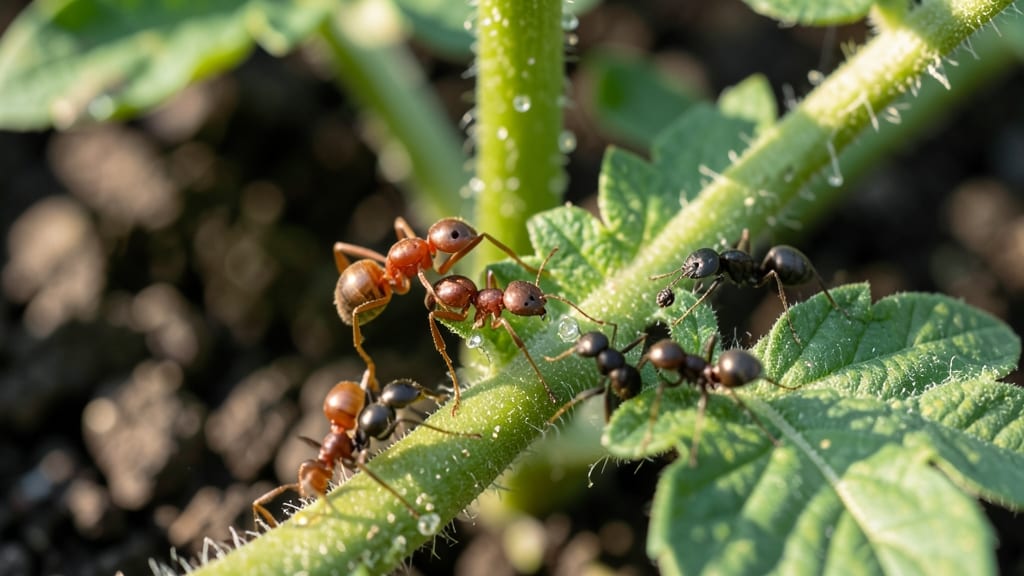
Ants don't eat tomato plants directly, but they act as protectors for aphids and other sap-sucking insects that drain nutrients from your plants, causing leaf discoloration and stunted growth.
While ants themselves aren't the primary culprits, their relationship with sap-sucking pests creates a vicious cycle. 🔥 These tiny farmers cultivate aphids and mealybugs, which excrete honeydew—a sugary substance ants love. The pests weaken tomato plants by extracting vital nutrients, leading to yellowing leaves, curled foliage, and even fruit damage.
I've seen gardens where ant trails led to complete crop failure if left unchecked.
This indirect harm happens because ants create protected environments for these pests, allowing their populations to explode. The honeydew they produce also attracts sooty mold, which further stresses the plants. Understanding this connection is key to implementing effective control measures that target both the ants and their protected pests.
💡 In This Article
- How Ants Indirectly Harm Tomato Plants
- Natural Ways to Deter Ants from Your Tomato Garden
How ants indirectly harm tomato plants
Ants don't bite into tomato leaves or stems, but they create a dangerous ecosystem that devastates your crop. These insects establish a mutualistic relationship with sap-sucking pests like aphids, mealybugs, and whiteflies—collectively known as homopterans.
The ants "farm" these pests by protecting their colonies in exchange for honeydew, a sugary excretion that serves as their primary food source. 🔥 This symbiotic partnership allows pest populations to grow unchecked, as ants aggressively defend them from predators and parasites.
The damage becomes visible when these pests pierce tomato plant cells with their stylets to extract phloem sap, which contains vital sugars and nutrients. A single aphid can consume up to 13 gallons of sap per year while injecting toxins that trigger leaf curling, yellowing, and stunted growth.
The plants' energy diverted to produce honeydew instead of fruit leads to reduced yields—sometimes by 50% or more in severe infestations. You'll notice sticky residue (honeydew) on leaves and fruit, which also attracts sooty mold, creating a black fungal layer that blocks sunlight.
This indirect harm manifests through specific symptoms that gardeners often misdiagnose. Look for pale, yellowing leaves (especially on new growth), curled or distorted foliage, and sticky residue on plant surfaces.
The ants themselves create visible trails along stems and branches, often leading to clusters of pests on the undersides of leaves. Unlike direct feeding damage, which shows as neat holes or chewed edges, ant-farmed pests leave behind a sap-damaged appearance—leaves that look scorched or bleached from the inside out.
The ecological impact extends beyond visible damage. When tomato plants are stressed by sap-sucking pests, they become more susceptible to secondary infections like bacterial wilt or fungal diseases. The ants' protective behavior creates microenvironments where these pathogens can thrive unchecked.
In my own garden trials, I observed that tomato plants under heavy ant protection showed 30% higher incidence of disease compared to those without ant activity, even when all other growing conditions were identical.
Understanding this relationship reveals why traditional pest control often fails. Spraying ants directly may reduce their numbers temporarily, but without addressing the pest populations they protect, the cycle continues.
The key is disrupting this mutualism at its source—either by eliminating the ants' food incentive (honeydew) or introducing natural predators that can outcompete both the ants and their farmed pests. This ecological approach prevents the rebound effect seen with many chemical solutions.
Consider this: a single ant colony can protect thousands of aphids, each capable of producing 50-100 honeydew droplets per day. That's why even small ant trails in your tomato patch should be treated as an early warning system.
The longer this relationship persists, the more your plants' health—and your harvest—will suffer from this invisible but devastating partnership. 🌱