
Plants
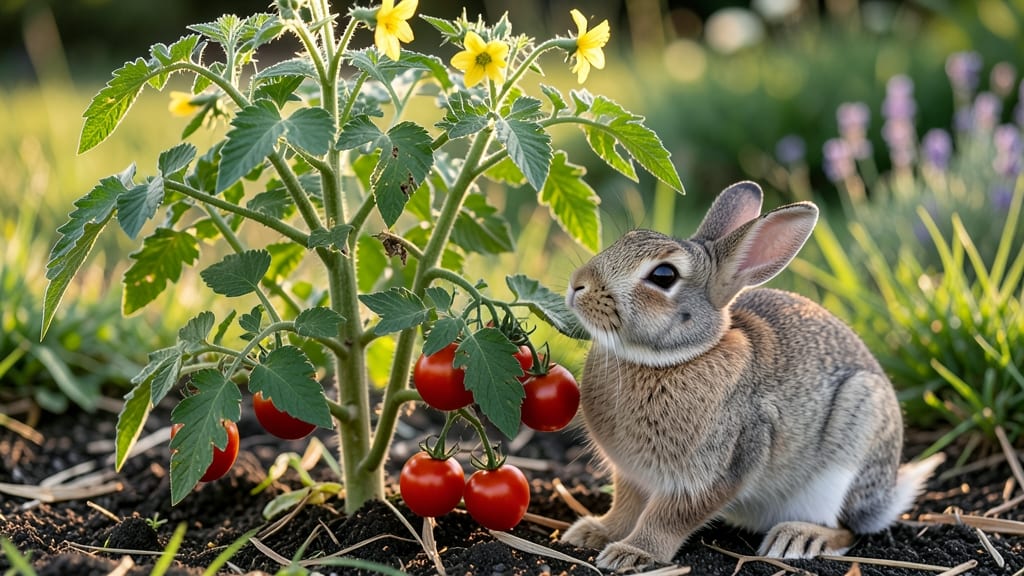
Yes, bunnies eat tomato plants, often going after leaves, stems, and occasionally fruits, which can severely stunt growth or even kill young plants. Their appetite depends on the tomato variety, with tender new growth being their favorite target.
Rabbits are drawn to tomato plants primarily because of their soft, nutrient-rich foliage. 🐰 The young, tender leaves and stems contain high moisture and protein levels that make them irresistible to these herbivores.
Unlike some garden pests, rabbits don't just nibble—they can completely defoliate plants, leaving them vulnerable to disease and unable to produce fruit. What's particularly concerning is their ability to detect stressed plants, which makes newly transplanted seedlings especially high-risk targets.
This damage isn't just cosmetic—it can have long-term consequences for your garden. When rabbits target the stems, they create open wounds that invite fungal infections. Even partial leaf damage reduces the plant's ability to photosynthesize effectively, leading to weaker vines and smaller yields.
The good news is that understanding their feeding patterns allows gardeners to implement targeted protection strategies before significant damage occurs.
💡 In This Article
- Why Rabbits Target Tomato Plants: Plant Preferences and Damage Patterns
- Effective Rabbit-Proofing Strategies for Tomato Gardens
Why rabbits target tomato plants: plant preferences and damage patterns
Rabbits are drawn to tomato plants because of their high moisture content and tender texture, which makes them easier to digest than mature, fibrous plants. 🌱 Young tomato leaves contain up to 90% water and are rich in nitrogen, which rabbits crave for their protein needs.
The scent profile also plays a role—tomatoes release volatile organic compounds when damaged, which rabbits detect as a signal of fresh, vulnerable vegetation. This is why newly transplanted seedlings or recently pruned plants become immediate targets.
The damage pattern follows a predictable sequence: rabbits first strip leaves from the top down, creating a distinctive "windowpane" effect where only the tougher veins remain. 🐇 Next, they gnaw on stems, which can sever the plant's vascular system, causing wilting within 24-48 hours.
Interestingly, they rarely eat ripe tomatoes (which contain solanine, a mild toxin), but will go after green fruit when other options are scarce. Varieties like 'Cherry Tomatoes' are particularly vulnerable because their compact growth habit makes them easier for rabbits to access and consume.
What makes this damage especially problematic is how quickly it escalates.
A single rabbit can consume 1-2 pounds of vegetation daily, and their grazing triggers a stress response in tomato plants that reduces fruit set by up to 40%. 🌿 The first visible signs are irregular holes in leaves or stems with clean, sharp edges (unlike insect damage, which is jagged).
Severe cases show complete defoliation, stunted growth, and blackened stems from fungal infections entering through rabbit bites.
Not all tomato varieties suffer equally—determinate types (which grow to a fixed height) tend to recover better than indeterminate varieties because their bushier structure makes them harder for rabbits to completely devour. 🌿 However, even resistant varieties can be overwhelmed during peak rabbit activity (dawn and dusk).
The key is recognizing early signs: look for fresh droppings (small, round pellets) near your plants, as this indicates active foraging. This behavioral pattern helps gardeners predict and prevent damage before it becomes irreversible.
Understanding these preferences allows for targeted protection.
For example, placing protective netting over young plants during their most vulnerable 4-6 week growth phase can prevent irreversible damage. 🔥 The combination of nutritional appeal, scent detection, and physical vulnerability makes tomato plants a prime target—but with the right knowledge, gardeners can outsmart these persistent foragers.