
Plants
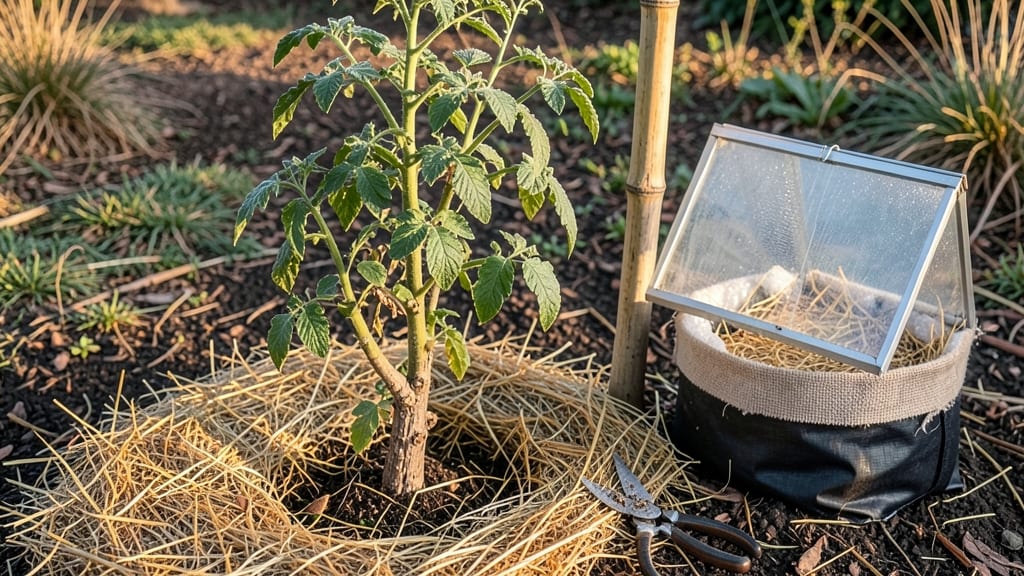
You can overwinter tomato plants, but it demands selecting cold-resistant varieties, using insulated containers, and maintaining precise indoor conditions to protect them from freezing and maintain growth through winter.
Overwintering tomatoes isn't just about keeping them alive—it's about preserving their vigor for a stronger spring harvest. 🌱 The biggest hurdle is their tropical origins; most varieties can't tolerate temperatures below 40°F, which triggers stress or death.
That's why I always choose Siberian or Cherokee Purple types—they handle cooler temps better than standard varieties. The key is mimicking their natural dormancy cycle while preventing root rot from overwatering in dim winter light.
Once you've got the right plants, the real work begins with creating a controlled environment. A south-facing window provides 6+ hours of indirect light daily, but you'll likely need supplemental grow lights to prevent leggy growth.
I've found that maintaining 65-75°F daytime temps and 55-60°F nights, along with 40-50% humidity, gives my plants the best chance. The container size matters too—too small roots get crowded, while oversized pots dry out faster.
💡 In This Article
- Scientific Factors Affecting Tomato Plant Overwintering Success
- Step-by-Step Guide to Overwintering Tomato Plants Indoors
Scientific factors affecting tomato plant overwintering success
Tomatoes are tropical plants with a natural sensitivity to cold, making overwintering a biological challenge. Their optimal growth range is 70-85°F, and temperatures below 50°F trigger metabolic slowdowns that weaken the plant's immune response.
The cold sensitivity stems from their thin, non-woody stems and broad leaves, which freeze at 32°F—a threshold most home environments can't consistently maintain during winter. 🌡️
The real science lies in photosynthesis disruption. Indoor winter light provides only 10-30% of summer sunlight intensity, causing plants to stretch unnaturally toward light sources—a condition called etiolation. This weakens cell walls and reduces chlorophyll production by up to 40% compared to outdoor summer conditions.
The root systems also face stress: containerized roots develop a compact growth pattern that becomes prone to waterlogging when combined with reduced evaporation rates in winter's dry indoor air.
Dormancy requirements present another hurdle. Unlike perennials, tomatoes don't naturally enter true dormancy—they continue slow growth if conditions permit. This means they'll keep consuming nutrients even in winter, depleting stored reserves.
The solution lies in mimicking their natural photoperiod response: providing 12-14 hours of light daily prevents the hormonal shifts that would trigger premature flowering or leaf drop.
Humidity becomes a critical factor indoors where central heating typically drops air moisture to 20-30% (compared to outdoor summer levels of 50-70%). This causes leaf edges to crisp and stomata to close, reducing gas exchange by 30% and increasing susceptibility to fungal pathogens like powdery mildew.
The root zone suffers similarly, as lower humidity increases evaporation rates from soil surfaces.
Container selection affects moisture retention through capillary action. Smaller pots (1-gallon size) dry out faster, while larger containers (> 5-gallon) maintain moisture longer but risk waterlogging.
The ideal balance is 3-5 gallons per plant, using containers with drainage holes to prevent anaerobic conditions that trigger root rot. The material matters too: porous fabric pots allow 15% better oxygen exchange than plastic, but require more frequent watering.
What most gardeners overlook is the plant's circadian rhythm disruption. Artificial grow lights with 6500K color temperature (mimicking sunlight) are essential, but the light spectrum must include red and blue wavelengths for proper photosynthesis and flowering signals.
Without these, plants develop weak stems and poor fruit set—even when temperatures and humidity are ideal. 🌱