
Plants
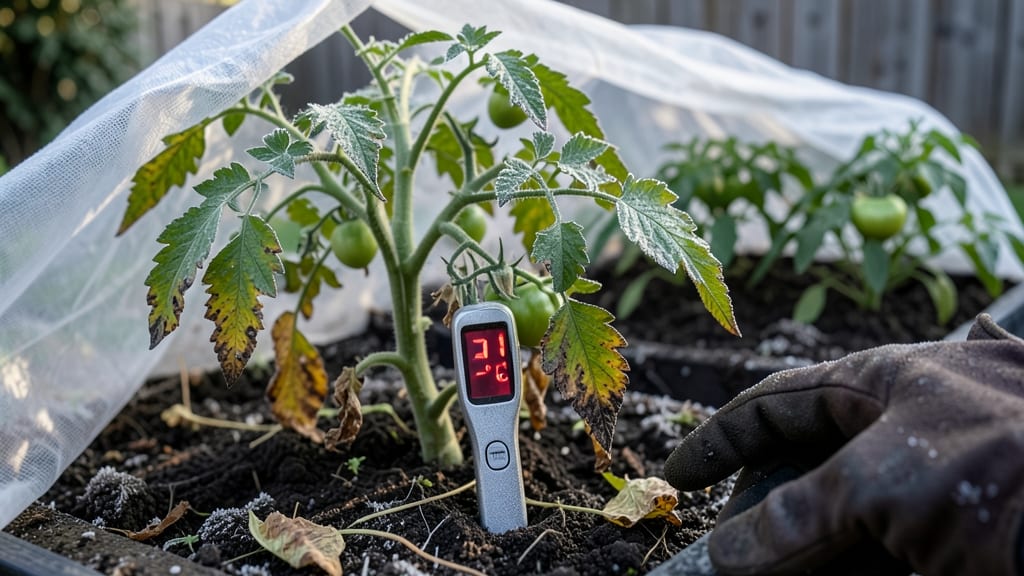
Tomato plants can survive a frost down to 28°F (-2°C), but temperatures dropping below 32°F (0°C) for extended periods will cause irreversible damage like blackened foliage and stunted growth. Young plants and tender varieties are especially at risk, while established plants may bounce back after a brief cold snap.
Your tomato plants' resilience depends on how long the cold lasts and their growth stage. 🌱 A hard frost (below 28°F) can kill seedlings outright, but mature plants might recover if the freeze is short-lived.
The key is watching for crispy leaf edges or brown spots—early signs the plant is struggling. I’ve seen gardeners cover plants with frost cloth or old blankets during overnight dips, which can make all the difference when temperatures hover near that critical 32°F threshold.
Even if your plants survive, frost stress weakens them, making them more susceptible to disease. That’s why I always check soil moisture after a freeze—dry soil can’t buffer temperature swings as well as damp earth.
For severe damage, prune back affected leaves and monitor for new growth, which often signals recovery.
💡 In This Article
- Frost Damage Thresholds for Tomato Plants by Stage
- Protecting Tomato Plants from Frost: Practical Recovery Steps
Frost damage thresholds for tomato plants by stage
Tomato plants experience frost damage through a process called cold acclimation failure, where ice crystals form inside plant cells. Seedlings and young plants lack the protective compounds (like sugars and proteins) that mature plants develop, making them vulnerable even at 32°F (0°C).
The critical threshold is 28°F (-2°C) for brief exposures, but damage begins at 30°F (-1°C) if frost lingers for more than 2-3 hours. 🌱
Mature tomato plants can tolerate 28°F (-2°C) better due to thicker stems and deeper root systems that stabilize soil temperature. However, their leaves—especially the younger, more tender ones—still suffer first. At 25°F (-4°C), cell membranes rupture, causing blackened patches that spread rapidly.
The stems may survive if protected, but unchecked frost can kill the entire plant within 6-8 hours at this temperature.
Duration matters as much as temperature. A 1-hour dip to 28°F (-2°C) might leave only superficial damage, while 4+ hours at 30°F (-1°C) can stunt growth for weeks. This is why gardeners in Zone 7-8 often lose entire crops during unexpected late-spring frosts, even when plants appear healthy beforehand.
The root zone stays slightly warmer, but above-ground foliage bears the brunt.
Variety also plays a role. Determinate tomatoes (bush varieties) handle frost slightly better than indeterminate types because their compact growth concentrates energy in the main stem. However, neither type develops frost resistance naturally—they rely on environmental conditions.
Some gardeners swear by vermilion or cherry tomato varieties for their faster recovery, but all tomatoes share the same cellular vulnerability to ice formation.
What most people overlook is how frost affects the plant's photosynthetic capacity. Even if leaves appear intact after a near-miss frost, their ability to produce energy drops by 30-50% for 1-2 weeks due to damaged chloroplasts.
This explains why frost-stressed plants often produce smaller fruit or none at all, even with proper care afterward. 💫
To test frost resilience, observe leaf texture post-freeze: crispy edges mean superficial damage, while mushy, discolored patches signal deep cell death. The stem's flexibility is another clue—if it snaps easily, the plant's vascular system may have been compromised.
These visual cues help determine whether to prune aggressively or wait for natural recovery.