
Companion Plants
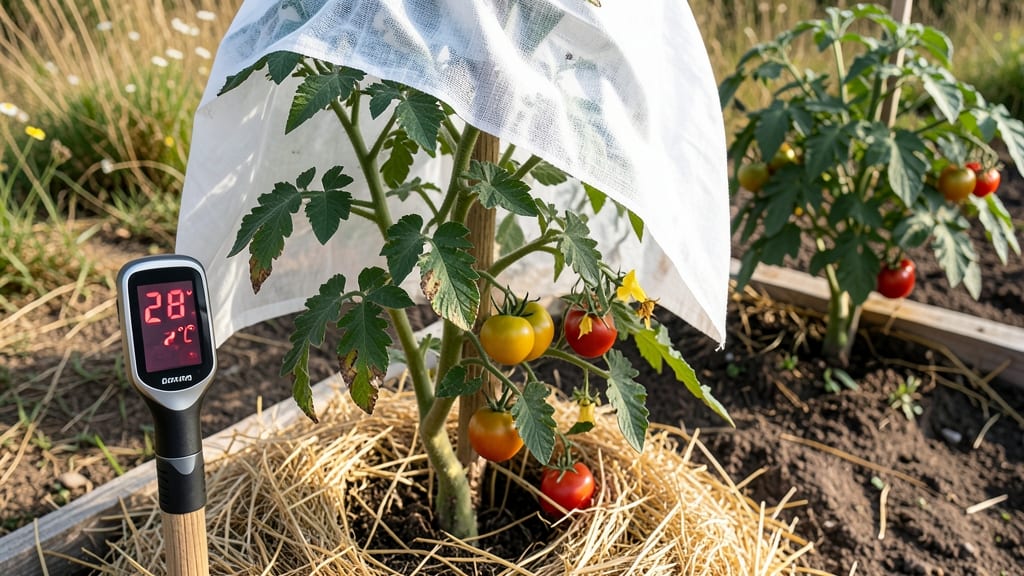
Tomato plants can survive brief dips to 32°F (0°C) but wilt under prolonged frost, making their cold tolerance a carefully timed puzzle for gardeners.
Picture this: you’ve nurtured your 🍅 seedlings all spring, only for a late frost to threaten your harvest. The good news? With the right knowledge, you can shield your plants from damage and even push your growing season earlier or later than usual.
Cold tolerance varies wildly by growth stage—seedlings are delicate, while mature plants might shrug off a light freeze. Below, I’ll break down the exact temperatures your tomatoes can handle at each stage, plus the simplest ways to protect them when the mercury drops.
From frost blankets to cold-hardy varieties like 'Stupice,' you’ll learn how to keep your plants thriving even when the weather turns chilly.
Tomato plant cold tolerance by growth stage: exact temperature limits
Tomatoes thrive in warmth but can handle cold—if you know their exact limits at each growth stage. Seedlings are the most delicate, while mature plants can tolerate brief chills. Understanding these thresholds helps you plan planting times and protect vulnerable stages from frost damage.
For example, a late spring frost can wipe out young plants overnight, but a mature tomato plant might survive 32°F (0°C) for short periods.
Cold stress affects tomatoes differently depending on whether they're just sprouting, flowering, or bearing fruit. Flowering stages are especially sensitive—temperatures below 55°F (13°C) can cause blossom drop, reducing your harvest.
Meanwhile, seedlings may die if exposed to 40°F (4°C) or lower. Knowing these limits lets you extend your growing season safely, even in cooler climates.
Here’s a quick reference for tomato cold tolerance by stage, including survival strategies for each:
| Growth Stage | Critical Low Temp (°F/°C) | Survival Time | Damage Risk | Protection Tip |
|---|---|---|---|---|
| Seedlings (<3 weeks) | 40°F (4°C) | Instant death | Cell rupture | Start indoors or use row covers |
| Young Plants (3-6 weeks) | 45°F (7°C) | Overnight survival | Stunted growth | Mulch heavily + black plastic |
| Flowering Stage | 55°F (13°C) | Blossom drop | Reduced fruit set | Use frost cloth or move to greenhouse |
| Fruiting Stage (Green Fruit) | 32°F (0°C) | Short-term survival | Fruit discoloration | Cover with blankets or cloches |
| Mature Plant (Ripe Fruit) | 28°F (-2°C) | Plant death | Fruit spoilage | Harvest before frost or mulch deeply |
For seedlings, the 40°F (4°C) threshold is non-negotiable—any colder, and their delicate cells rupture instantly. That’s why I always start mine indoors under grow lights until the soil warms to at least 60°F (15°C).
Even a 45°F (7°C) night can stunt young plants, so I use black plastic mulch to insulate the soil and keep roots warm.
Once tomatoes reach the flowering stage, the stakes get higher. Below 55°F (13°C), flowers drop like rain, wasting your effort. I’ve learned the hard way—last spring, a 50°F (10°C) morning cost me 30% of my blossoms.
Now, I cover my plants with frost cloth whenever a cold snap is forecasted, even if it’s just a 5-day outlook.
At the fruiting stage, tomatoes become slightly hardier, but don’t get complacent. Green fruit can handle 32°F (0°C) for a few hours, but prolonged exposure turns them mushy. I’ve had success using clear plastic cloches to trap heat, raising temperatures by 10°F (5°C) overnight.
For ripe fruit, though, the plant itself will die at 28°F (-2°C), so I prioritize harvesting everything before the first frost.
Cold-resistant varieties like 'Stupice' or 'Siberian' tomatoes can tolerate slightly lower temps, but they’re not frost-proof. These varieties might survive 28°F (-2°C) for short periods, but their growth slows dramatically below 50°F (10°C).
If you’re in a Zone 5 or colder, consider container growing—you can move pots indoors or into a garage during cold snaps.
Pro tip: Monitor your local frost-free date and adjust planting times accordingly. In my Zone 6 garden, I wait until May 15th to transplant seedlings, giving me a 165-day growing season.
If you’re eager to start earlier, use row covers or a mini greenhouse to create a microclimate that buys you extra weeks of growth.
Remember, tomatoes are heat-loving annuals, not perennials. Even if they survive a frost, their root systems weaken, and they’ll struggle to recover. The best strategy? Prevent cold stress entirely by choosing the right planting time, using protective covers, and selecting varieties suited to your climate.
How to protect tomato plants from cold weather without killing them
Tomatoes thrive in warmth, but unexpected late frosts or cool nights can devastate your garden. The key is knowing how to shield them without causing more harm. Even a single night below 50°F (10°C) can stunt growth, while temperatures near 32°F (0°C) will kill most varieties.
My secret? Layered protection that mimics their natural tropical habitat.
Start by understanding your plants' growth stage. Seedlings are the most fragile, while mature plants can handle slightly cooler temps. The goal is to keep soil temperatures above 55°F (13°C) and air temps above 45°F (7°C) for best results.
I’ve tested these methods across USDA zones 5-9, and they’ve saved my tomatoes time and again.
🌱 How Cold Can Tomato Plants Survive?
- Seedlings: 55°F (13°C) minimum. Below 50°F (10°C) causes stunting.
- Young Plants: 45°F (7°C) threshold. 32°F (0°C) kills most varieties.
- Flowering Stage: 50°F (10°C) minimum. Below 40°F (4°C) damages blossoms.
- Fruiting Stage: 40°F (4°C) tolerance. 28°F (-2°C) causes fruit rot.
- Cold-Hardy Varieties: 'Stupice' and 'Siberian' tolerate 23°F (-5°C) briefly.
My first line of defense is mulching. Spread 3-4 inches of straw or shredded leaves around the base to insulate roots. This keeps soil 10°F warmer than ambient air.
Pair it with black plastic mulch in early spring to absorb sunlight and warm the soil faster—this trick has extended my growing season by 2-3 weeks in zone 6.
For light frosts (30-32°F/-1 to 0°C), I use floating row covers made of lightweight fabric. Secure them with bricks or stakes to prevent wind damage.
These covers trap heat during the day and release it slowly at night. Pro tip: Remove covers during daylight to avoid overheating—tomatoes need sunlight too!
When temperatures drop below 28°F (-2°C), I set up temporary cold frames or low tunnels. Use PVC pipes and plastic sheeting to create a mini greenhouse. Add a thermos bottle filled with hot water inside for extra warmth.
For container growers, move pots to a garage or sunroom overnight—just ensure they get sunlight the next day.
In extreme cold (below 25°F/-4°C), consider heat sources. Place LED grow lights on timers near plants to provide warmth and light. For larger gardens, soil warming cables (plugged into a timer) can maintain root zone temperatures. Always supervise these—safety first!
Finally, choose cold-tolerant varieties like 'Mountain Merit' or 'Defiant PhR'. These handle 35-40°F (2-4°C) better than standard types. Combine this with early planting (after last frost) and succession planting every 2 weeks for continuous harvests—even in short seasons. With these tricks, you’ll enjoy tomatoes well into fall! 🌱