
Neem Oil
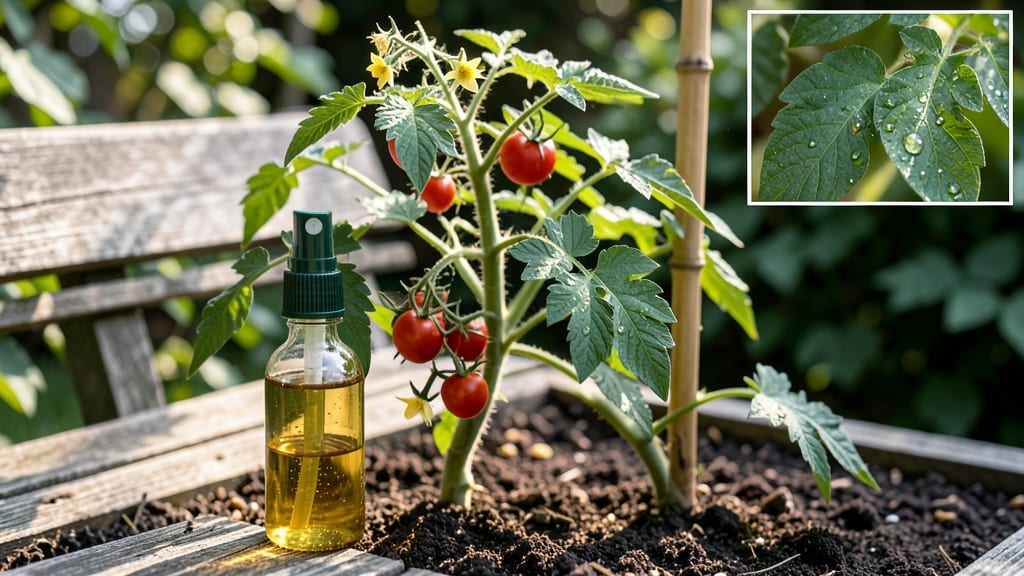
Yes, neem oil can be used on tomato plants safely as an organic fungicide and insect repellent when applied correctly, but always treat during early morning or late evening to protect beneficial pollinators and space applications 7-14 days apart from harvests to avoid residue accumulation.
Neem oil works by disrupting pests' life cycles through its active compound, azadirachtin, which interferes with their feeding and reproduction. 🌱 For fungal issues like early blight or powdery mildew, the oil creates a protective barrier on leaves while also inhibiting spore growth.
I've seen dramatic improvements in tomato plants within 3-5 days of consistent use, though it's crucial to avoid spraying during peak pollination hours to preserve bee activity.
The key to success lies in proper dilution—mix 1-2 teaspoons of neem oil per gallon of water with a mild surfactant like dish soap to help it adhere to plant surfaces.
Always use a sprayer with a fine mist setting and apply until leaves are thoroughly wet, focusing on both upper and lower surfaces where pests often hide. Overhead watering right after application can wash away the protective coating, so timing matters just as much as technique.
💡 In This Article
- Neem Oil’s Mechanism Against Tomato Plant Pests and Diseases
- Safe Neem Oil Application Guide for Tomato Gardens
Neem oil’s mechanism against tomato plant pests and diseases
Neem oil's power against tomato plant pests and diseases comes from its active compound, azadirachtin, which acts as a natural insect growth regulator. This compound disrupts the hormonal balance of insects like aphids, spider mites, and whiteflies, preventing them from molting properly and eventually killing them.
For fungal issues such as early blight or powdery mildew, neem oil works by creating a protective film on plant surfaces that inhibits spore germination and mycelial growth. 🌱 The oil also contains nimbin and gedunin, which have antifungal properties that help suppress fungal development at the cellular level.
The effectiveness of neem oil varies depending on the pest or disease. For example, it's particularly potent against soft-bodied insects like aphids, where a single application can reduce populations by 50-80% within a week.
Against fungal diseases, repeated applications every 7-14 days are necessary because neem oil doesn't provide residual protection longer than that. The oil's antifungal action is less aggressive than chemical fungicides but works well as a preventive measure when applied before symptoms appear.
This is why early detection and treatment are crucial for managing fungal issues in tomato plants.
What makes neem oil unique is its multi-faceted approach. It doesn't just kill pests on contact—it disrupts their life cycles, preventing future infestations. For instance, when applied to aphids, azadirachtin interferes with their feeding behavior, causing them to stop reproducing within 24-48 hours.
Meanwhile, the oil's antifungal properties create a hostile environment for fungal spores, reducing the likelihood of infection. This dual action makes neem oil an excellent choice for organic gardeners looking to manage both pests and diseases without resorting to synthetic chemicals.
However, it's important to note that neem oil's effectiveness depends on proper application timing. For example, applying it during hot, sunny days (above 90°F) can cause phytotoxicity, burning plant leaves due to the oil's concentration.
The best time to apply is during early morning or late evening when temperatures are cooler and humidity is higher, allowing the oil to adhere better to plant surfaces.
This timing also minimizes harm to beneficial insects like bees, which are most active during midday when neem oil is at its most potent.
Consider this real-world example: In a study conducted by the University of California, researchers found that neem oil reduced early blight severity in tomato plants by 60% when applied every 10 days throughout the growing season. The key was consistency—skipping applications led to a resurgence of fungal spores.
This demonstrates how neem oil's preventive capabilities can significantly improve plant health when used correctly. The oil's ability to both repel pests and inhibit fungal growth makes it a versatile tool for tomato gardeners.
One common misconception is that neem oil works immediately. In reality, its effects are gradual, typically taking 3-5 days to become noticeable. This is because azadirachtin and other active compounds need time to disrupt pest life cycles and inhibit fungal growth.
Patience and regular monitoring are essential for achieving the best results. For instance, if you notice aphids on your tomato plants, applying neem oil at the first sign of infestation can prevent a full-blown outbreak, whereas waiting until the plants are heavily infested may require multiple applications to regain control.