
Plants
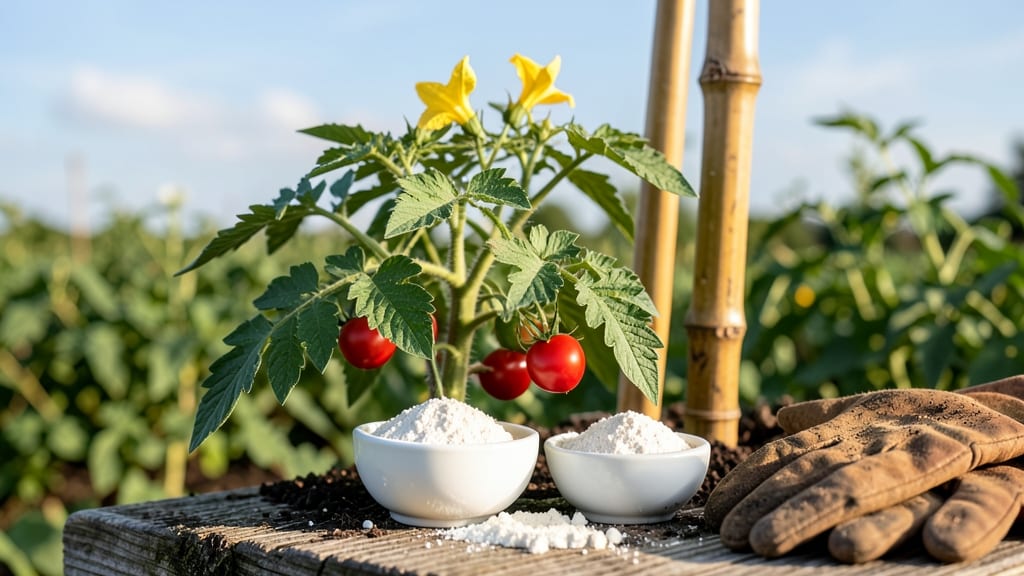
Calcium carbonate for tomato plants prevents blossom end rot by supplying essential calcium to developing fruits, especially in acidic or nutrient-deficient soils. Apply as a soil amendment or foliar spray during flowering and fruiting stages for best results.
Blossom end rot occurs when your tomato fruits lack calcium during rapid growth, causing those telltale black, sunken spots. 🌱 Calcium carbonate works by raising soil pH slightly, making calcium more available to plant roots—especially in sandy or acidic soils where calcium leaches away.
Unlike synthetic fertilizers, it’s a natural soil amendment that also helps balance pH over time, creating healthier growing conditions for your plants.
For best results, mix 1-2 tablespoons per gallon of soil before planting or top-dress around established plants during flowering. Foliar sprays (like a 1-teaspoon-per-gallon solution) work faster but require reapplication every 2-3 weeks. Pair it with organic matter like compost to boost calcium uptake even further.
💡 In This Article
- How Calcium Carbonate Corrects Blossom End Rot in Tomatoes
- Best Application Methods for Calcium Carbonate on Tomato Plants
How calcium carbonate corrects blossom end rot in tomatoes
Calcium carbonate works its magic primarily by neutralizing acidic soil conditions, which directly impacts how your tomato plants absorb calcium. When soil pH drops below 6.0, calcium becomes less available to plant roots because it binds tightly to soil particles.
This creates a deficiency that manifests as blossom end rot—the classic black, leathery spots on the blossom end of tomatoes. Calcium carbonate (CaCO₃) raises pH gradually, typically by 0.5-1.0 units per application, creating an optimal range of 6.0-6.8 where calcium solubility peaks.
The science gets even more interesting at the cellular level. Calcium ions act as "glue" for plant cell walls, particularly in rapidly growing fruit tissues. During flowering and fruiting, tomatoes need 10-20 parts per million (ppm) calcium in their tissue to maintain structural integrity.
When calcium levels drop below this threshold—often due to uneven watering or acidic soils—the cell walls weaken, leading to those unsightly lesions. Calcium carbonate provides a slow-release source that helps maintain consistent calcium availability throughout the plant's growth cycle. 🌱
What most gardeners don't realize is that calcium carbonate also improves soil structure over time. As it breaks down, it releases calcium while increasing soil porosity, which enhances root development. This dual action means healthier roots can better access existing calcium reserves in the soil.
The key is application timing: pre-planting incorporation works best for establishing proper pH, while mid-season applications target active calcium deficiencies during fruit development.
For visual learners, think of calcium carbonate as a pH "buffer" system. In acidic soils (pH < 6.0), calcium exists mostly as insoluble compounds that plants can't access. When you add calcium carbonate, it reacts with soil acids to form water-soluble calcium ions (Ca²⁺) that roots can absorb.
This process continues gradually, maintaining calcium availability throughout the growing season rather than providing a single spike like synthetic fertilizers. The result? Stronger cell walls and fewer blossom end rot symptoms.
Here's where it gets practical: calcium carbonate works best in combination with organic matter. Compost or well-rotted manure creates a "buffer zone" around roots where calcium remains more available. Without this organic component, calcium carbonate alone may not prevent rot in extremely sandy soils where nutrients leach away quickly.
Think of it as teaming up calcium carbonate with compost for a two-pronged attack on blossom end rot—improved pH AND enhanced nutrient retention.
One common misconception is that calcium carbonate will over-alkalize soil. In reality, it's remarkably stable: a typical application of 1-2 pounds per 100 square feet raises pH by just 0.5 units. This gentle adjustment is perfect for tomato plants, which thrive in slightly acidic to neutral conditions.
The slow-release nature means you won't see sudden pH spikes that could harm beneficial soil microbes or make other nutrients like iron less available.