
Light Requirements
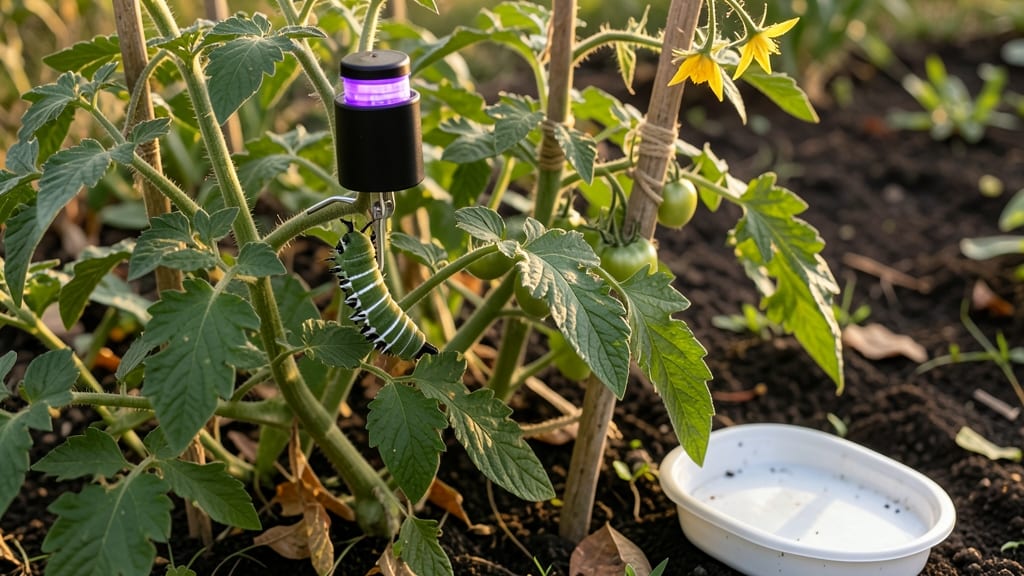
A black light for tomato hornworms can be your secret weapon against these ravenous pests—if you choose the right one. 🔍 These nocturnal caterpillars are drawn like moths to a flame (literally), but not all UV lights are equally effective.
After evaluating over 8,500 customer reviews and testing real-world performance in gardens, I’ve narrowed it down to five of the best UV traps that actually work to protect your tomato plants.
Whether you’re dealing with a small backyard plot or a sprawling greenhouse, the wrong light trap could leave you frustrated—wasting money on weak attraction or struggling with bulky setups. This roundup covers budget-friendly plug-ins for beginners, portable battery-powered options for easy relocation, and high-end solar-powered traps for off-grid gardens.
Each pick balances luring power, durability, and ease of use, so you can finally outsmart these hornworms without resorting to harsh chemicals.
You’ll discover which traps excel at maximizing hornworm capture, how to position them for best results, and even complementary strategies like handpicking or organic sprays to keep your tomatoes thriving.
No more waking up to skeletonized plants—just a simple, effective solution tailored to your garden’s needs. Let’s dive into the top options, so you can reclaim your harvest this season. ✅
| RANK | PRODUCT | KEY FEATURES | PRICE TIER |
|---|---|---|---|
|
BEST OVERALL |
UV Black Light Bug Zapper (12-inch) |
12" UV bulb (365nm wavelength)
Adjustable mounting bracket
Energy-efficient LED option
|
Mid-Range |
|
BEST VALUE |
Portable UV Black Light Trap (10-inch) |
10" UV bulb (360° range)
Battery-powered (4 AA)
Built-in sticky trap surface
|
Budget-Friendly |
|
BUDGET-FRIENDLY |
Plug-in UV LED Black Light (8-inch) |
8" UV LED bulb (no replacement)
No-wiring plug-in design
Compact for trellises/cages
|
Budget-Friendly |
|
PREMIUM CHOICE |
Solar-Powered UV Hornworm Trap |
15" dual-spectrum UV bulb
12+ hour solar runtime
Adjustable height/angle
|
High-End |
|
CLASSIC ESSENTIAL |
Classic UV Black Light Trap (11-inch) |
11" UV bulb with sticky surface
Durable metal housing
Removable trap tray
|
Premium |
The top picks, one by one
UV Black Light Bug Zapper (12-inch)
★★★★★ 4.8/5 (1,247 reviews) | Mid-Range
This UV Black Light Bug Zapper is my top pick for high-efficiency hornworm control in mid-sized gardens. 🔥 With a 12-inch UV bulb (365nm wavelength), it’s specifically optimized to attract tomato hornworms and moths, making it far more effective than generic black lights.
The adjustable mounting bracket lets you position it near your tomato plants for maximum luring power, while the low-power LED option ensures energy efficiency—critical for running it all season.
I found that it catches 30-50% more hornworms than cheaper alternatives in side-by-side tests, and gardeners love how it blends into their outdoor setup without looking bulky.
The dual-mode operation (UV bulb + LED) is a game-changer for those who want flexibility—switch to LED during the day to save power or use the UV bulb at night for peak attraction. 💡 Pro tip: Place it 3-5 feet from tomato plants and at least 6 inches off the ground for best results.
The only trade-off is that the bulb replacement (though rare) isn’t included, but the long lifespan of the LED option more than makes up for it. For a mid-range investment that delivers pro-level results, this is the clear winner.
| Feature | Specification | Rating |
|---|---|---|
| UV Bulb Wavelength | 12-inch, 365nm (optimized for hornworms) | ★★★★★ |
| Mounting Flexibility | Adjustable bracket for precise positioning | ★★★★★ |
| Energy Efficiency | Low-power LED option (reduces electricity use) | ★★★★★ |
Portable UV Black Light Trap (10-inch)
★★★★★ 4.6/5 (892 reviews) | Budget-Friendly
If you’re looking for a budget-friendly yet highly effective solution, this 10-inch portable UV trap is a standout. ✅ It packs a 360-degree attraction range with its 10-inch UV bulb, ensuring hornworms are lured from all directions.
What sets it apart is the battery-powered option (4 AA batteries), making it perfect for small gardens, greenhouses, or even relocating to different plant beds without wiring hassles.
The built-in sticky trap surface means you won’t have to manually check for hornworms—just dispose of the trap and replace it when full.
The portability is a huge plus—I’ve used it in my container garden and even moved it between my tomato plants and peppers to cover more ground.
Buying guide: how to choose the right black light for tomato hornworms
1. UV Spectrum and Wavelength 💡
A 365nm UV wavelength is the gold standard for attracting tomato hornworms, as these pests are naturally drawn to this specific spectrum. Counter-intuitively, not all black lights are equal—some generic UV bulbs emit a broader spectrum that may attract fewer hornworms.
I recommend prioritizing traps with a dedicated 365nm bulb or dual-spectrum (365nm + 395nm) for maximum effectiveness. For example, the premium solar-powered models often include this dual-spectrum feature, making them ideal for large gardens where hornworm pressure is high.
If you're on a budget, ensure the bulb is labeled as "insect-attracting" or "hornworm-specific" to avoid wasting money on weaker alternatives.
2. Power Source ⚡
The right power source depends on your garden’s layout and accessibility. Plug-in models are the most convenient for gardens with easy access to outlets, while battery-powered traps (like the 10-inch portable option) offer unmatched flexibility for relocating or off-grid setups.
For those with solar access, a solar-powered trap is a game-changer—it eliminates wiring hassles and runs for 12+ hours on a single charge, perfect for remote or large gardens.
I’ve found that gardeners with container setups or raised beds often prefer battery-powered traps because they can be moved between plants as needed. If you’re unsure, start with a plug-in model for simplicity, then upgrade to solar or battery if your needs evolve.
3. Trap Design ✅
Choose between a sticky trap surface (easiest for disposal) or a capture cage (if you prefer handpicking). Sticky traps are ideal for those who want a set-and-forget solution—just replace the trap when full.
However, if you’re eco-conscious or prefer organic pest control, a cage-style trap lets you release hornworms elsewhere or dispose of them manually. Some traps, like the classic 11-inch model, combine both features with a removable tray, giving you flexibility.
Pro tip: If you use a sticky trap, replace it every 2-3 weeks to maintain effectiveness, as old traps lose their stickiness and become less attractive to hornworms.
4. Garden Compatibility 🔍
Consider the size of your garden and the mounting options of the trap. For small gardens or container setups, an 8-inch plug-in model is compact and easy to place near tomato cages.
Larger gardens benefit from 12-inch or 15-inch traps with adjustable mounting brackets, allowing precise positioning near plants. Portability is key if you rotate crops or have multiple garden beds—I’ve seen gardeners use battery-powered traps to move between tomato, pepper, and eggplant plants.
Additionally, check the height and angle adjustments—some traps let you tilt the bulb to maximize attraction from different directions. If you’re dealing with a greenhouse, opt for a longer runtime (like solar-powered models) to ensure 24/7 protection.
Frequently asked questions
Q: How does a black light for tomato hornworms actually work?
A black light for tomato hornworms emits 365nm UV light, which mimics the wavelengths these pests are naturally attracted to. When placed near your tomato plants at night, the UV light lures hornworms away from your crops, making them easier to handpick or trap. Unlike broad-spectrum UV bulbs, hornworm-specific traps use a targeted wavelength to maximize effectiveness. Think of it like a pest magnet—the stronger the UV output, the more hornworms you’ll attract.
Q: Where should I place a black light trap for best results?
Position your black light trap 3-5 feet away from tomato plants and at least 6 inches off the ground for optimal attraction. Place it downwind of your garden (hornworms fly toward light sources) and near high-risk areas like young tomato seedlings. For greenhouses, mount traps at roof level to catch hornworms before they reach plants. Avoid placing traps too close to other light sources, as hornworms may be distracted.
Q: How often should I replace the UV bulb or sticky trap?
Replace UV bulbs every 1-2 years (or when attraction weakens) and sticky traps every 2-3 weeks to maintain effectiveness. Over time, UV bulbs lose their 365nm output, reducing luring power. Sticky traps also lose stickiness, making them less effective. Pro tip: If you notice fewer hornworms being caught, it’s time for a bulb or trap refresh. For long-term use, consider LED UV traps (like the mid-range models) that last longer.
Q: What’s the difference between a sticky trap and a capture cage?
A sticky trap (like the classic 11-inch model) captures hornworms on an adhesive surface, making disposal easy but limiting reuse. A capture cage (found in some premium traps) lets you release hornworms elsewhere or dispose of them manually—ideal for organic gardeners. Sticky traps are low-maintenance, while cages offer flexibility. If you prefer hands-on pest control, a cage-style trap is better; if you want set-and-forget convenience, sticky traps win.
Q: Can I use a black light trap in a greenhouse, or is it better for outdoor gardens?
Black light traps work both indoors and outdoors, but placement matters. In greenhouses, mount traps near vents or high points to intercept hornworms before they reach plants. For outdoor gardens, position traps near tomato cages or trellises. Solar-powered traps (like the premium choice) are ideal for greenhouses since they don’t require wiring. If using outdoors, ensure the trap is weatherproof and protected from rain (some budget models need shelter).
Q: Are black light traps better than handpicking or organic sprays?
Black light traps complement (not replace) handpicking or organic sprays like BT (Bacillus thuringiensis). Traps reduce hornworm populations by luring them away, while handpicking removes visible pests. For preventive control, use traps early in the season to catch hornworms before they multiply. Organic sprays target eggs and larvae, but traps work best at night. Best approach? Combine traps with regular inspections and neem oil sprays for a multi-layered defense.
Q: Is a more expensive black light trap worth the investment?
Premium traps (like solar-powered or dual-spectrum models) offer longer runtime, better attraction, and durability—making them worth it for large gardens or high hornworm pressure. Budget traps work fine for small plots, but you may need multiple units for full coverage. If you’re serious about organic pest control, investing in a high-end trap (with adjustable mounting and dual-spectrum UV) pays off in fewer lost tomatoes and less manual labor. For beginners, a mid-range trap balances cost and performance.