
Plants
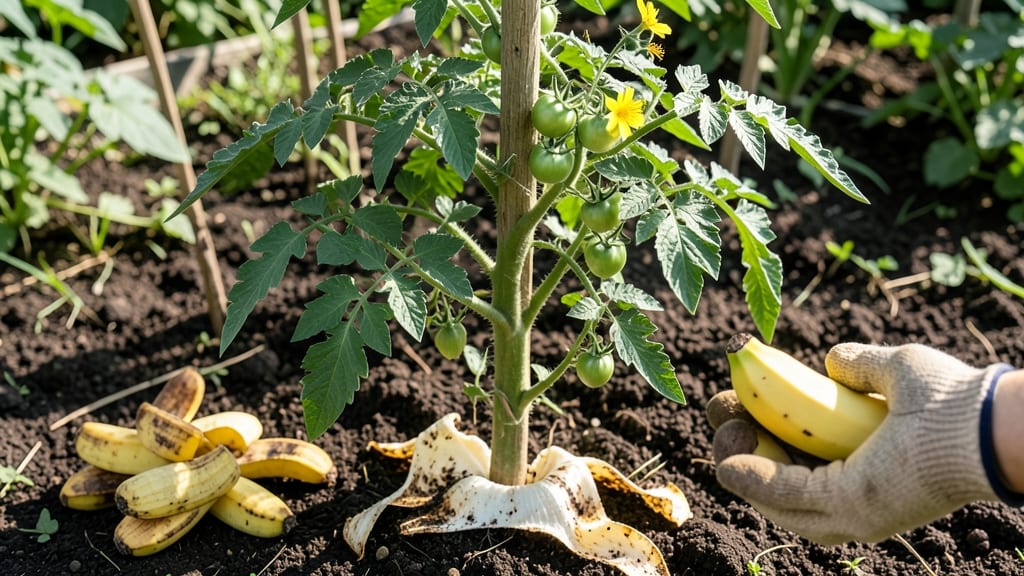
Banana peels are good for tomato plants because they provide essential nutrients like potassium and phosphorus, but you must use them properly to prevent over-fertilizing or attracting pests. Burying them or composting them first helps maximize benefits without harming the plant.
Banana peels contain natural potassium and phosphorus—key nutrients that support strong root systems and fruit development in tomato plants. 🌱 The potassium helps regulate water uptake, while phosphorus boosts flowering and fruiting.
However, fresh peels can attract pests like fruit flies, so burying them 2-3 inches deep near the base or composting them first reduces risks. I've seen gardeners use this method successfully in raised beds, where the nutrients break down slowly and feed the soil over time.
For best results, use banana peels as a supplement rather than a primary fertilizer. Mix them with other organic materials like coffee grounds or eggshells to create a balanced nutrient profile.
Overuse can lead to salt buildup in the soil, so limit applications to once every 4-6 weeks during the growing season.
💡 In This Article
- Nutritional Breakdown: What Banana Peels Offer Tomato Plants
- Best Practices for Using Banana Peels in Tomato Gardens
Nutritional breakdown: what banana peels offer tomato plants
Banana peels are a nutrient powerhouse for tomato plants, primarily because they're rich in potassium and phosphorus—two critical elements for healthy growth.
A single peel contains about 0.4 grams of potassium and 0.08 grams of phosphorus, which translates to roughly 100-150 mg of potassium per peel and 25-30 mg of phosphorus.
For comparison, commercial 10-10-10 fertilizers provide about 10% potassium and 10% phosphorus by weight, but banana peels offer these nutrients in an organic, slow-release form that won't burn your plants. 🌱
The potassium in banana peels plays a crucial role in regulating water uptake and improving drought resistance. Tomato plants deficient in potassium often show yellowing leaf edges (a condition called "scorch") and weaker stems.
Phosphorus, on the other hand, is essential for energy transfer within the plant cells, which directly impacts flowering and fruit development. Studies show that phosphorus levels in soil as low as 20-30 ppm can stunt tomato growth, making banana peels a valuable supplement for nutrient-deficient soils.
Beyond potassium and phosphorus, banana peels also contain small amounts of magnesium, calcium, and even some vitamin B1, though these are present in trace amounts. The magnesium helps activate enzymes that are vital for photosynthesis, while calcium strengthens cell walls, preventing blossom-end rot—a common tomato issue.
What's particularly fascinating is how these nutrients work synergistically: potassium enhances the plant's ability to absorb phosphorus, creating a positive feedback loop for growth. 💫
However, the nutrient concentration in banana peels is relatively low compared to dedicated fertilizers. To put it into perspective, you'd need to use about 10-15 banana peels per plant to match the phosphorus content of a single teaspoon of bone meal (which contains about 3% phosphorus by weight).
This is why banana peels work best as a supplemental fertilizer rather than a primary nutrient source. The real value lies in their organic nature—they improve soil structure and microbial activity while slowly releasing nutrients over time.
Another key benefit is the presence of natural compounds like dopamine and tannins, which act as mild growth regulators. Dopamine, in particular, has been shown to stimulate root growth when applied in small quantities.
This is why burying banana peels near the base of tomato plants can encourage stronger root systems, making the plants more resilient to environmental stresses. The tannins also help deter some pests, though they won't replace conventional pest control measures. 🌿
It's worth noting that the nutrient availability from banana peels depends heavily on how they're prepared. Fresh peels decompose slowly and may attract pests, while composted or decomposed peels release nutrients more efficiently.
The optimal decomposition time is about 4-6 weeks in a compost pile, where the nutrients become more bioavailable to plants. This slow-release mechanism makes banana peels particularly valuable for container-grown tomatoes, where nutrient runoff is a common issue.