
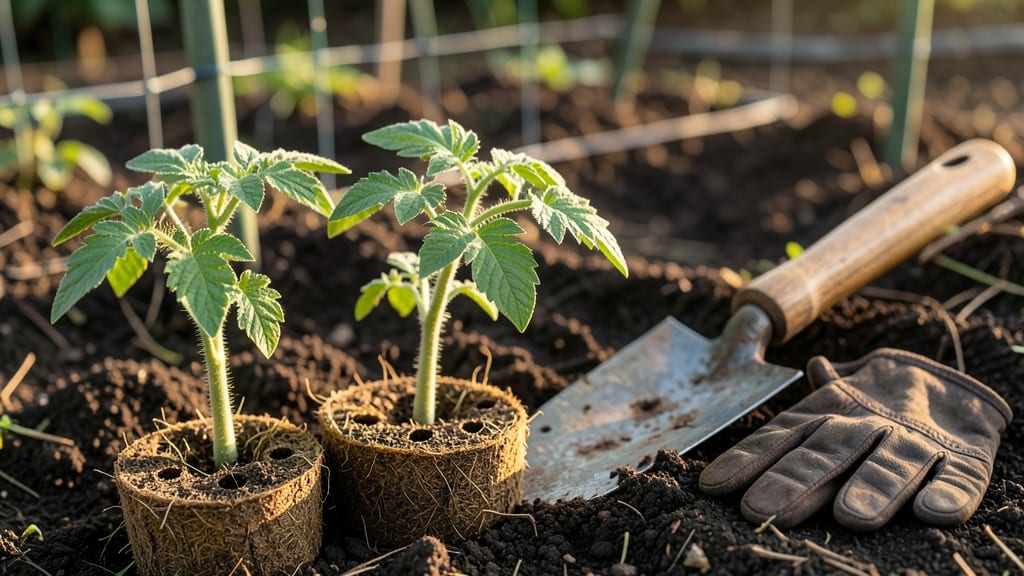
When to Plant Tomato Seedlings in the Garden: Frost-Free Timeline by Zone

Planting

When to Plant Tomato Seedlings in the Garden: Frost-Free Timeline by Zone

To plant tomato seedlings in the garden at the right time means avoiding frost damage and maximizing your harvest—wait until after your last average frost date, when soil and air temperatures are stable.

Picture this: you’ve nurtured your seedlings for weeks, only to watch them wilt overnight when a late frost hits. That’s why timing is everything—especially in Zone 6a or similar climates where April 15 is the average last frost date.

But here’s the catch: soil temperature matters just as much as air temperature. Tomatoes need the ground to warm to at least 60°F before transplanting, or their roots will struggle to establish.

In this guide, I’ll break down the exact frost-free timeline by zone, how to adjust for early or late plantings, and the 3 biggest mistakes that ruin timing—so you can plant with confidence and enjoy a bountiful 🍅 harvest all season.

🍅 When to Plant Tomato
Jan ❄️
Feb ❄️
Mar 🌱
Apr 🍅
May 🍅
Jun 🍅
Jul 🌱
Aug ☀️
Sep 🍂
Oct 🍂
Nov 🍂
Dec ❄️
Ideal Time
Also Good

USDA zone-specific timing for planting tomato seedlings

Getting your tomato seedlings in the ground at the right time is the difference between a bountiful harvest and a sad, wilted disappointment. Tomatoes hate cold—frost damage can kill them overnight—so knowing your USDA zone and local frost dates is critical.

Even a few degrees below 50°F (10°C) at night can stunt growth or trigger blossom drop. Let’s break down the perfect planting windows by zone, including soil temperature requirements and last-frost averages to help you time it just right.

Most tomato varieties need 60-80 days to mature from seedling to harvest, but this varies by type. Heirloom varieties often take longer (80+ days), while cherry tomatoes or early-season hybrids can be ready in as few as 55 days.

Start by checking your zone’s average last frost date, then count backward based on your plant’s days to maturity. For example, a 70-day variety in Zone 5 (last frost ~May 15) should go in the ground by March 15 to avoid late-season failures.

Here’s the catch: soil temperature matters just as much as air temperature. Tomatoes won’t thrive until the soil warms to at least 60°F (15°C). In cooler zones, you might need to extend the season with row covers or plant in black plastic mulch to warm the soil faster.

In warmer zones, fall planting is possible if you choose heat-tolerant varieties and protect seedlings from early morning chills.

How to calculate your local frost-free date for tomatoes

Getting your tomato seedlings in the ground at the right time means the difference between a bountiful harvest and a sad, frost-nipped failure. But how do you pinpoint your local frost-free date when USDA zones only give you averages?

Start by checking your historical frost dates—most local agricultural extensions or weather services track these. For example, my Zone 6a typically sees its last frost around April 15th, but I always verify with my county's records.

Next, account for your microclimate. Urban areas with heat islands may warm up faster, while valleys or shaded spots can stay colder longer.

I once planted tomatoes too early in my backyard because I assumed the city heat would protect them—only for a late frost to wipe out my seedlings. Always add a 5-7 day buffer if your garden sits in a frost pocket.

Now, factor in your tomato variety's maturity. A 60-day cherry tomato needs far less time than a 90-day heirloom beefsteak. If your last frost is May 1st and your tomatoes need 80 days to fruit, you’ll only get half a season of harvests.

For this reason, I always choose early-maturing varieties like 'Early Girl' or 'Stupice' when my growing season feels tight.

Step 1: Find Your Last Frost Date

📅 Check local records

Consult your USDA zone and county extension office for historical data.

⏰ Average last frost

Example: Zone 5 = May 10, Zone 8 = March 1.

Step 2: Adjust for Microclimate

🏙️ Urban heat islands

Add 3-5 days if your garden is in a concrete-heated area.

🌿 Frost pockets

Subtract 5-7 days if your garden is in a valley or low spot.

Step 3: Calculate Seedling Maturity

🌱 Days to maturity

Subtract seedling days (e.g., 60-90 days) from your first frost date.

📝 Example

Last frost: May 1 - 80 days = Plant by February 20 (start indoors!).

Step 4: Verify Soil Temperature

🌡️ Minimum 60°F

Use a soil thermometer—tomatoes won’t thrive below 50°F at night.

🔄 Extend season if needed

Use row covers or greenhouses to plant 2-3 weeks earlier.

Don’t forget to test your soil temperature before planting. Tomatoes need warm soil—at least 60°F (15°C)—to prevent blossom-end rot and stunted growth. I use a soil thermometer to confirm readiness, especially in cooler zones.

If your soil is still chilly, consider using black plastic mulch or straw bales to warm it up faster.

For late plantings, extend your season with row covers or a mini greenhouse. I’ve successfully grown tomatoes in Zone 5 by covering seedlings until late May, then removing the cover once nighttime temps stayed above 50°F (10°C).

This gives me an extra 2-3 weeks of growing time—enough to squeeze in a second planting of fast-maturing varieties like 'Tiny Tim' or 'Patio Princess'.

Finally, keep a gardening journal to track your frost dates and planting success. Over time, you’ll refine your timing and avoid the heartbreak of lost seedlings. Last year, I planted my tomatoes on May 5th—just in time for a late frost that killed my early seedlings.

This year, I’m adjusting to May 15th and crossing my fingers for a better outcome!

★★★★★5.0(4 reviews)
Categories Planting
USDA Zone Avg. Last Frost Ideal Planting Window Soil Temp. Requirement Notes
Zone 3 (-40°F to -30°F) Mid-May to June 1 Late May to early June 60°F+ (15°C+) Use row covers; plant in black plastic
Zone 4 (-30°F to -20°F) Mid-May Early to mid-May (with protection) 60°F+ (15°C+) Start indoors 6-8 weeks early
Zone 5 (-20°F to -10°F) Mid-May Late April to early May 60°F+ (15°C+) Hardy varieties like 'Stupice' work well
Zone 6 (-10°F to 0°F) Early May Late April to mid-May 60°F+ (15°C+) Can plant early with row covers
Zone 7 (0°F to 10°F) Mid-April Early April to early May 60°F+ (15°C+) Long season; plant early and late crops
Zone 8 (10°F to 20°F) Mid-March Late February to early April 60°F+ (15°C+) Can plant year-round in microclimates
Zone 9 (20°F to 30°F) Mid-January Late January to early March 60°F+ (15°C+) Fall planting possible for late harvests
Zone 10 (30°F to 40°F) None (winter) Year-round (avoid winter) 60°F+ (15°C+) Use shade cloth in peak summer
Zone 11 (40°F+) None (tropical) Year-round (avoid extreme heat) 60°F+ (15°C+) Choose heat-tolerant varieties