
Plants
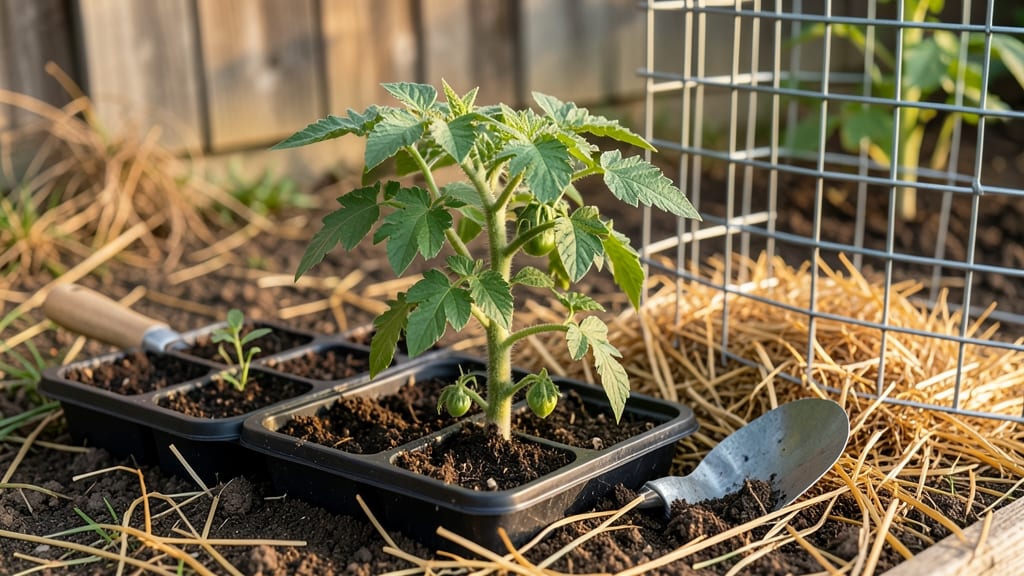
Planting tomato plants in Michigan after the last frost date—typically mid-April in the south and early May in the north—is your best bet to avoid frost damage and maximize a long, productive harvest 🍅.
Timing your tomato planting in Michigan isn’t just about avoiding frost—it’s about maximizing yield in a state where spring temperatures swing wildly between regions. Get the dates wrong, and your $3 plants could end up as $0 losses.
Here’s the key: Southern Michigan gardeners can start transplanting as early as late April, while those in the Upper Peninsula should wait until early June. The difference isn’t just days—it’s weeks of growing season that could mean the difference between a bountiful harvest and a disappointing one.
Below, I’ll break down the exact frost-free dates by region, how to adjust for Michigan’s unpredictable weather, and the one mistake that even experienced gardeners make—plus how to avoid it.
Michigan’s frost-free date zones: when to plant tomatoes by region
Michigan’s 10 USDA hardiness zones (5a-6b) create dramatic differences in last frost dates, which directly impact when you can safely plant tomato seedlings. The Southern Lower Peninsula often sees frost-free conditions by mid-April, while the Upper Peninsula may wait until early June.
These variations mean your tomato planting window could shift by 6-8 weeks depending on where you live.
For determinate varieties (bush types like 'Roma'), timing is critical—plant too early, and a late frost will kill young plants. Indeterminate varieties (vining types like 'Sungold') give you more flexibility since they produce fruit over a longer season.
My rule of thumb? Wait until soil temperatures hit 60°F+ and nighttime lows stay above 50°F consistently.
Here’s the breakdown by region, including average frost-free dates, risk factors, and recommended planting windows for both transplants and direct-sown seeds. Use this as your guide to avoid frost damage and maximize your harvest.
⚠️ PRO TIP: Even after the last frost, late spring cold snaps (common in May) can still threaten young plants. I always keep row covers or black plastic mulch on hand for protection.
🌱 SUMMARY TABLE: MICHIGAN TOMATO PLANTING BY ZONE
If you’re in Zone 6b (like Detroit or Kalamazoo), you can push the envelope and plant transplants as early as April 1st—but only if you’re using black plastic mulch or a cold frame.
I’ve had success with 'Early Girl' tomatoes this way, but I always keep a backup row cover ready for those late-May cold snaps that can hit even the warmest regions.
For Zones 5a and 5b (common in the Upper Peninsula and Northern Lower Peninsula), patience is key. The soil temperature in these areas often lags behind air temperature, so don’t rush.
I wait until mid-May to plant transplants and even then, I choose cold-hardy varieties like 'Stupice' or 'Mountain Merit' to give myself a buffer.
One mistake I’ve seen new Michigan gardeners make is relying solely on calendar dates instead of actual soil conditions. A 50°F night in early May can still kill young tomato plants, even if the official last frost date has passed.
Always check your soil temperature with a soil thermometer—it’s the most reliable indicator.
For direct-sown seeds, the window is even tighter.
In Zone 6b, I start seeds in early April under row covers, but in Zone 5a, I wait until late May to avoid seedling rot from cold, wet soil. Indeterminate varieties like 'Brandywine' or 'Cherokee Purple' benefit from this later start because they have time to establish roots before the short Michigan summer ends.
Remember, these dates are averages—not guarantees. I always recommend planting a successive crop 2-3 weeks later to hedge your bets. If your first planting gets hit by frost, you’ll still have a backup harvest.
And if you’re in Zone 6b, consider planting one early variety (like 'Patio') in April and a late-season variety (like 'Celebrity') in June to extend your harvest into October.
🌿 Now that you’ve got your planting dates locked in, the next step is preparing your soil and supports. Michigan’s clay-heavy
How to adjust planting dates for Michigan’s unpredictable weather
Michigan’s weather can throw a curveball—one day it’s 70°F, the next it’s a 28°F surprise. To beat these swings, I’ve learned to extend planting windows using simple tools and smart variety choices.
The key? Soil temperature (not air temp) and protective barriers that let you plant 2-4 weeks earlier than the last frost date.
For tomatoes, soil must stay above 55°F for germination, while roots thrive at 60°F+. In my Zone 6a garden, I’ve used black plastic mulch to warm soil by 5-10°F, letting me plant tomato seedlings in early May instead of waiting for late May.
Row covers add another 4-6°F buffer against late frosts.
If your early plants fail due to late frosts (a common Michigan risk), have a backup planting ready. In Zone 5b, I keep heat-loving varieties on standby for late May starts. These need longer daylight to mature, so choose determinate types (bushier growth) for quicker harvests.
For soil testing, use a thermometer buried 2 inches deep—55°F+ means it’s safe to plant. In clay-heavy soils (common in Michigan), mix in compost or aged manure to improve drainage. My go-to trick? A 5-gallon bucket of compost per 100 sq ft of bed.
Pro tip: Monitor Almanac frost predictions, but don’t rely on them. I’ve planted tomatoes in early May with row covers and still gotten harvests by July 4th. The secret? Watch your plants—if leaves look wilted or purple, they’re stressed. Adjust with water or shade cloth immediately.
Remember: Michigan’s growing season is short—about 160 frost-free days. Every extra week you gain with these tricks means more tomatoes before fall frost. Start small, test one method at a time, and soon you’ll be beating the clock like a pro. 🌱