
Vegetables
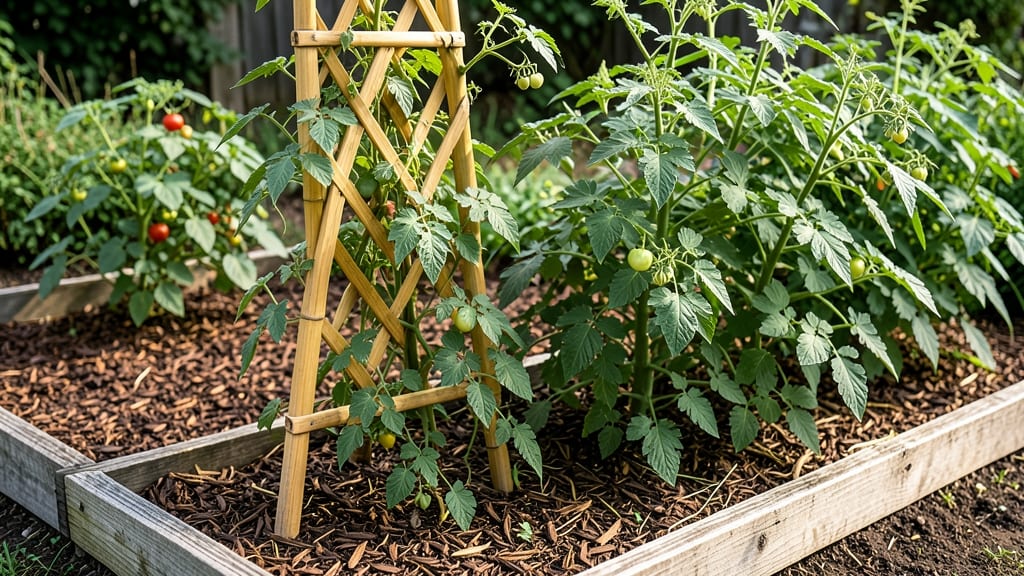
Indeterminate tomatoes mean the plants grow continuously throughout the entire growing season, producing fruit until the first frost, unlike determinate varieties that stop fruiting after their initial flowering cycle. Their sprawling vines need sturdy support like cages or trellises to maximize yield and airflow.
This continuous growth habit makes indeterminate tomatoes perfect for gardeners who want a steady harvest all season long. 🌱 Unlike their bushy determinate cousins, these vines can grow 6 to 10 feet tall if left unchecked, producing blossoms and fruit along the entire stem.
The key to success lies in proper support—without it, the heavy fruit load can break the stems, leading to lower yields and disease risks from poor airflow.
Many popular heirloom varieties like Brandywine and Cherokee Purple fall into this category, rewarding patient gardeners with larger, flavorful fruits over an extended period. The trade-off? They require more attention to pruning and trellising compared to compact determinate types.
💡 In This Article
- How Indeterminate Tomato Vines Differ from Determinate Varieties
- Trellising and Pruning Tips for Maximizing Indeterminate Tomato Yields
How indeterminate tomato vines differ from determinate varieties
The fundamental difference lies in their growth architecture. Indeterminate tomato plants have an open, sprawling vine structure that continues growing vertically throughout the entire season, often reaching 6 to 12 feet in height.
This unlimited growth pattern creates a continuous flowering cycle—new blossoms form at the leaf axils (where leaves meet stems) all season long, resulting in a steady stream of fruit until frost. 🌿 In contrast, determinate varieties grow to a fixed height (typically 3 to 5 feet) and produce a single flush of flowers that develop into fruit simultaneously, after which flowering ceases.
The biological mechanism behind this difference involves hormone regulation. Indeterminate plants maintain high levels of auxin, a plant hormone that promotes cell elongation, while suppressing flowering hormones in the apical bud (the growing tip).
This allows the vine to keep extending upward while producing lateral shoots with flowers and fruit clusters. Determinate varieties, however, have a genetic switch that triggers flowering at a specific growth stage, after which the plant focuses all energy on ripening existing fruit rather than producing new growth.
This growth habit translates directly to harvest patterns. Indeterminate varieties like Sungold cherry tomatoes or Beefsteak heirlooms provide a staggered harvest—you'll pick a few ripe tomatoes every 3-5 days throughout the season, while determinate plants like Roma or Celebrity deliver a single massive harvest all at once.
The trade-off? Indeterminate plants require significantly more space and support structures to accommodate their sprawling nature and heavy fruit loads.
Another critical difference is disease susceptibility. The dense foliage of indeterminate vines creates microclimates that can trap moisture, increasing risks for fungal diseases like early blight or powdery mildew if airflow isn't properly managed.
Determinate varieties, with their more compact growth, generally have better natural airflow. However, this comes at the cost of shorter production windows—once their main stem stops growing, so does their fruit production.
Consider the Solar Fire cherry tomato as an example: its indeterminate nature means you might harvest 10-15 pounds of fruit over 100+ days from a single plant, while a determinate Better Boy might produce 15-20 pounds in just 6-8 weeks.
The choice between them depends entirely on your gardening goals—continuous harvests versus concentrated yields.
What most gardeners don't realize is how vine length affects fruit quality. Longer indeterminate vines often produce larger, more flavorful tomatoes because they have more time to develop sugars and complex flavors.
However, this comes with the challenge of managing the plant's energy distribution—too much vertical growth can divert resources from fruit development if not properly pruned and supported. 🌱