
Plants
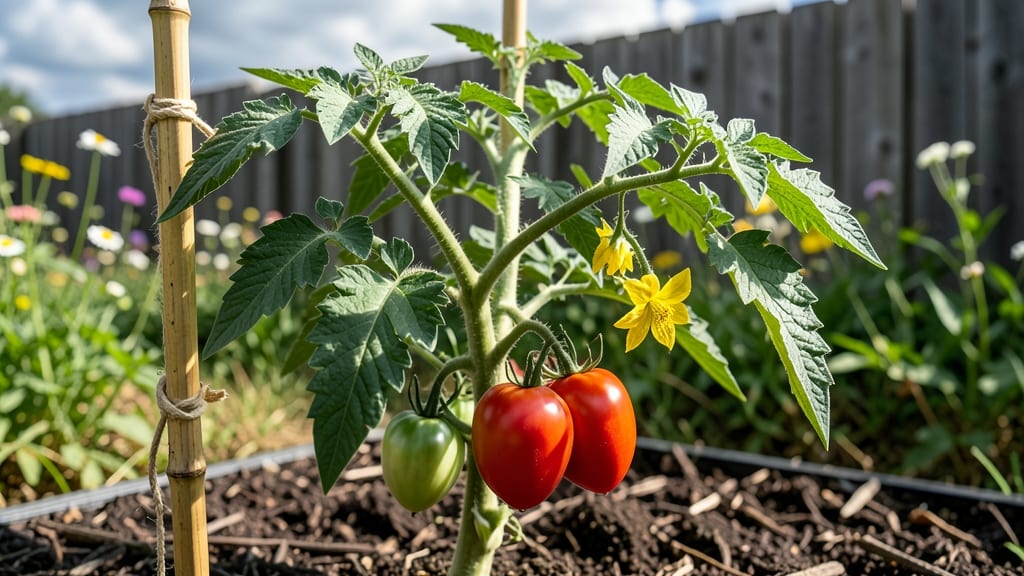
A Roma tomato looks like an elongated, oval-shaped fruit with smooth skin and subtle ribbing along its sides, typically turning deep red or purple when fully ripe. Its slender, blunt-ended form sets it apart from round varieties like beefsteaks or cherry tomatoes, making it instantly recognizable in markets or gardens.
A Roma tomato's distinctive shape isn't just about aesthetics—it's a functional design for cooking. 🌱 The elongated form holds up better during crushing for sauces, while the smooth skin (unlike bumpy heirlooms) makes them easier to peel if you're making fresh paste.
What really gives them away is the blunt, almost egg-like tip—unlike the tapered ends of cherry tomatoes or the broad shoulders of beefsteaks. Even when green, you can spot them by their uniform oval shape, which never bulges like a round tomato would.
Here's a pro tip: hold one up to the light—Roma tomatoes have fewer seeds and less gel inside compared to beefsteaks, which is why they're the gold standard for canned sauces. That dense flesh is what makes them collapse beautifully when simmered down. 💫
💡 In This Article
- Identifying Roma Tomatoes by Shape and Color
- Key Differences Between Roma and Other Paste Tomatoes
Identifying Roma tomatoes by shape and color
Roma tomatoes have a signature 3:1 length-to-width ratio, meaning they're typically 3-4 inches long but only 1-1.5 inches wide at their broadest point. The sides feature subtle vertical ribbing that's more pronounced than on beefsteak varieties but less dramatic than heirloom tomatoes.
When you run your thumb along the skin, you'll feel these faint ridges—about 4-6 per tomato—which help channel water and nutrients during growth. 🌿 These ribs disappear slightly as the tomato ripens, giving the surface a smoother appearance perfect for sauces where texture matters.
The color transformation is equally distinctive. Unripe Roma tomatoes start a pale greenish-yellow that gradually deepens to a bright red or deep purple-red when fully ripe—this purple hue comes from higher anthocyanin levels than in red tomatoes.
What's unique is how the color change happens uniformly along the entire surface, unlike beefsteaks which often develop uneven red patches. At their peak ripeness, they'll have a slightly glossy sheen from natural waxes that protect the skin, making them look almost semi-translucent when held up to light.
Here's how to spot them in a crowd: Roma tomatoes have blunt, rounded ends (never pointed like cherry tomatoes) and a slightly flattened top where they attached to the vine. The stem scar is small and circular, unlike the larger, more irregular scars on beefsteaks.
When you cut one open, you'll notice the seed cavity is narrow and elongated, containing fewer seeds than other varieties—this is why they yield 30-40% less juice when cooked, making them ideal for thick sauces where you want concentrated flavor rather than watery consistency.
One common mistake is confusing Roma tomatoes with San Marzano tomatoes, which are also paste varieties. While both are elongated, San Marzanos are slightly larger (4-5 inches long) with a more pronounced ribbing pattern and a softer, less glossy skin when ripe. The key difference?
Hold them side by side—Roma tomatoes feel firmer and denser due to their thicker flesh walls, while San Marzanos have a slightly softer, more yielding texture when squeezed gently. This density is what makes Roma tomatoes the preferred choice for homemade tomato paste where you want maximum flavor extraction.
The color progression also differs: Roma tomatoes develop their deep red/purple hue more evenly, while San Marzanos often show lighter green streaks along the ribs even when fully ripe. This is because San Marzanos have a higher chlorophyll content in their ribbed areas, which persists longer during ripening.
For gardeners, this means Roma tomatoes will look more uniformly colored when harvested, while San Marzanos may require longer vine ripening to achieve full color uniformity.
For visual learners, think of a Roma tomato as a cigar-shaped fruit with the ends slightly flattened like a football.
Their smooth surface (unlike the bumpy skin of heirlooms) and uniform color make them stand out in markets where they're often sold in 2-3 pound baskets—a clear indication of their commercial popularity for sauce production.
The lack of large seeds also means you won't find the gelatinous seed pockets common in beefsteaks, which can turn sauces slimy if not properly strained.