
Blooming
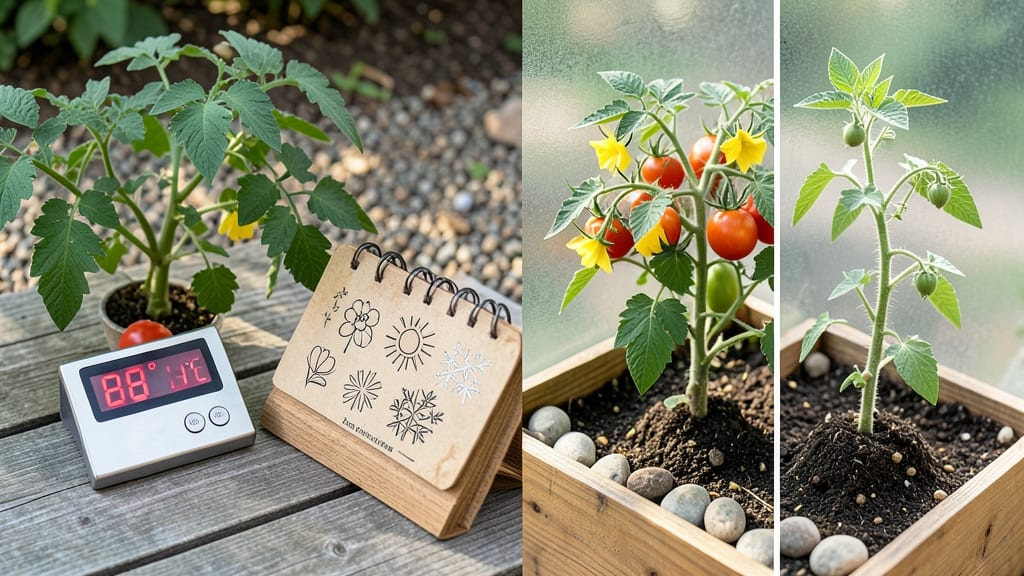
Your tomato plants are blooming too early when they should still be growing strong—that’s the sign of a classic gardening speed bump. 🌱 I’ve seen this happen every late spring when warm days fool the plants into thinking summer’s already here, only for frost to nip those early flowers.
The good news? You can still salvage the season with a few smart moves.
First, prune those early blooms ruthlessly—yes, even the ones that look promising. You’re not being cruel; you’re redirecting the plant’s energy toward thicker stems and more leaves, which means bigger harvests later.
Pair that with shade cloth on sunny days to keep temps steady, and hold off on heavy nitrogen until the plant’s established. Think of it like hitting the pause button on a movie you know will have a better ending.
By the time your plants hit 6-8 inches tall, they’ll be ready to handle blooms without bolting. The key is patience—what feels like a setback now means stronger plants and fruit that lasts weeks longer.
Plus, you’ll learn exactly what triggers early blooming in your microclimate, so next season you’ll time everything perfectly.
This works for both garden beds and containers, and the same principles apply whether you’re dealing with heirlooms or hybrids. The only real mistake? Giving up too soon. Trust the process, and you’ll be picking tomatoes when everyone else is still waiting for theirs to set fruit.
📚 In This Guide
- What you need
- Instructions
- Tips and common mistakes
- Wrapping up and next steps
What you need
- ● Pruning shears or sharp bypass pruners – Clean, sterilized (1 pair)
- ● Garden gloves – Durable, cut-resistant (1 pair)
- ● Disinfectant (rubbing alcohol or bleach solution) – 1:9 ratio for bleach (small bottle)
- ● Garden twine or plant ties – 3–4 ft per plant (1–2 rolls)
- ● Shade cloth (30–50% coverage) – For temporary protection (1–2 yards)
- ● Stakes or cages – For support if needed (1–2 per plant)
- ● Watering can or hose with nozzle – For post-pruning hydration
- ● Growth regulator (e.g., Flowering Inhibitor) – Follow label instructions
- ● Mulch (straw or grass clippings) – To retain moisture
- ● Plant food (balanced fertilizer, 10-10-10) – For post-pruning recovery
- ● Spray bottle with water – For misting flowers if heat stress is an issue
How to manage early blooms on tomato plants
Here's how I save tomato harvests when plants flower too soon—simple pruning and protection tricks.
✂️ Step 1: Identify and Remove Early Flowers
When you spot flowers on young plants—especially those under 12 inches tall—they're stealing energy from root and stem growth. Use clean pruning shears to snip the flower clusters completely at their base. I always check plants weekly after they reach 6 inches tall because that's when early blooms often appear.
Don't worry about being gentle—tomato stems are tougher than they look. Just avoid damaging the main stem or leaves. You'll know you're doing it right when the plant looks like it's putting all its energy into growing taller instead of producing fruit.
🌱 Step 2: Focus on Stem and Leaf Growth
After removing early flowers, concentrate on helping the plant build strong stems and leaves. Pinch off any suckers (those little shoots growing between the main stem and branches) that appear in the first 4-6 weeks. These compete with the main plant for energy and can lead to weak growth.
I like to do this on a dry morning when the plants are firm. The goal is to keep just one strong stem with plenty of leaves—each leaf is a potential food factory for bigger fruit later. You'll see new growth within 7-10 days if you're doing it right.
☀️ Step 3: Protect Plants from Cold Snaps
Early blooms often appear when plants get a false spring warmth. If nighttime temperatures dip below 55°F, cover plants with lightweight frost cloth or old bedsheets secured with rocks. I've saved entire harvests this way—even when the forecast called for 40°F nights.
Remove covers by 10 AM so plants get full sun during the day. Watch for signs of stress like yellowing leaves—this usually means the covers stayed on too long. With protection, your plant will focus on growing stronger instead of trying to set fruit too early.
🪴 Step 4: Adjust Watering and Fertilizing
When plants bloom early, they often need more consistent moisture. Water deeply 1-2 times weekly (check when the top 2 inches of soil feel dry) and avoid wetting leaves to prevent disease. I add a 1-inch layer of mulch around the base to keep soil moisture steady.
Hold off on heavy fertilizing until after the last frost. Instead, use a balanced 10-10-10 fertilizer at half strength every 3-4 weeks once plants are established. This helps them grow strong stems and leaves without pushing early fruit production.
⏰ Step 5: Monitor for Pest Pressure
Early blooming plants attract pests like aphids and whiteflies that weaken stems. Inspect leaves regularly—look for sticky residue or tiny insects clustering on new growth. I spray plants with a mix of 1 tablespoon mild dish soap in 1 gallon of water if I see pests.
Strong stems from proper pruning can handle some pest pressure, but don't wait until you see damage. The earlier you catch pests, the better your plants will recover. You'll know you're winning when you see healthy new leaves appearing above the old growth.
Tips & tricks for managing early tomato blooms
Real talk: I've lost entire tomato seasons to early blooms, so here's what I learned the hard way.
Timing is Everything: Start checking for early blooms right when your plants hit 6 inches tall—that's when they're most vulnerable. I check mine every 3-4 days during warm spells, especially if your area has those unpredictable swings between 55°F and 80°F nights. The key is catching those first flowers before they set fruit, which drains energy from your plant's foundation.
The Pruning Technique: When removing early flowers, cut them off at the base where they meet the stem—not just the top. This prevents any chance of regrowth while keeping your plant's energy focused on vertical growth. I use clean scissors or pruning shears (never your fingers!) to avoid spreading disease. And here's what nobody tells you—if you see tiny flowers forming in leaf axils (where leaves meet the stem), snip those too, even if they're not fully open.
Cold Snap Protection: If your forecast shows nights dropping below 55°F, act fast. I've saved plants from certain failure by covering them with lightweight frost cloth or even old bedsheets secured with bricks. The trick is removing covers by 10 AM to let them photosynthesize—leaving them on too long causes stress. Watch for yellowing leaves as your warning sign that covers stayed on too long.
Pest Prevention: Early blooming plants attract pests like aphids and whiteflies that weaken stems. I make a simple spray of 1 tablespoon mild dish soap in 1 gallon of water and keep it handy. Spray the undersides of leaves where pests love to hide. You'll know you're doing it right when you see healthy new leaves appearing above the old growth—this means your plant is putting energy where it counts, not fighting pests.
Pro Tips for Tomato Plants Blooming Too Early
- Real talk: I've lost entire tomato seasons to early blooms, so here's what I learned the hard way.
- Timing is Everything: Start checking for early blooms right when your plants hit 6 inches tall—that's when they're most vulnerable.
- The Pruning Technique: When removing early flowers, cut them off at the base where they meet the stem—not just the top.
Frequently asked questions
about tomato plants blooming too early—here’s what you need to know to save your harvest!Why does my tomato plant bloom early?
Early blooming often happens due to temperature swings (like warm days followed by cool nights), long daylight exposure, or stress (e.g., transplant shock or overwatering). Some varieties are also bred to flower quickly—check your seed packet for clues!
Can I stop early blooms from setting fruit?
Yes! Prune off the first few flower clusters (up to 2-3 inches from the stem) to redirect energy to root and leaf growth. This buys time for your plant to strengthen before producing fruit. Just avoid removing all blooms—balance is key!
What’s the ideal temperature for tomato plants?
Tomatoes thrive in daytime temps of 70–85°F (21–29°C) and nighttime temps above 55°F (13°C). If nights dip below 50°F (10°C), blooms may drop. Use row covers or black plastic mulch to insulate roots and keep soil warm.
Will pruning early blooms reduce my total yield?
Not if done right! Pruning selectively (removing only the earliest blooms) can increase yield by letting the plant focus on stronger stems and more fruit later. Over-pruning, though, can stress the plant—aim to leave 3–5 main stems for indeterminate varieties.
What if my plant keeps blooming early every year?
Try these fixes:
- Choose late-blooming varieties (e.g., ‘Brandywine’ or ‘Cherokee Purple’).
- Start seeds indoors 6–8 weeks earlier to harden off plants gradually.
- Use shade cloth (30–50%) during peak sunlight hours to delay flowering.
- Adjust watering—consistent moisture (not soggy soil) prevents stress blooms.
Wrapping up and next steps
Early blooms on your tomato plants can feel like a challenge, but with the right adjustments—like strategic pruning, protective measures, and a little patience—you’re already on your way to a bountiful harvest. 🌱 Remember, nature works on its own timeline, and your efforts to guide it will pay off in juicy, flavorful tomatoes. Now’s the perfect time to step back, assess your plants, and trust the process!
Ready to take action? Check your plants weekly, adjust your care routine as needed, and soon, you’ll be celebrating a garden full of thriving tomatoes. Happy growing! 🍅✨