
Light Requirements
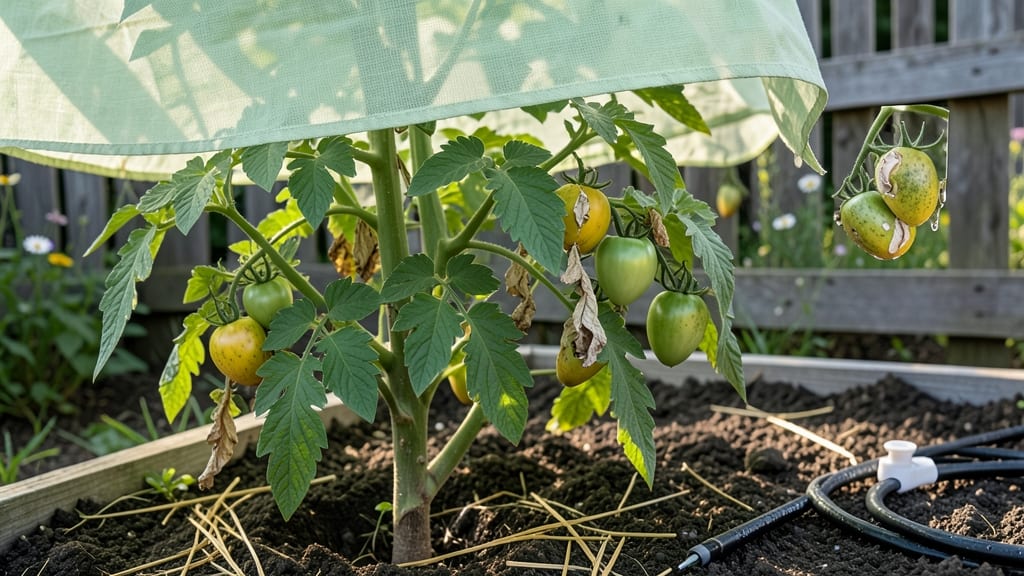
When your tomato plant gets too much sun, it’s not just wilting—it’s sunburned, with leaves turning crispy and white along the edges. 🌱 I’ve seen it happen after moving plants too quickly from shade to full sun, and the damage can cut your harvest by half if you don’t act fast.
The good news? Quick shade solutions work better than you’d think. A simple shade cloth (30-50% block) draped over a hoop or trellis can drop temperatures enough to save your plants in just a few hours.
Even a white bedsheet tied loosely above them does the trick in a pinch—just leave room for airflow. You’ll notice new growth within 2-3 days if the roots stay cool and hydrated.
Water deeply at the base (not overhead) to prevent heat stress, and mulch with straw to keep soil temperatures down. Prune any severely damaged leaves to redirect energy to healthy parts. This works for container tomatoes, raised beds, or in-ground plants—just adjust the shade timing based on your climate.
Let’s get those plants back on track!
When Sunlight Becomes Too Much
Too much sunlight might seem like a gardener’s dream, but for tomato plants, excessive exposure can quickly turn into a problem. Understanding why this happens helps you take corrective action before your plants suffer.
Let’s break down the key reasons behind sunburnt or stressed tomato leaves—and what’s really going on in your garden.
Tomatoes thrive in warmth, but when temperatures soar—especially above 90°F (32°C)—their delicate leaves and fruit can’t handle the intensity. Here’s the science:
- Photosynthesis overload: Excessive sunlight forces chloroplasts (the plant’s energy factories) to overwork, producing reactive oxygen species (ROS) as a byproduct. These molecules damage cell membranes, leading to brown or white patches on leaves.
- Water loss acceleration: High heat increases transpiration (water evaporation through leaves) faster than roots can absorb water. This causes wilting, even in well-watered plants.
- Sunburn on fruit: Green tomatoes exposed to intense UV rays develop sunscald, turning white or leathery. This ruins flavor and texture, making them unmarketable.
💡 Pro Tip: If your area hits 95°F (35°C)+ regularly, consider shade cloth (30-50%) during peak afternoon sun (12 PM–4 PM). Tomatoes can recover from temporary heat stress, but chronic exposure leads to permanent damage.
Tomato plants adapted to gradual sunlight changes struggle when moved abruptly into full, direct sun. This is common with:
- Seedlings transitioning outdoors: If young plants are hardened off too quickly (e.g., moving from a shaded greenhouse to a sunny patio overnight), their leaves lack the protective anthocyanin pigments that develop with slow acclimation.
- Pruned or defoliated plants: Removing leaves reduces the plant’s ability to dissipate excess light energy. Without foliage to spread out sunlight, remaining leaves overheat.
- Newly planted mature tomatoes: Transplanting a shaded-grown plant into full sun without a 7–10 day acclimation period shocks the system, causing rapid leaf bleaching.
🔥 Actionable Fix: If you’re moving plants, harden them off gradually by increasing sunlight exposure by 1–2 hours daily. For established plants, provide dappled shade (e.g., near a lattice or tall plants) while they adjust.
Tomatoes aren’t native to regions with intense UV radiation (like deserts or tropical zones). Their natural defenses—like cuticular wax layers on leaves—aren’t always enough to block:
- UV-B radiation: Prolonged exposure breaks down chlorophyll, causing leaves to turn white or yellow in a condition called chlorosis.
- Infrared heat buildup: While UV damages leaves, infrared radiation (felt as heat) stresses the plant’s vascular system, reducing water and nutrient transport to fruit.
- Albedo effect: Light-colored soil (e.g., sand or concrete) reflects up to 30% more heat onto plants, amplifying stress.
✨ Solution: Use mulch (straw, grass clippings) to reflect less heat and retain soil moisture. For container-grown tomatoes, opt for dark-colored pots (they absorb heat) but place them on heat-protective pads.
By identifying whether your tomatoes are suffering from heat stress, abrupt sun exposure, or UV overload, you can tailor your shade solutions to the root cause. Next, we’ll explore how to quickly protect your plants without sacrificing their growth potential.
Quick Fixes for Sun-Stressed Tomatoes
When your tomato plants are frying under too much sun, they need immediate relief—but don’t panic! With the right adjustments, you can revive them and protect future harvests.
Below are practical, step-by-step solutions tailored to the most common signs of sun damage, plus prevention tips to keep your plants thriving.
If your tomato plants look limp or scorched midday, they’re likely suffering from heat stress (a close cousin of sun overload). Here’s how to cool them down fast:
- 🔥 Install shade cloth (30–50% coverage) over the plants for 2–4 hours during peak sun (10 AM–4 PM).
Secure it with stakes or a lightweight frame to avoid crushing stems. - 🍳 Use reflective mulch like white plastic sheeting or straw around the base to bounce back some sunlight and retain moisture. - 👨🍳 Prune lower leaves (up to 12 inches from the ground) to improve airflow and reduce water loss.
Snip with clean, sharp shears to avoid disease.
✨ Pro Tip: If you don’t have shade cloth, drape a lightweight breathable fabric (like an old bedsheet) loosely over the plants. Avoid plastic—it traps heat!
Tomatoes left in unfiltered sun often develop blossom-end rot (blackened bottoms) or sunscald (white/yellow patches). Fix it with these steps:
- 🌿 Move potted tomatoes to a partially shaded spot (e.g., under a patio awning or near a north-facing wall). If planted in the ground, relocate nearby plants (like basil or marigolds) to cast natural shade. - 🔪 Thin out crowded foliage to let air circulate.
Aim for 3–4 main stems per plant, removing suckers (side shoots) that compete for sunlight. - 💡 Boost soil moisture with deep watering (1–2 inches per week) in the early morning. Dry soil worsens sun stress—use a moisture meter if possible.
🎯 Prevention Hack: Train vines to grow vertically (using cages or trellises) to keep fruit off scorching ground. Prune aggressively in late afternoon to avoid shocking the plant.
If your tomatoes are leggy, weak, or not flowering, they might be overwhelmed by too much direct sun combined with poor care. Try this:
- 🌱 Reduce afternoon sun by planting near taller crops (like corn or sunflowers) that provide natural shade later in the day. - 🥗 Feed with balanced fertilizer (10-10-10 or compost tea) to encourage root and flower growth.
Avoid high-nitrogen feeds—this promotes leaves over fruit! - 🌡️ Mulch heavily with straw or grass clippings to keep roots cool. A 2–3 inch layer works best.
💡 Quick Fix: If your tomatoes are bolting (sending up flowers too fast), move them to a slightly cooler, shadier spot for 1–2 weeks to slow growth and improve fruit set.
Stop sun damage before it starts with these low-effort, high-impact tactics:
| Problem | Solution | When to Do It |
|---|---|---|
| Intense afternoon sun | Plant in morning sun + afternoon shade | At transplanting |
| No shade cloth? | Use whitewash paint on stakes to reflect light | Early season |
| Urban heat islands | Raise beds (6+ inches) or use black plastic mulch to absorb heat | Before planting |
| Container tomatoes | Choose self-watering pots with shade | Start of growing season |
✨ Bonus Tip: Succession plant tomatoes in two batches—start one in early spring (for cooler months) and another in mid-summer (for partial shade). This spreads out your harvest and reduces peak-sun stress.
Final Reminder: Tomatoes thrive in 6–8 hours of sun daily, but intensity matters more than duration in hot climates. Monitor your plants daily (especially in heatwaves) and adjust shade as needed. With these fixes, your plants will bounce back—and your harvest will be sweeter than ever! 🍅🌞
Frequently asked questions
How do I know if my tomato plant has too much sun?
Look for crispy, white or brown edges on leaves (sunburn) or yellowing between leaf veins. Fruit may develop white patches (sunscald) or blackened bottoms (blossom-end rot). Wilting during peak sun hours is another red flag—even with consistent watering.
Can I use a regular sheet for shade instead of special cloth?
Yes! A lightweight white or light-colored bedsheet works in a pinch. Drape it loosely over a hoop or trellis to allow airflow—never let it touch the leaves. For best results, use it during 12 PM–4 PM when UV rays are strongest.
Will my tomato plant recover from sun damage?
Mild cases often recover within 3–5 days if you provide shade and deep watering. Severely damaged leaves won’t regrow, but new growth will emerge from healthy stems. Prune affected leaves to redirect energy to fruit production.
How much shade should tomato plants get in extreme heat?
In temperatures above 90°F (32°C), aim for 30–50% shade cloth** during peak sun hours. For containers, move them to a spot with natural afternoon shade (like under a patio). Too much shade (over 60%) reduces fruit production.
Can I save tomatoes already showing sunburn?
Yes, but focus on protecting new growth. Remove severely damaged leaves and fruit, then provide shade and mulch. The plant will redirect energy to healthier parts. For existing fruit, shade cloth can prevent further sunscald development.