
Planting
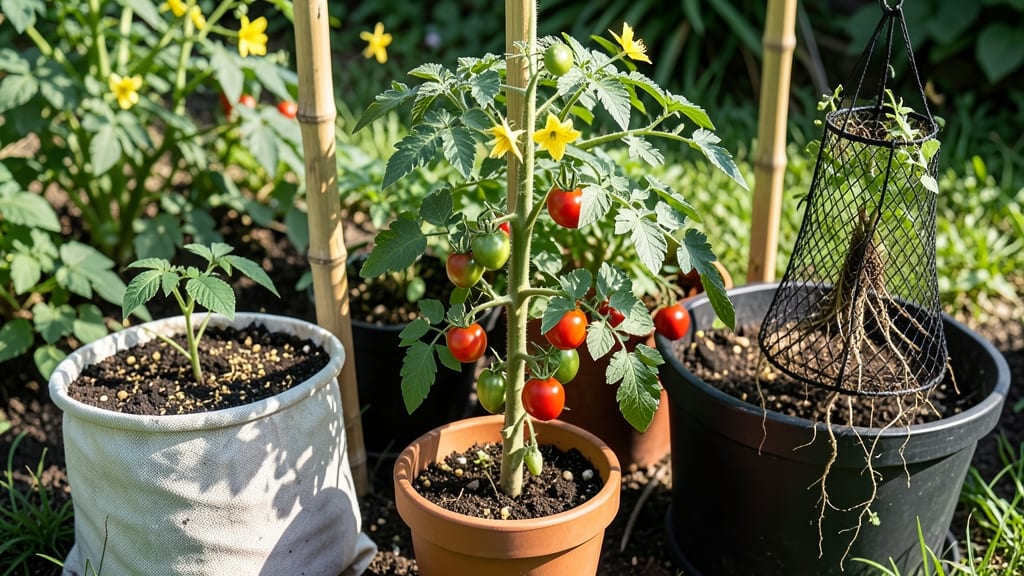
Your tomato plant's pot size determines whether you'll harvest bushels or sad, stunted vines. 🌱 The right container gives roots room to spread while keeping plants stable—too small, and you'll watch them struggle even when everything else looks perfect.
My first cherry tomatoes nearly died because I crammed them into a 5-gallon pot meant for peppers. Lesson learned: match the pot to the plant's ambition.
Indeterminate varieties like 'Sungold' or 'Brandywine' need 10-15 gallons to support their sprawling vines, while determinate types like 'Roma' thrive in 5-7 gallons. Dwarf tomatoes? Even 3-5 gallons works. Fabric grow bags are my secret weapon—they breathe better than plastic and prevent root circling.
Just make sure drainage holes are bigger than your little finger, or you'll end up with soggy roots and unhappy plants.
By choosing the right pot, you'll see thicker stems, more flowers, and fruit that stays on the vine longer. My 15-gallon containers now produce enough tomatoes to share with neighbors, while my old 5-gallon mistake?
That's the one I never repeat. The key is balancing space with stability—tomatoes need room to grow down AND up.
Here's the game-changer: if you're starting with seedlings, move them up to their permanent pots within 2-3 weeks. Roots grow faster than you think, and cramped conditions lead to stunted plants that never recover.
Watch for yellowing leaves or roots circling the pot—those are your warning signs. With the right container, your tomatoes will reward you with a harvest that puts store-bought to shame.
📚 In This Guide
- What you need
- Instructions
- Tips and common mistakes
- Wrapping up and next steps
What you need
- ● Tomato plant pot: Minimum 5-gallon capacity (18.9 L) for determinate varieties (bush tomatoes).
- ● Minimum 10-gallon capacity (37.9 L) for indeterminate varieties (vining tomatoes).
- ● Drainage holes (non-negotiable—no soggy roots!)
- ● Lightweight yet sturdy material: Plastic, fabric grow bags, or ceramic (avoid heavy pots that tip easily).
- ● High-quality potting mix: 1 bag (typically 1–2 cubic feet) of well-draining, sterilized mix designed for vegetables or tomatoes.
- ● Tomato plant: 1 healthy seedling (check local nursery for disease-resistant varieties like Early Girl or Sungold).
- ● Fertilizer: Balanced 10-10-10 or 5-10-10 granular fertilizer (or organic options like compost or worm castings).
- ● Watering can or hose with a gentle spray nozzle.
- ○ Support system (optional but recommended): 1 tomato cage (5–6 ft tall) or
- ● 1 bamboo stake (6–8 ft) + twine (for indeterminate varieties).
- ● Self-watering pot (to maintain moisture without overwatering).
- ● Mulch (straw or shredded leaves) to retain soil moisture and suppress weeds.
- ● pH testing kit (to ensure soil pH is between 6.0–6.8 for optimal growth).
- ● Slow-release fertilizer tablets (for convenience and steady nutrition).
- ● Reflective mulch film (to deter pests and warm the soil).
- ● Pruning shears (for trimming suckers and shaping the plant).
How to choose the right tomato plant pot size for healthy growth
Tomatoes need space to thrive—here’s how to pick containers that keep roots happy without wasting resources.
🪴 Step 1: Determine Minimum Pot Size Based on Variety
Dwarf tomatoes like 'Tiny Tim' or 'Patio Princess' do fine in 5-gallon containers (about 12-14 inches deep). These compact varieties have shallow root systems and won’t outgrow the space. Look for pots marked with gallon capacity—they’re more reliable than diameter measurements alone.
Medium-height varieties such as 'Sweet 100' or 'Better Boy' need 7-10 gallons (roughly 16-18 inches deep). These plants develop deeper root systems and produce heavier fruit, so they’ll outgrow smaller pots by midseason. I always check the variety description for root depth clues—it’s the best predictor of pot size needs.
🌱 Step 2: Prioritize Depth Over Width for Root Development
Tomatoes grow downward as much as upward, so depth matters more than diameter. A 12-inch deep pot is better than a shallow, wide tray. Roots need 8-12 inches of soil to anchor the plant and access moisture deep in the container.
If you’re using fabric grow bags, opt for 14-18 inches deep—they dry faster than rigid containers, so the extra depth helps maintain moisture. You’ll see this in action when plants in shallower pots start wilting faster after watering, even if they’re the same size.
☀️ Step 3: Add Support Structures Early for Stability
Even in the right-sized pot, tomatoes need cages or stakes to prevent tipping. A 5-gallon pot should have a 4-foot cage (the standard size for dwarf varieties), while 7-10 gallon pots need 5-6 foot cages to support the vine’s weight. I always install supports at planting—waiting until the plant is established leads to broken stems when you try to add them later.
For indeterminate varieties (like 'Sungold' or 'Brandywine'), use tall trellises instead of cages. These plants grow 6-10 feet tall, so the pot must be deep enough to support the root system while the trellis handles the weight. A 10-gallon pot with a 7-foot trellis is my go-to for these heavy producers.
💧 Step 4: Plan for Drainage and Soil Volume
Every container must have multiple drainage holes—tomatoes hate soggy roots. If your pot lacks holes, drill them yourself (use a ½-inch bit for standard pots). Add a 2-inch layer of gravel or broken pottery at the bottom to prevent soil from clogging the holes while still allowing water to escape.
Fill the pot ¾ full with high-quality potting mix (never garden soil—it compacts in containers). For 5-gallon pots, that’s about 4 gallons of mix, leaving 1 inch at the top for watering. The extra space prevents soil from spilling when you water deeply, and it gives roots room to expand without crowding.
✂️ Step 5: Monitor Growth and Adjust as Needed
Check root growth by gently tugging the plant after 4-6 weeks. If it slides easily, the roots aren’t filling the pot—time to upgrade. 5-gallon pots may need a 7-gallon move by midseason for medium varieties, while 10-gallon pots often suffice for the entire season.
Prune suckers (the shoots in the leaf axils) regularly to encourage bushier growth in smaller pots. You’ll see fewer suckers on determinate varieties, but indeterminate types need weekly pruning to keep the plant manageable. This also improves airflow, reducing the risk of fungal diseases in crowded containers.
Tips & tricks for perfect container sizing for tomato plants
Choosing the right container size for tomatoes isn't just about fitting the plant—it's about creating an environment where roots can thrive. Here's what I've learned from years of trial and error in my garden.
Root Space Matters: The 5-gallon minimum for dwarf varieties might seem generous, but trust me—it's not. Roots need room to spread, especially as plants mature. I've seen 'Tiny Tim' varieties struggle in 3-gallon pots by midseason when they start producing fruit. The extra space in a 5-gallon container prevents root-bound stress that leads to stunted growth and poor yields. For medium varieties, that 7-10 gallon range isn't arbitrary—it accounts for the plant's vertical growth and fruit weight.
Material Makes a Difference: Fabric grow bags might seem like a convenient alternative, but they behave differently than rigid containers. The instructions mention their 14-18 inch depth is ideal, and I can't stress enough how important this is. Fabric pots dry out faster, so the extra depth helps maintain moisture levels. I've noticed my plants in fabric pots need watering 20-30% more frequently than in ceramic containers—something to keep in mind when planning your watering schedule.
Support Structures Save the Day: That 4-foot cage for 5-gallon pots isn't just about aesthetics—it's about stability. I learned this the hard way when a heavy 'Sweet 100' plant toppled over in a 7-gallon pot without proper support. Installing cages at planting time prevents stem damage that can occur when you try to add them later. For indeterminate varieties, don't skimp on trellis height—those 6-10 foot plants need the full support to keep their weight off the fragile stems.
Drainage is Non-Negotiable: The 2-inch gravel layer at the bottom of your pot isn't just a suggestion—it's essential. I've seen too many containers develop waterlogged soil because of inadequate drainage. If your pot lacks holes, drill them yourself with a ½-inch bit. This creates just the right balance—preventing soil from clogging the holes while still allowing excess water to escape. The ¾ full soil recommendation leaves crucial space for root expansion and prevents soil spillage during watering.
Pro Tips for Tomato Plant Pot Size
- Choosing the right container size for tomatoes isn't just about fitting the plant—it's about creating an environment where roots can thrive.
- Root Space Matters: The 5-gallon minimum for dwarf varieties might seem generous, but trust me—it's not.
- Material Makes a Difference: Fabric grow bags might seem like a convenient alternative, but they behave differently than rigid containers.
Frequently asked questions
Got questions about tomato plant pot sizes? You’re not alone! Here are some of the most common concerns—plus quick, practical answers to help you grow like a pro.
What’s the ideal tomato plant pot size for determinate vs. indeterminate varieties?
Determinate tomatoes (bush types) thrive in 5-gallon containers (18–24" deep), while indeterminate vines (vining types) need at least 7–10 gallons (24–36" deep). Larger pots prevent root-binding and support bigger harvests. Pro tip: Use fabric grow bags for better drainage!
How long can tomatoes stay in the same pot before transplanting?
Tomatoes should never be root-bound. If roots circle the pot’s bottom or spill over the edges, it’s time to upgrade! Transplant every 1–2 years (or sooner for fast growers). Watch for stunted growth or yellowing leaves—your plant’s SOS signals!
Are there affordable alternatives to big pots for tomatoes?
Yes! Try these space-saving hacks:
- 5-gallon buckets (drill drainage holes!)
- Fabric grow bags (breathable & lightweight)
- Vertical planters (hanging or trellis systems)
- DIY wooden boxes (line with plastic for moisture control)
Why do my tomato plants wilt even with enough water in a big pot?
Wilting in large pots often means overwatering or poor drainage. Check:
- Soil should be damp, not soggy (stick your finger 2" deep).
- Ensure pots have drainage holes and saucers underneath.
- Tomatoes hate hot roots—use mulch to keep soil cool.
Can I grow tomatoes in small pots if I prune heavily?
Pruning helps, but small pots (under 3 gallons) limit growth. Even with pruning, tomatoes need space for roots and fruit. Minimum size: 5 gallons for determinate, 7+ for indeterminate. Compromise: Use a smaller pot temporarily (e.g., for seedlings) but upgrade before flowering!
Wrapping up and next steps
Choosing the right tomato plant pot size is the secret to bountiful harvests—whether you’re growing cherry tomatoes in small containers or beefsteak varieties in spacious grow bags. Remember, depth matters most: aim for at least 12–18 inches deep for healthy roots, and don’t overlook drainage or material quality.
With the right setup, your tomato plants will thrive, rewarding you with juicy, flavorful fruit all season long!
Ready to plant? Grab your containers, soil, and seeds—and get growing! For extra success, check out our pro tips on spacing, pruning, and care. Happy gardening! 🌱🍅