
Size
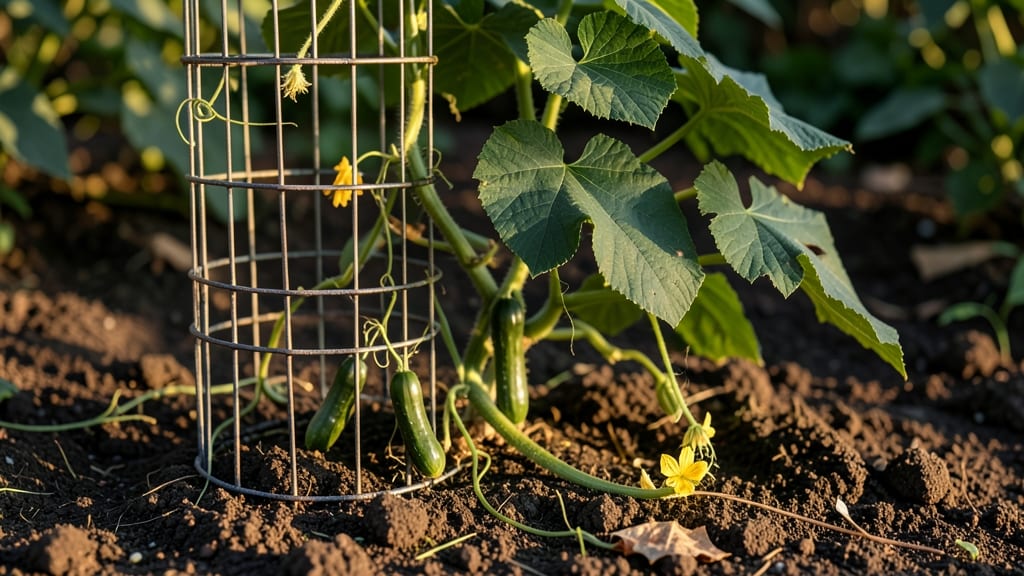
Growing cucumbers in a tomato cage turns a flimsy support into a powerhouse for heavy vines—no more sagging plants or wasted space. 🌿 I learned the hard way that cucumbers need sturdy support, and these cages (with a few tweaks) work better than anything I bought at the store.
The secret is in how you prep the cage and train the vines—it’s simpler than it looks.
Start with bush or compact cucumber varieties like ‘Bush Champion’ or ‘Spacemaster’—they’re bred for vertical growth and won’t overwhelm the cage. Reinforce the cage with zip ties or garden twine to create extra vertical support, then plant your cucumber near the center so vines can spiral upward naturally.
Water deeply at the base to avoid fungal issues, and mulch to keep roots cool.
By mid-summer, you’ll have a lush, productive vine producing cucumbers within arm’s reach—no bending, no sprawling mess. The cage keeps fruits clean and off the ground, too. Prune regularly to encourage airflow, and watch for pests like cucumber beetles (spray neem oil if needed).
This method works in containers, raised beds, or small backyards—perfect for renters or urban gardeners. The best part? You’ll save space and avoid the heartbreak of cucumbers rotting on the soil. Ready to try it?
📚 In This Guide
- What you need
- Instructions
- Tips and common mistakes
- Wrapping up and next steps
What you need
- ● Tomato cage: 1 sturdy, 5-foot-tall cage (preferably made of galvanized steel or heavy-duty plastic). Look for one with at least 6–8 stakes for maximum support.
- ● Cucumber seeds or seedlings: 1–2 plants (choose bush or compact varieties like ‘Bush Champion’ or ‘Spacemaster’ for smaller cages).
- ● Potting soil or garden soil: 1–2 bags (ensure it’s well-draining and rich in organic matter).
- ● Container or in-ground spot: A pot at least 12–15 inches deep and wide (or direct-sow in a garden bed with loose soil).
- ● Watering can or hose: With a gentle spray nozzle to avoid disturbing roots.
- ● Fertilizer: Balanced, water-soluble fertilizer (e.g., 10-10-10) or compost tea for organic growth.
- ● Trellis or twine: Extra support if vines get too heavy (weave through cage or tie to stakes).
- ● Mulch: Straw or shredded leaves to retain moisture and suppress weeds.
- ● Pruning shears: To trim excess leaves or encourage upward growth.
- ● Drip irrigation kit: For consistent watering (saves time and effort!).
- ● Cage stabilizers: Heavy-duty stakes or weights to prevent tipping in windy areas.
Step-by-step instructions for growing cucumbers in a tomato cage
Here’s how to turn a simple tomato cage into a sturdy, space-saving trellis for cucumbers—no sagging vines or wasted space in sight.
🪴 Step 1: Choose and Prepare the Right Tomato Cage
Start with a 5-foot-tall tomato cage made of sturdy wire or plastic mesh—these hold 25-30 pounds each, perfect for cucumber vines. Check for sharp edges and bend any protruding wires gently with pliers to prevent damaging delicate vines. Place the cage in a sunny spot where it won’t be knocked over by wind or foot traffic.
For extra stability, drive two 6-inch wooden stakes into the ground on either side of the cage and loosely tie the cage to them with soft plant ties. This keeps the structure from leaning or toppling as vines grow heavy with fruit. I always do this—last year, a gust of wind sent an untied cage crashing into my neighbor’s fence.
🌱 Step 2: Plant Cucumber Seedlings at the Base
Wait until soil temperature reaches at least 65°F before planting. Dig a hole twice as wide as the root ball but no deeper—cucumbers hate having their crowns buried. Gently remove the seedling from its pot, loosen the roots if they’re circling, and place it in the hole so the top of the root ball sits just below soil level. Fill the hole with soil and press lightly around the base to eliminate air pockets.
Water deeply right after planting to settle the soil and encourage root contact. Use 1 gallon of water per plant—this ensures moisture reaches all the way down to the roots without running off. Avoid wetting the leaves to prevent fungal diseases like powdery mildew, which cucumbers are especially prone to.
🌿 Step 3: Train Vines Up the Cage as They Grow
As soon as the main stem reaches 6-8 inches tall, gently weave it through the cage’s openings in a spiral pattern. Use soft plant ties or twist ties to secure the vine every 12-18 inches—never tie directly to the wire, as this can damage the stem. I like to tie the vine loosely enough that I can still slide my finger between the tie and the stem; cucumber vines grow fast and need room to thicken.
Watch for side shoots (those little nubs where leaves meet the stem). Pinch off the first few that appear below the top 3 leaves—this directs the plant’s energy upward instead of outward. You’ll see stronger, straighter growth within a week, and the vines will climb faster once they hit the top of the cage.
✂️ Step 4: Prune and Maintain for Heavy Fruit Production
Once the vines reach the top of the cage, stop tying them—let the weight of the fruit naturally encourage downward growth along the cage’s sides. Prune any vines that grow parallel to the ground (they’ll produce fruit but won’t support themselves). Focus on keeping 3-4 main vines spiraling up and around the cage; this prevents overcrowding and improves air circulation.
Water at the base of the plant every 2-3 days during fruiting, giving 1-2 gallons per plant each time. Cucumbers need consistent moisture, but soggy soil leads to rot. You’ll know you’re doing it right when the soil feels damp 1-2 inches down but not waterlogged. Mulch around the base with 2 inches of straw to retain moisture and keep roots cool.
🍉 Step 5: Harvest and Extend the Season
Harvest cucumbers when they’re 6-8 inches long and firm to the touch—waiting too long turns them bitter and seedy. Use pruning shears to cut the fruit from the vine, leaving a ¼-inch stem attached. This encourages more flowers (and thus more cucumbers) to form. I harvest every 2-3 days during peak production; missing a cucumber by even a day can mean it turns into a monster.
To extend the season, cover the cage with frost cloth when nighttime temperatures dip below 50°F. Cucumbers are warm-weather plants and won’t tolerate frost. If your growing season is short, opt for bush cucumber varieties like ‘Bush Champion’—they produce fruit faster and stay compact enough for a single cage.
Tips & tricks for perfect cucumber trellising
Here's what I've learned from years of growing cucumbers in tomato cages—avoid these common mistakes and you'll end up with lush, productive vines.
Cage Stability is Non-Negotiable: That 5-foot cage might look sturdy, but cucumber vines can weigh up to 30 pounds when loaded with fruit. I've seen cages topple when tied only to the plant—always use those 6-inch wooden stakes on both sides as instructed. For extra peace of mind, add a third stake at the back and tie all three together with soft plant ties. This creates a triangular support system that won't wobble in windy conditions.
Root Ball Placement Matters: When planting, make sure the top of the root ball sits just below soil level—not buried, not exposed. I learned this the hard way when my first cucumber plant developed root rot from being planted too deep. The soil should cover the roots but leave the stem's base exposed. This prevents both rot and stem diseases while encouraging strong root growth.
Tying Technique Prevents Damage: Those soft plant ties are crucial—they're the only thing keeping your delicate cucumber stems from getting crushed by the cage's wire. I recommend using twist ties instead of regular ties because they're easier to adjust as the vine grows. Always slide your finger between the tie and stem to ensure it's not too tight. Re-tie every 12-18 inches as the vine climbs, but never tie directly to the wire.
Watering Wisdom: The 1-2 gallons per plant during fruiting is spot-on, but timing matters just as much. Water in the morning so the leaves have time to dry before evening—this prevents powdery mildew, cucumbers' arch-nemesis. I've found that mulching with 2 inches of straw (as instructed) keeps soil moisture consistent and reduces watering frequency by about 30%. The key is checking that dampness 1-2 inches down—not just the surface.
Pro Tips for Grow Cucumbers In Tomato Cage
- Here's what I've learned from years of growing cucumbers in tomato cages—avoid these common mistakes and you'll end up with lush, productive vines.
- Cage Stability is Non-Negotiable: That 5-foot cage might look sturdy, but cucumber vines can weigh up to 30 pounds when loaded with fruit.
- Root Ball Placement Matters: When planting, make sure the top of the root ball sits just below soil level—not buried, not exposed.
Frequently asked questions
Got questions about growing cucumbers in tomato cages?
You’re not alone! Here are answers to the most common queries to help you succeed with this space-saving hack.
Can I reuse a tomato cage for cucumbers, or do I need a stronger one?
A standard tomato cage (5–6 feet tall) works for bush cucumber varieties, but vining types (like straight or Armenian cucumbers) need reinforcement. Add a second cage or tie vines to stakes for extra support. For heavy loads, opt for a heavier-duty wire cage or a trellis instead.
When is the best time to plant cucumbers in a tomato cage?
Wait until after the last frost when soil temps hit at least 60°F (15°C). Cucumbers are heat-lovers! Start seeds indoors 3–4 weeks before transplanting (if your climate allows). For cooler zones, use black plastic mulch to warm the soil faster.
Why are my cucumber vines sagging even with a tomato cage?
Sagging usually means overcrowding or weak support. Prune excess leaves to reduce weight, and tie vines gently but frequently to the cage (every 12–18 inches). If the cage bends, add a wooden stake inside for extra rigidity. Also, ensure vines aren’t overwatered—soil should stay moist but not soggy.
What if I don’t have tomato cages? Are there alternatives?
No cages? No problem! Try these:
- DIY wire frame: Bend coat hanger wire into a cylinder (5–6 ft tall).
- Trellis or fence: Use a sturdy vertical screen or chain-link section.
- Straw bales or pallets: Prop against a wall for a lean-to trellis.
- Repurpose other cages: Flower cages or even old wire dog crates work!
Will cucumbers grown in cages produce smaller or fewer fruits?
Not necessarily! Cages improve air circulation, reducing disease risk (like powdery mildew) and often boosting yield by keeping vines off the ground. However, bush varieties may produce slightly smaller fruits than sprawling vines. To maximize size, prune side shoots and focus energy on 1–2 main vines per cage.
Wrapping up and next steps
Growing cucumbers in a tomato cage is a game-changer—it’s simple, space-efficient, and keeps those heavy vines happy without the sag or sprawl! 🌱 With the right setup, you’ll enjoy bountiful harvests while maximizing your garden’s potential. Now that you’re armed with tips and tricks, there’s only one step left:
- Try it out! Grab a tomato cage, a few cucumber seeds (or seedlings), and let your green thumb shine. Watch your vines climb, thrive, and reward you with crisp, homegrown cucumbers in no time.
Happy gardening—your future self (and taste buds) will thank you! 😊