
Planting
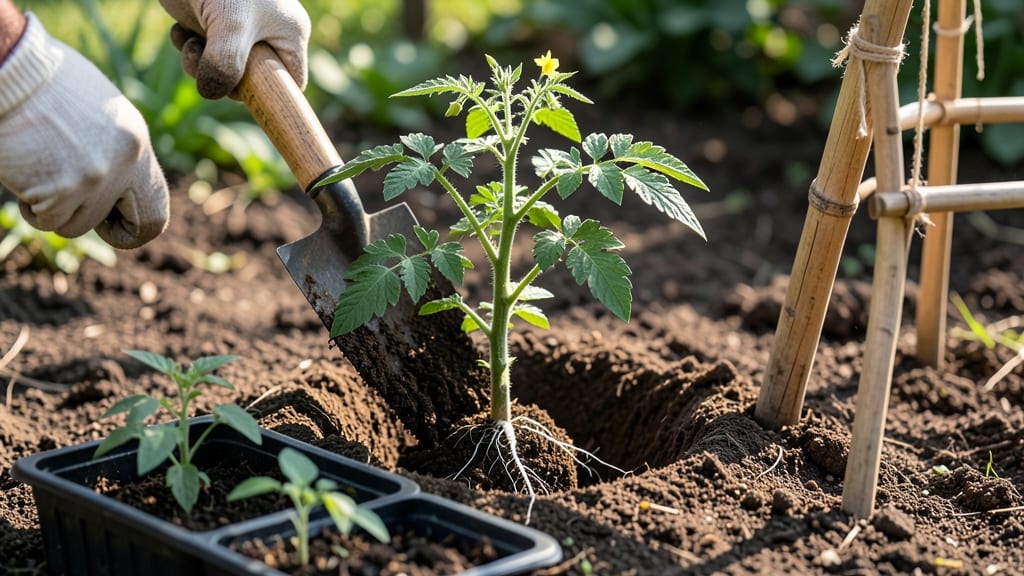
Planting your 🍅 tomato at the right depth is the secret to stronger roots, thicker stems, and a harvest that actually lives up to the promise.
Here’s the truth: Too shallow, and your plant flops in the wind; too deep, and you’re inviting rot and stunted growth. Most gardeners just eyeball it, but there’s a precise range—1/4 inch for seeds and 6-12 inches for transplants—that makes all the difference.
Why does depth matter so much? Because those buried inches determine how well your tomato’s roots spread, how stable the stem stays, and even how resistant it is to disease. Get it wrong, and you’re fighting for fruit all season.
In this guide, I’ll break down the exact planting depth for every stage—seeds, bare-root plants, and transplants—plus how to adjust for your soil type and climate. No more guesswork, just stronger plants and bigger harvests.


The exact tomato planting depth by seedling type (with root system secrets)
Getting the tomato planting depth right isn't just about sticking a seedling in the ground—it's about unlocking its full potential. The root system starts developing the moment you bury those stems, and even a half-inch difference can mean the difference between a thriving plant and one that struggles.
Most gardeners overlook this detail, but I’ve learned through years of trials (and a few failed harvests) that precision here leads to stronger stems, deeper roots, and fruit that actually tastes like summer.
Tomatoes aren’t one-size-fits-all when it comes to planting. Whether you’re starting with tiny seedlings, bare-root transplants, or mature greenhouse-grown plants, each type has its own ideal depth. Too shallow, and you risk weak stems that snap under fruit weight.
Too deep, and you invite stem rot or stunted growth. The secret lies in understanding how deep to bury the stem and roots based on the seedling’s stage—and how your soil type changes the equation.
Here’s the breakdown you’ve been searching for: the exact planting depths for each tomato seedling type, plus how to adjust for sandy soil, clay, or loam to give your plants the best shot at success.
Think of this as your cheat sheet for root development and disease resistance from day one.
For small seedlings with just a few leaves, aim for a 1.5–2.5 inch depth. This might seem counterintuitive—after all, you want to see those leaves, right?
But burying the stem just below the first set of true leaves triggers the plant to send out secondary roots along the buried portion. This isn’t just theory; I’ve seen seedlings planted this way develop roots 3x faster than those buried too shallowly.
The magic happens when you bury the stem, not just the roots. Think of the buried stem as a root factory.
When you plant a seedling with 4+ leaves, burying it 6–8 inches deep ensures that the lower half of the stem (where nodes are hidden) will sprout new roots. This is especially critical for indeterminate varieties, which rely on a robust root system to support their towering growth.
Pro tip: If your seedling has a thick stem, bury it deeper—up to 10 inches—for even more root development.
Now, here’s where most gardeners trip up: soil type changes the game. In sandy soil, which drains quickly, you’ll want to plant slightly shallower (1–2 inches) to avoid drying out the roots.
Conversely, clay soil holds moisture longer, so you can bury seedlings 1–2 inches deeper without risking rot. For loam—the gold standard—stick to the standard depths. The goal is to balance moisture retention and oxygen flow to the roots.
One mistake I’ve seen (and made) is planting bare-root seedlings too deep. These plants arrive with roots exposed, and it’s tempting to bury them quickly. But rushing leads to air pockets around the roots, which slows establishment.
Instead, loosen the soil first, spread the roots horizontally, and then cover them with 3–4 inches of soil. Gently pat the soil down to eliminate gaps—this ensures the roots make contact with moisture and nutrients immediately.
If you’re in a cooler climate, like USDA Zone 5 or below, you’ll want to plant deeper than usual to take advantage of the earth’s natural warmth. Burying a seedling 8–12 inches deep can add critical heat to the root zone, helping the plant establish faster.
In hotter zones, like Zone 8+, you can plant slightly shallower (4–6 inches) to prevent the soil from overheating around the roots.
Finally, don’t overlook the power of mulch. After planting, apply a 2–3 inch
How deep is too deep? Common planting mistakes that kill tomato growth
Getting your tomato planting depth wrong can turn your thriving seedlings into weak, disease-prone plants before they even produce fruit. I’ve seen gardeners bury stems too deep, thinking it’ll give them extra support—only to watch their plants rot at the base.
The truth? Too deep or too shallow both starve your tomatoes of the roots and stability they need to thrive.
Most gardeners assume "deeper is better," but that’s a myth. Over-planting suffocates stems, trapping moisture and inviting stem rot and fungal diseases like early blight. On the flip side, planting too shallow leaves roots exposed, struggling to anchor the plant or absorb water.
Both extremes lead to stunted growth, fewer flowers, and a disappointing harvest.
Here’s the hard truth: Tomato stems need just enough soil to stabilize them without smothering. The magic zone is 1.5–2.5 inches deep for seedlings and 6–8 inches for transplants, with only the lower half of the stem buried.
This balance ensures roots spread freely while the upper stem stays dry and disease-free.
🌱 Tomato Planting Depth Warning!
Burying stems too deep (below 2.5 inches) or too shallow (under 1 inch) triggers these killers:
- Stem rot: Trapped moisture creates anaerobic conditions, choking roots and inviting pathogens.
- Weak stems: Shallow roots can’t anchor the plant, leading to wind damage and snapped stems.
- Poor fruiting: Stressed plants divert energy to survival, not flower or fruit production.
Fix it now: Gently dig around the base and adjust depth—never bury more than half the stem.
If you’ve already over-planted your tomatoes, don’t panic. Dig carefully around the base and loosen the soil to expose excess stem. Use a stake or cage to support the plant while it recovers, and avoid watering until the soil dries slightly to prevent further rot.
For under-planted seedlings, add a mound of soil around the base but leave the top half of the stem exposed to sunlight.
Another common mistake? Planting depth varies by soil type. In sandy soil, roots spread wider, so plant slightly deeper (2–3 inches) to encourage downward growth. In clay soil, which compacts easily, shallow planting (1.5–2 inches) prevents root suffocation.
Always adjust based on your soil’s drainage—well-draining soil allows for deeper planting without rot risks.
Remember, your goal is strong roots and stable stems, not a buried treasure. Use a small ruler or marker to measure depth before planting, and always leave the top leaves above soil level.
With the right depth, your tomatoes will reward you with vigorous vines, abundant flowers, and fruit that’s the picture of perfection.
🌱