
Companion Plants
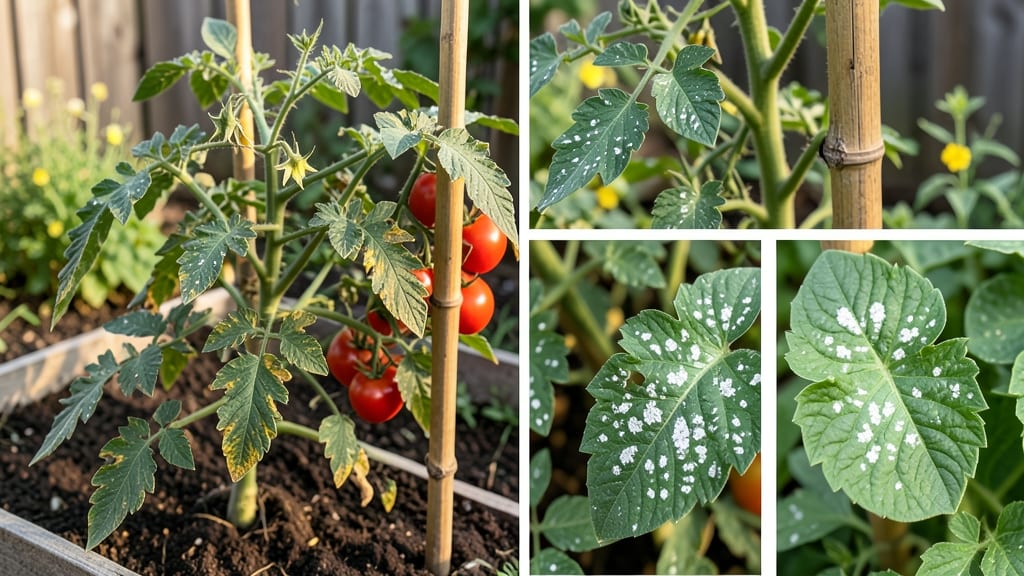
Your tomato plant has white spots on the leaves—it could be powdery mildew, or something else entirely. 🌿 I’ve saved countless plants from this exact problem, and the first step is figuring out what’s really happening.
Is it a fuzzy white coating? Tiny webbing? Or just dry patches? Each clue points to a different fix, and missing one means wasting time on the wrong treatment.
Most white spots are powdery mildew, a fungal infection that thrives in warm, humid conditions. But spider mites leave silvery specks and webbing, while environmental stress (like too much sun or wind) can scorch leaves into white patches.
The key is checking the leaf underside—mildew grows there first, while mites hide in webs. Once you know the cause, you’re halfway to a cure.
For powdery mildew, a baking soda spray (1 teaspoon baking soda + 1 quart water + a drop of dish soap) stops it in its tracks. Spray leaves until they drip—this fungus hates moisture on its surface.
Reapply every 7–10 days, and your plant will bounce back faster than you’d expect. The secret? Consistency. One spray won’t cut it; you need to outlast the fungus.
Prevention is easier than treatment: space plants for airflow, water at the base (never overhead), and pick up fallen leaves—those are fungus hotels. If you catch it early, you’ll save your tomatoes and your sanity. Here’s how to diagnose and fix it for good.
Root Causes Of Leaf Spots
When your tomato plant’s leaves develop white spots, it’s rarely a coincidence—it’s usually a sign of stress, infection, or environmental imbalance. Understanding the why behind these spots is the first step to saving your plants.
Below, we break down the most common culprits, backed by science, so you can diagnose the issue accurately and act fast.
Fungi like Oidium (powdery mildew) or Alternaria thrive in warm, humid conditions and can turn your tomato leaves into a white, fuzzy canvas. These pathogens don’t just discolor leaves—they block sunlight, weaken the plant’s ability to photosynthesize, and create entry points for secondary infections.
How it happens:
- Spores spread via wind, water, or tools: A single infected leaf can release thousands of spores in 24 hours, especially in greenhouses or crowded gardens.
- High humidity + poor airflow: Fungi love moisture. If your plants are watered overhead or lack circulation, spores land on leaves and germinate within hours.
- Nutrient imbalances: Over-fertilizing with nitrogen (common in fast-growing tomato varieties) makes plants soft and susceptible to fungal attacks.
🔍 Tell-tale signs: White spots start as powdery patches, then spread to a chalky, web-like cover on both leaf surfaces. Unlike some pests, fungal spots don’t move—they stay put.
Tiny but mighty, spider mites and whiteflies don’t just cause white spots—they create them. These sap-sucking pests inject toxins into leaves, triggering a defensive response that manifests as white or yellow stippling. Left unchecked, they’ll turn your lush tomato foliage into a skeleton.
How it happens:
- Dry, dusty conditions: Spider mites thrive in arid environments (think indoor gardens or drought-stricken outdoor plants). They spin fine webs under leaves, making their presence hard to spot until damage appears.
- Sticky honeydew residue: Whiteflies excrete a sugary substance that attracts sooty mold—a black fungal film that further stresses the plant.
- Weakened plants: Underwatered or nutrient-deficient tomatoes are easier targets. Pests prefer stressed hosts.
🔍 Tell-tale signs: Look for:
- Tiny moving dots (mites/flies) when you shake the plant.
- Silvery or bronze discoloration before white spots appear.
- Sticky residue on lower leaves (honeydew).
Not all white spots are biological. Sometimes, your tomato’s leaves are screaming for help due to physical stress. Two common culprits:
1. Sunburn (Bleached Spots)
Tomatoes love sunlight, but too much direct UV exposure—especially after rain or when plants are transplanted—can cause leaves to develop white, papery patches. This happens when water droplets act like magnifying glasses, focusing sunlight and cooking the leaf tissue.
2. Mineral Buildup (White Crust)
Over-fertilizing or using hard water (high in calcium/magnesium) can lead to salts crystallizing on leaf surfaces. These white, powdery deposits clog stomata (pores), preventing gas exchange and photosynthesis. Common in container-grown tomatoes or soils with poor drainage.
🔍 Tell-tale signs:
- Sun scorch: Spots are irregular, often on upper leaves, and may have a dry, brittle texture.
- Mineral toxicity: White residue wipes off like chalk, and spots appear on older leaves first.
While excess minerals cause problems, deficiencies in key nutrients can also trigger white spotting. Two critical deficiencies to watch for:
1. Calcium Deficiency (Blossom End Rot’s Silent Partner)
Calcium is essential for cell wall strength. When tomatoes lack it—often due to uneven watering or high nitrogen—leaves develop interveinal chlorosis (white patches between veins). This is especially common in fast-growing varieties like ‘Early Girl’ or ‘Cherry Roma.’
2. Magnesium Deficiency (Yellow-White Vein Patterns)
Magnesium is the center of the chlorophyll molecule. When levels drop, leaves show white or yellow patches between veins, starting on older leaves. This is often a sign of overwatering or acidic soil (pH < 6.0).
🔍 Tell-tale signs:
- Spots follow vein patterns (unlike fungal spots, which are random).
- New growth is stunted or purple-tinged (another deficiency sign).
💡 Pro Tip: If you suspect a nutrient issue, test your soil’s pH and conduct a leaf tissue test (available through extension services). Tomatoes need a pH of 6.0–6.8 for optimal calcium and magnesium uptake.
Quick Fixes for White-Spotted Tomato Leaves
If your tomato plant’s leaves are showing up like a polka-dot disaster, don’t panic—there’s a way to turn things around! The key is identifying the root cause (we covered that in Why It Happens) and applying the right remedy.
Below, we’ll map out step-by-step solutions for each likely culprit, from fungal infections to environmental stress, plus tips to keep your plants thriving long-term.
Fungal spores love damp, crowded conditions, and once they take hold, they spread fast. Here’s how to stop the spread and restore your plant:
🔥 Step 1: Isolate the Problem
- Remove infected leaves immediately (don’t compost them—trash them in a sealed bag to prevent spores from lingering).
- Space plants 18–24 inches apart to improve airflow. Pro tip: Use stakes or cages to keep foliage off the ground, where humidity builds up.
🍳 Step 2: Apply a Fungicide Spray (DIY or Store-Bought)
For powdery mildew or early blight, a homemade baking soda spray works wonders:
Recipe: Mix 1 tsp baking soda + 1 tbsp vegetable oil + 1 tsp mild dish soap + 1 gallon water. Spray undersides of leaves (where spores hide) every 7–10 days until new growth appears.
For late blight (the sneakiest culprit), switch to a copper fungicide (like Bordeaux mixture) or a neem oil spray (1 tsp neem oil + 1 tsp soap per quart of water). ⚠️ Warning: Late blight spreads rapidly—act fast or you may lose the plant.
👨🍳 Step 3: Adjust Watering Habits
- Water at the base, not overhead (use a drip irrigation system or soaker hose if possible).
- Water early in the day so leaves dry quickly—wet leaves = fungal buffet.
- Avoid mulching too close to stems (keep it 2–3 inches away to reduce soil-borne spores).
🌡️ Step 4: Boost Plant Immunity
- Fertilize lightly with a balanced, low-nitrogen fertilizer (like 5-5-5) to strengthen defenses.
- Add compost or worm castings to the soil for natural resistance-boosting microbes.
If the white spots are dry, crispy, or sunken (not fuzzy or powdery), your plant might be suffering from sunburn or chemical damage. Here’s how to fix it:
🔪 Step 1: Shield from Harsh Conditions
- Move plants to partial shade (especially in afternoon heat) using shade cloth (30–50% coverage).
- Hardened tomato varieties (like ‘Solar Fire’ or ‘Heatmaster’) tolerate heat better—consider swapping out sensitive plants.
💡 Step 2: Check Your Soil & Water
- Test soil pH (ideal: 6.0–6.8). White spots can signal mineral buildup (e.g., from tap water or over-fertilizing). Flush soil with rainwater or distilled water if needed.
- Avoid hard water (high in calcium/magnesium)—use a water softener or collect rainwater.
🎯 Step 3: Prune & Protect
- Trim severely damaged leaves to redirect energy to healthy growth.
- Apply a light layer of mulch (straw or grass clippings) to insulate roots and retain moisture.
Tiny pests can leave behind white webbing or stippled spots. Here’s how to evict them:
⏰ Step 1: Inspect & Act Fast
- Check leaf undersides for whiteflies (tiny flying insects) or spider mites (red dots, webbing).
- Blast them off with a strong spray of water (repeat daily for 3–5 days).
🌿 Step 2: Use Natural Pesticides
- Neem oil spray (1 tsp neem + 1 tsp soap per quart of water) disrupts their life cycle.
- Introduce beneficial insects: Ladybugs (eat whiteflies) or predatory mites (control spider mites).
🔄 Step 3: Prevent Reinvasion
- Yellow sticky traps catch flying pests before they multiply.
- Rotate crops next season—don’t plant tomatoes, peppers, or eggplants in the same spot (pests love these families).
An ounce of prevention is worth a pound of baking soda spray! Follow these habits to keep your tomato plants happy and spot-free:
- ✅ Rotate crops annually—avoid planting tomatoes in the same spot every year.
- ✅ Plant companion herbs like basil, marigolds, or garlic to deter pests and fungi.
- ✅ Space plants properly (18–24 inches apart) for airflow.
- ✅ Water deeply but infrequently—aim for 1 inch per week (adjust for climate).
- ✅ Harvest regularly—ripe tomatoes = less stress on the plant.
- ✅ Monitor daily—catch issues early before they spread!
With these fixes, your tomato plant should bounce back in 2–4 weeks. If the problem persists, double-check your diagnosis—sometimes white spots are a sign of nutrient deficiency (like magnesium or calcium) rather than a fungal issue. Happy growing! 🍅✨
Frequently asked questions
Are white spots on tomato leaves always caused by powdery mildew?
Not at all! While powdery mildew is the most common culprit, white spots can also signal spider mites (which leave silvery specks and webbing), environmental stress like sunburn, or even mineral buildup from hard water. Always check the leaf undersides—mildew grows there first, while mites hide in webs.
How often should I spray baking soda solution for powdery mildew?
Spray every 7-10 days until new growth appears. For best results, apply in the early morning so leaves dry quickly. Mix 1 teaspoon baking soda + 1 tablespoon oil + 1 teaspoon soap per gallon of water—the oil helps the solution stick to leaves. Consistency is key!
Will cutting off leaves with white spots help my tomato plant?
Yes, but only if you remove entire infected leaves (don't compost them—trash them in sealed bags). This stops spore spread and helps the plant focus energy on healthy growth. For severe cases, prune 10-20% of foliage to improve airflow. Just don't overdo it—too much pruning stresses the plant further.
Can I still harvest tomatoes if the leaves have white spots?
The spots affect leaves (which power photosynthesis), not the fruit. Keep harvesting ripe tomatoes to reduce plant stress. Just watch for late blight (dark spots on fruit)—this requires immediate action. Most white-spotted leaves won't ruin your harvest.
What's the fastest way to tell if white spots are from mites vs. fungus?
Check for movement: Shake the plant—if tiny dots scatter (mites) or you see webbing, it's pests. Fungal spots stay put and often have a powdery texture. Also, mites prefer dry conditions while fungi love humidity. A magnifying glass helps spot the difference!