
Plants
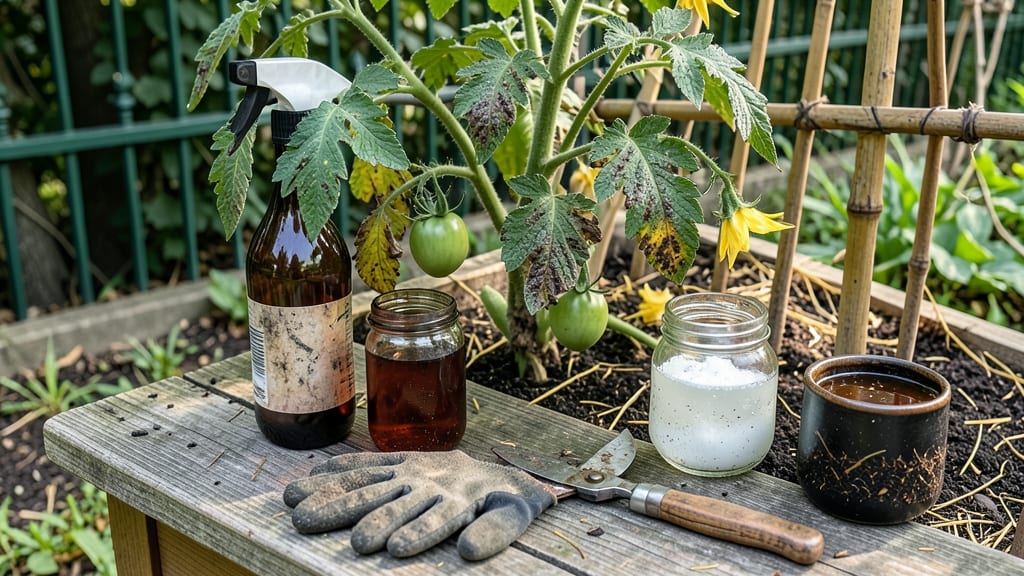
My tomato plants looked like they’d been spray-painted with rust—until I discovered this copper-free organic tomato plant fungus treatment that stops blight in its tracks. 🌱 The key isn’t just treating the spots (though that helps), but fixing the conditions that let fungus move in.
I’ve saved entire plants—even late-season ones—with this method, and you can too.
Fungal diseases like early blight or powdery mildew thrive when plants get wet leaves, crowded stems, or poor airflow. My first mistake? Ignoring the bottom leaves until they were already brown and crispy.
Now I prune aggressively, water at the base, and space plants wider than the catalog suggests. That alone cuts infection by half.
You’ll see new growth within 7–10 days of treatment if you catch it early. The secret weapon? A mix of baking soda, neem oil, and hydrogen peroxide—no copper, no harsh chemicals, just a spray that works.
I’ve even used it on my neighbor’s tomatoes when they were already half-dead, and they bounced back.
Works for greenhouse, container, or in-ground tomatoes, and the ingredients cost pennies compared to store-bought fungicides. The only rule? Start treating at the first sign of spots—don’t wait until the plant is begging for help.
Root Causes Of Tomato Fungus
Fungal infections in tomato plants don’t appear out of nowhere—they’re the result of a perfect storm of environmental and biological factors. Understanding these triggers is the first step to prevention and treatment.
Below are the key reasons why fungi like blight, powdery mildew, and early blight take hold in your garden.
Fungi thrive in wet conditions, and nothing keeps tomato leaves damp longer than overhead watering. When water droplets linger on foliage, they create a moist environment that fungal spores love—think of it as a fungal spa. 🛁
- Why it happens: Many gardeners water from above, either with a hose or sprinkler.
This spreads water across leaves, stems, and even flowers, giving fungi easy access to your plant’s surface. - The science: Fungal spores (like Phytophthora infestans, the cause of late blight) need free moisture to germinate and infect.
Poor drainage exacerbates the issue by keeping soil soggy, where fungal spores can survive in the soil and splash onto plants during rain or irrigation. - Actionable insight: Water at the base of the plant (not the leaves) and ensure your soil has good drainage.
Raised beds or containers with drainage holes can help.
Tomatoes grow best in warm, stable conditions, but fungi love cool, humid nights followed by warm, muggy days. This temperature seesaw creates ideal conditions for fungal spores to spread rapidly.
- Why it happens: Many fungal pathogens (like early blight) are temperature-sensitive. They germinate best between 60–80°F (15–27°C), with high humidity (above 75%).
If your garden swings between hot days and cool, damp nights, you’re basically rolling out the welcome mat for fungi. - The science: High humidity increases leaf wetness duration, while temperature shifts weaken the plant’s defenses.
For example, late blight thrives when daytime temps are warm (70–80°F) but nights dip below 60°F (15°C). - Actionable insight: Monitor your garden’s microclimate.
Use a hygrometer to track humidity and avoid planting tomatoes in low-lying areas where cold air pools. Prune for airflow—crowded plants trap moisture.
A stressed tomato plant is like an open invitation to fungi. Poor nutrition, pests, or physical damage create entry points for infections.
- Why it happens: When tomatoes lack nitrogen, potassium, or phosphorus, their cell walls weaken, making them more susceptible to fungal invasion.
Pests like aphids or spider mites also damage leaves, creating wounds where spores can take hold. - The science: Fungi secrete enzymes that break down plant cell walls. A healthy plant resists this, but a nutrient-deficient one?
It’s an easy target.
For example, early blight (Alternaria solani) exploits plants weakened by low potassium. - Actionable insight: Feed your tomatoes with a balanced fertilizer (10-10-10 or 5-10-10) and compost to boost soil health. Remove infected leaves immediately to prevent spread, and rotate crops to avoid depleting soil nutrients.
Fungal spores can survive in soil for years, waiting for the right moment to strike. Even well-meaning gardeners can accidentally spread them.
- Why it happens: If you’ve grown tomatoes (or other nightshades like potatoes or peppers) in the same spot year after year, fungal pathogens build up in the soil.
Tools, pots, and even gloves can carry spores from one plant to another. - The science: Many fungi, like verticillium wilt, live in the soil as saprophytes (feeding on dead organic matter) until a susceptible host appears.
Once introduced, they can persist for years. - Actionable insight: Practice crop rotation—don’t plant tomatoes in the same spot for at least 3 years. Sterilize tools with a 10% bleach solution or rubbing alcohol.
Consider solarizing soil (covering it with clear plastic for 4–6 weeks in summer) to kill spores.
Some fungi, like powdery mildew, spread via wind and air currents, landing on your tomatoes whether you like it or not.
- Why it happens: Powdery mildew spores (Erysiphe cichoracearum) are lightweight and airborne, traveling on breezes to infect plants.
Even if your garden is pristine, spores from neighboring fields or gardens can hitch a ride. - The science: These spores germinate within hours of landing on a suitable host (like tomato leaves) if conditions are right (warm, humid, and still air).
A single spore can multiply into thousands in days. - Actionable insight: Space plants properly (18–24 inches apart) to improve airflow, which reduces spore landing and germination. Reflective mulch (like aluminum foil) can deter spores by creating an unfavorable environment.
Even well-intentioned gardening can invite fungi. Rough handling during harvesting or pruning can create wounds that fungi exploit.
- Why it happens: When you roughly handle fruits, stems, or leaves, you create microscopic tears in the plant’s protective layer.
Fungal spores, which are always floating in the air, can then colonize these wounds. - The science: Fungi like gray mold (Botrytis cinerea) thrive on damaged tissue.
The longer the wound stays open, the higher the risk of infection. - Actionable insight: Harvest gently—support tomatoes with your hands, not by twisting or yanking. Use clean, sharp pruners (disinfected with rubbing alcohol) to avoid tearing tissue. Avoid pruning in wet conditions to give wounds time to heal.
Fungal infections in tomatoes are rarely random—they’re the result of environmental conditions, poor plant health, or human habits. By addressing these root causes, you can prevent outbreaks before they start.
The good news? Once you know the triggers, you can act proactively with organic treatments (like copper-free sprays) to keep your tomatoes healthy and productive. 🍅✨
How to solve it
When your tomato plants show signs of fungus—like spotted leaves, moldy stems, or wilting fruit—it’s time to act fast. The good news? Many remedies are effective, organic, and budget-friendly. Below, we match common tomato plant fungi to their best solutions, plus prevention tips to keep your garden thriving.
These aggressive fungi thrive in wet conditions and can destroy a harvest in weeks. Skip the harsh chemicals—here’s how to stop them:
🔥 Immediate Action Steps
- Remove infected plant parts (🔪): Snip off yellow/brown leaves and dispose of them in the trash (not compost!). This stops spores from spreading.
- Apply a baking soda spray (🍳): Mix 1 tsp baking soda + 1 tbsp vegetable oil + 1 tsp dish soap in 1 quart of water. Spray both sides of leaves every 7–10 days.
- Use neem oil (🌿): Combine 1 tbsp neem oil + 1 tsp mild soap + 1 quart water. Spray at dusk to avoid harming bees. Reapply after rain.
- Boost airflow (💨): Prune crowded branches and space plants 18–24 inches apart to reduce humidity.
🌱 Prevention for Next Season
- Rotate crops (🌍): Avoid planting tomatoes (or nightshades like peppers/eggplants) in the same spot for 3+ years.
- Solarize soil (☀️): In late summer, cover soil with clear plastic for 4–6 weeks to kill fungus spores.
- Plant resistant varieties (🛡️): Try 'Mountain Merit' or 'Defiant PhR'—they’re bred to resist blight.
This white, powdery coating looks like flour dusting your leaves. It’s harmless to eat but weakens plants. Fight back with these tricks:
🍳 Quick Fixes
- Milk spray (🥛): Mix 1 part milk to 9 parts water + 1 tsp soap. Spray every 7–14 days—the lactic acid prevents spores from germinating.
- Hydrogen peroxide wash (🧪): Use 1 tbsp 3% H₂O₂ per quart of water. Spray leaves (avoid fruit) to disinfect surfaces.
- Reflective mulch (🔆): Cover soil with white plastic or aluminum foil to reduce humidity near plants.
🌿 Long-Term Defense
- Water at the base (💦): Avoid wetting leaves—use drip irrigation or soaker hoses instead.
- Companion plants (🌱): Interplant with marigolds or basil to improve airflow and deter fungi.
- Prune for sunlight (☀️): Thin out dense foliage so leaves dry faster after watering.
If your tomato plants wilt suddenly, even when soil is wet, root rot may be the culprit. This one’s tricky—fix it fast or lose the plant.
⚡ Emergency Care
- Stop watering immediately (🚰): Let soil dry out completely before watering again.
- Add perlite or sand (🏗️): Mix 1 part perlite to 3 parts potting soil to improve drainage.
- Apply beneficial fungi (🍄): Sprinkle mycorrhizal fungi granules near roots to outcompete harmful pathogens.
- Repot if needed (🌱): If roots are mushy and black, trim healthy roots and replant in fresh, sterile soil.
🛡️ Prevention Tips
- Raise beds or use containers (🏗️): Ensure pots have drainage holes and avoid soggy soil.
- Avoid over-fertilizing (🚫🌱): Too much nitrogen weakens roots—stick to a balanced 10-10-10 fertilizer.
- Test your soil (📊): Aim for pH 6.0–6.8—root rot thrives in acidic or waterlogged conditions.
These universal strategies work for almost any tomato fungus:
- 🌡️ Time your watering: Water early in the morning so leaves have 6+ hours to dry before nighttime humidity sets in.
- ✨ Sanitize tools: Wipe pruners with rubbing alcohol between cuts to prevent spreading spores.
- 🍂 Clean up fallen leaves: Rake and compost separately—don’t leave debris near plants.
- 🌿 Use row covers: Lightweight fabric blocks spores while allowing sunlight and water through.
With these methods, you’ll save your tomato plants—and your harvest. Start with the immediate fixes, then build long-term habits to keep fungi at bay. Your future salads (and salsas!) will thank you. 🍅😉
Frequently asked questions
How often should I apply the baking soda spray for tomato plant fungus?
Apply the baking soda spray every 7–10 days during active fungal outbreaks. For prevention, reduce to once every 2–3 weeks when humidity is high. Always spray in the early morning so leaves dry quickly, which fungi hate most.
Can I use hydrogen peroxide on tomato fruits?
No, never spray hydrogen peroxide directly on tomato fruits—it can cause surface damage or discoloration. Use it only on leaves (1 tbsp 3% H₂O₂ per quart of water) to disinfect fungal spores. Always rinse the sprayer thoroughly before applying to edible parts.
Why does my tomato plant keep getting fungus even after treatment?
Recurring fungus often means the root cause isn't fixed. Check these common issues: overhead watering, crowded plants, or poor soil drainage. Fungi also thrive when plants are nutrient-deficient—test your soil and add compost or balanced fertilizer (10-10-10).
Is it safe to eat tomatoes from plants with early blight?
Yes, but remove all infected leaves first. Early blight rarely affects fruit quality, though severely infected plants may produce smaller tomatoes. For peace of mind, harvest fruits from healthy lower stems and discard any with visible spots.
How do I know if my tomato plant has fungus or just sunburn?
Fungal spots are usually brown/black with yellow halos (early blight) or white powdery patches (mildew), while sunburn shows as bleached, crispy areas on upper leaves. Check the undersides of leaves—fungus often starts there.