
Plants
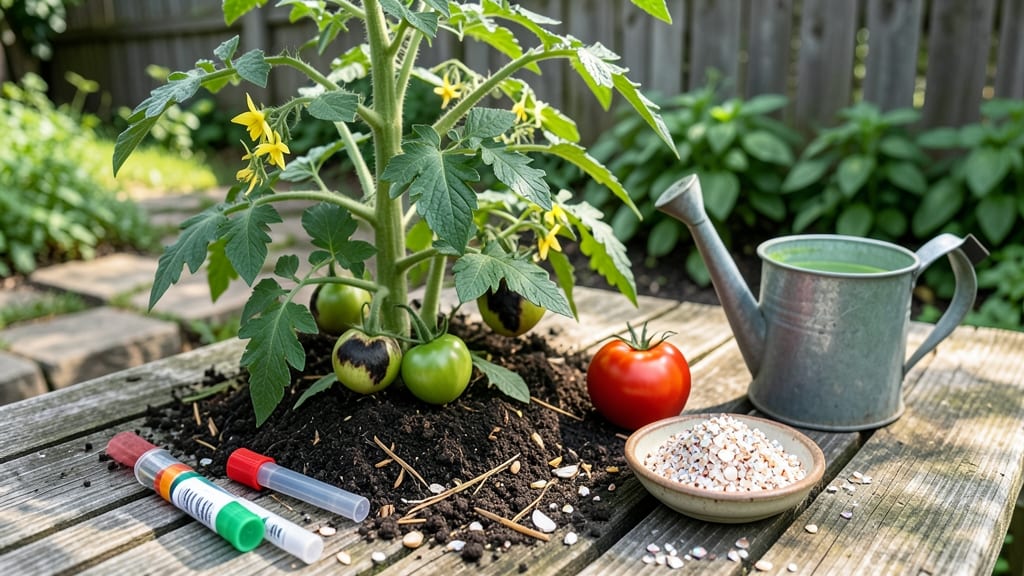
Blossom end rot turns your tomatoes into leathery, blackened messes instead of juicy summer treats. 🌱 I’ve watched my perfectly healthy tomato plants produce fruit with ugly, sunken bottoms—until I learned the calcium secret that saves the harvest.
The problem starts when calcium can’t reach the growing fruit, usually from inconsistent watering, compacted soil, or pH imbalances. Even with plenty of water, roots can’t absorb enough calcium when conditions fluctuate. That’s why mulching and drip irrigation become game-changers—keeping moisture steady lets roots work efficiently.
With the right fix, your next tomato crop will be crisp, sweet, and blemish-free. We’re talking thick-walled heirlooms that pop in salads and sauce that clings to pasta. The solution is simpler than you think, and it starts with a quick soil check.
For gardeners in hot climates, this method also prevents cracking. Let’s get those tomatoes back on track—no more sad, shriveled bottoms!
Root Causes Of Fruit Scarring
Blossom end rot isn’t just a random bad-luck scenario—it’s a cry for help from your tomato plants, often tied to calcium deficiency but also influenced by environmental and soil factors. Let’s break down the science behind why your tomatoes develop those unsightly dark, sunken spots at the blossom end.
Tomatoes are hungry growers—they expand rapidly during fruiting season, demanding more nutrients than the roots can deliver. Calcium is a structural building block for cell walls, but when plants grow too fast, they can’t absorb enough from the soil.
This creates a transport bottleneck: even if calcium is present, the plant can’t move it quickly enough to the youngest, fastest-growing tissues (like the blossom end of tomatoes).
- Why it matters: Calcium deficiency weakens cell walls, making them prone to bursting or collapsing under pressure.
The blossom end is the last to receive calcium, so it’s the first to show symptoms. - Actionable insight: Think of calcium like a construction crew—if the plant is expanding too quickly, the crew gets overwhelmed and can’t finish the job.
Calcium is most available to plants when soil pH is between 6.0 and 7.0. If your soil is too acidic (pH < 5.5) or too alkaline (pH > 7.5), the plant struggles to absorb calcium, even if it’s in the soil.
- Too acidic (low pH): Excess aluminum and manganese compete with calcium, locking it out of the root zone. - Too alkaline (high pH): Calcium binds tightly to soil particles, making it unavailable for uptake. - Test your soil: A simple home pH test kit (or lab analysis) can reveal if pH is the culprit.
Adjust with lime (to raise pH) or sulfur (to lower pH) as needed.
Water is the delivery system for calcium in plants. When watering is inconsistent—like drought followed by a sudden soak—roots can’t maintain steady nutrient flow. This disrupts calcium transport, leading to localized deficiencies in the fruit.
- Drought stress: Roots shrink, reducing surface area for nutrient absorption.
- Flooding or uneven moisture: Oxygen deprivation in roots stops calcium uptake temporarily.
- Solution: Aim for 1–1.5 inches of water per week, delivered consistently (e.g., drip irrigation or deep watering 2–3 times per week).
Over-fertilizing—especially with high-nitrogen or high-salt fertilizers—can burn roots, reducing their ability to absorb calcium. Salty soil (from tap water, compost tea, or synthetic fertilizers) also osmotically stresses the plant, forcing it to prioritize water over nutrients.
- Signs of over-fertilization: Yellowing leaves, crispy leaf edges, or white crust on soil surface.
- Fix it: Flush the soil with rainwater or distilled water to leach out excess salts. Switch to balanced, organic fertilizers (like fish emulsion or compost) and reduce frequency.
Tomatoes thrive in warm but stable conditions (60–85°F). Extreme heat or cold disrupts root activity, slowing calcium uptake. Additionally, rapid temperature swings (e.g., hot days + cool nights) can cause physiological stress, making the plant less efficient at nutrient distribution.
- Heat stress: Roots may suffocate in compacted soil, reducing absorption.
- Cold stress: Enzymes in roots slow down, halting calcium movement.
- Pro tip: Use mulch (straw or grass clippings) to regulate soil temperature and shade cloth during heatwaves.
Healthy roots are the gatekeepers of nutrient uptake. If roots are damaged by cultivation, pests (like nematodes), or compacted soil, their ability to absorb calcium plummets.
- Common culprits:
- Over-tilling (breaks fine root hairs).
- Heavy foot traffic (compacts soil, reducing oxygen).
- Root-knot nematodes (parasitic worms that disrupt root function).
- Solution: Improve soil structure with compost or perlite, avoid walking on beds, and rotate crops to break pest cycles.
Some tomato varieties are more susceptible to blossom end rot due to their fast growth rates or thin cell walls. Heirloom and indeterminate varieties (like Beefsteak or Brandywine) are often more prone than hybrid types bred for disease resistance.
- What to do: If you’re growing high-risk varieties, proactively supplement calcium (see next section) and monitor soil conditions closely.
💡 Quick Fix Reminder: While these causes explain why blossom end rot happens, the good news is that calcium supplements, consistent watering, and soil amendments can often reverse the problem—even mid-season! Stay tuned for our rescue strategies in the next section.
Fixing Blossom End Rot Naturally
Blossom end rot may look like the end of your tomato harvest, but with the right fixes, you can still save your plants—and even prevent future issues.
The key is addressing the root causes (literally!) with practical, garden-friendly solutions. Below, we’ve mapped out cause-specific fixes to revive your tomatoes and keep them thriving.
Blossom end rot often starts when your tomatoes lack calcium, especially during rapid growth. Here’s how to give them a quick calcium boost:
🍳 Quick Fix: Calcium-Rich Fertilizer
- Use: A calcium nitrate or crushed eggshells fertilizer (both dissolve easily).
- How: Mix 1 tablespoon of crushed eggshells into the soil around the base of the plant, or dissolve 1 teaspoon of calcium nitrate in 1 gallon of water and water deeply.
- When: Apply every 7–10 days during fruiting (when tomatoes are forming).
🌡️ Prevent Future Shortages
- Test soil pH: Aim for 6.0–6.8—calcium absorbs poorly in acidic soil. Add lime if needed.
- Mulch heavily: Keeps soil moist and roots cool, improving calcium uptake.
- Avoid over-fertilizing with nitrogen: Too much nitrogen speeds growth but starves calcium.
Use a balanced 10-10-10 or 5-10-10 fertilizer instead.
Drought stress or sudden watering changes trigger blossom end rot. Keep soil consistently moist (but not soggy):
👨🍳 Step-by-Step Watering Fix
- Water deeply 2–3 times per week (early morning is best).
- Use drip irrigation or soaker hoses to avoid wetting leaves (prevents disease).
- Check soil moisture with your finger—top 1–2 inches should be dry, but deeper soil should stay damp.
- Avoid overhead sprinklers (they cause uneven watering and fungal risks).
✨ Pro Tip: Self-Watering Trick
- DIY wick system: Bury a terracotta pot near the plant, fill it with water, and insert a wick (cotton rope) leading to the tomato’s roots. This keeps moisture steady.
Temperature swings stress plants, making them drop calcium. Protect your tomatoes with these low-effort fixes:
🔥 Beat the Heat
- Shade cloth: Use 30–50% shade fabric on hot afternoons (especially in peak summer).
- Reflective mulch: Lay white plastic or aluminum foil around plants to bounce back sunlight.
- Evening watering: Lightly water roots at dusk to cool the soil overnight.
❄️ Cold Snaps? Cover Up
- Row covers or old blankets can shield plants from sudden chills.
- Move potted tomatoes to a sheltered spot if frost is forecast.
Compacted or poor-quality soil blocks calcium and water. Revive your garden bed with these easy amendments:
| Problem | Solution | How to Apply |
|---|---|---|
| Clay soil | Gypsum or compost | Mix 1 cup gypsum per 10 sq ft or top-dress with 2–3 inches of compost. |
| Sandy soil | Organic matter (peat moss, coconut coir) | Work in 5–10 lbs of compost per 10 sq ft. |
| Poor drainage | Raised beds or sand amendment | Add coarse sand (50/50 mix with soil) if drainage is slow. |
If your tomatoes are already rotting, don’t waste them—repurpose them!
- 🍅 Use rotted tomatoes in sauces: Blend into salsa, soups, or pasta sauce (the rot softens them).
- 🌱 Prune affected branches: Cut back severely damaged fruit to redirect energy to healthy tomatoes.
- 🌱 Monitor new growth: If new blossoms appear, apply calcium treatments preventatively.
✅ Start with calcium-rich soil (add crushed eggshells or bone meal at planting). ✅ Mulch heavily (straw or wood chips retain moisture). ✅ Water consistently (never let soil dry out completely). ✅ Avoid over-fertilizing (stick to balanced NPK ratios). ✅ Test soil pH (aim for 6.0–6.8 for best calcium uptake).
With these fixes, your tomato plants should bounce back—and next season, you’ll enjoy crisp, rot-free tomatoes all harvest long! 🍅✨
Frequently asked questions about tomato blossom end rot
Why do only some tomatoes on my plant get blossom end rot while others stay perfect?
This happens because blossom end rot targets the fastest-growing fruit first. When calcium supply is limited, the plant prioritizes younger, more active tomatoes. The first to show symptoms are often the ones that formed during rapid growth spurts or after inconsistent watering. Prune the affected ones to redirect the plant's energy to healthier fruit.
Can I still eat tomatoes with blossom end rot?
Yes, but remove the blackened area first. The rot only affects the bottom 1/4 inch of the tomato, so cutting it off and using the rest is perfectly safe. For sauces or soups, the rot actually softens the texture, making it ideal for blending. Just avoid eating the sunken, leathery spot.
How quickly can I expect to see results after applying calcium treatments?
New growth typically shows improvement within 7–14 days, but existing fruit won't recover. For best results, start calcium supplements at planting time and continue every 2 weeks during fruiting. The key is maintaining consistent soil moisture and pH while applying calcium.
Will compost alone fix blossom end rot?
Compost helps, but it's not a complete solution. While it improves soil structure and provides some calcium, you'll still need to actively supplement with crushed eggshells or calcium nitrate, especially during fruiting. The rot occurs when calcium demand outpaces what compost can supply during rapid growth.
Can I use milk to prevent blossom end rot?
Yes! Diluted milk (1 part milk to 10 parts water) can help. The calcium and lactobacillus in milk improve soil structure and microbial activity, making calcium more available to roots. Spray it on leaves or use as a soil drench every 2 weeks during the growing season for prevention.