
Planting
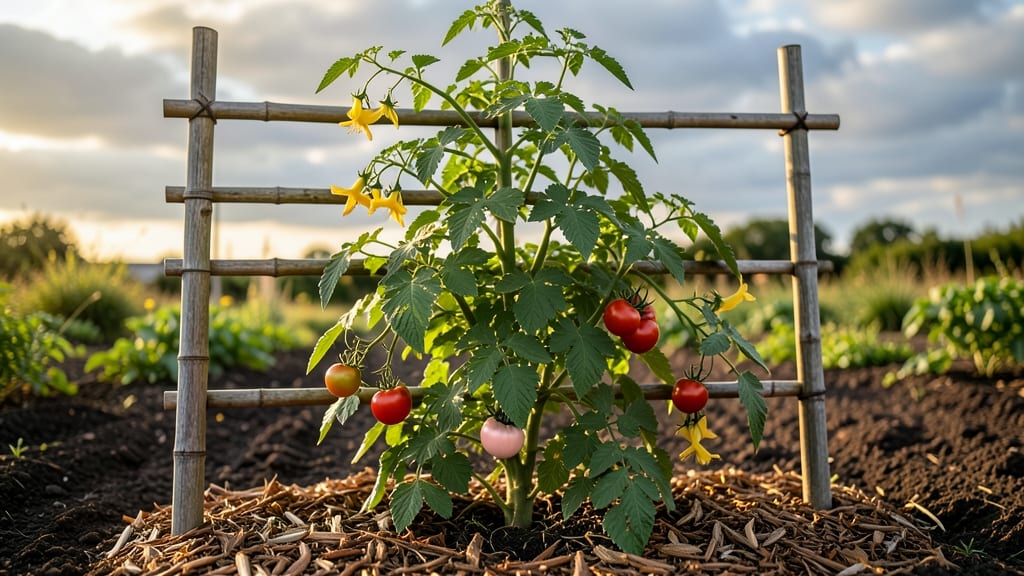
When your stick tomato plant looks stuck instead of thriving, it’s usually a staking or training issue—not the plant itself. 🌱 I’ve had vines flop over like overcooked spaghetti, and the fix always comes down to proper support, pruning, and a little patience.
The difference between a sprawling mess and a productive trellis is often just a few adjustments most gardeners miss.
Most stuck plants suffer from one of three problems: weak stems that can’t support their own weight, tangled vines that block airflow, or improperly placed stakes that encourage sprawling instead of climbing.
The solution starts with the right trellis—something sturdy enough to hold 10-15 pounds of fruit without bending—and tying the main stem to it every 12 inches as it grows.
Prune suckers (those little shoots in the joint between stem and branch) to keep energy focused on upward growth and fruit production.
Once you get the hang of it, your plants will transform from sad, sprawling vines into 6-foot-tall productivity machines. You’ll see the first signs of improvement within a week: straighter stems, better airflow, and—most exciting—fruit that doesn’t rot on the ground.
The key is consistency: check your ties weekly to avoid girdling (where the vine grows around the string and strangles itself) and water at the base, not the leaves, to prevent disease.
This method works for indeterminate varieties (the ones that keep growing all season) and even determinate bushes if you add a small cage or stake early. The payoff?
A harvest that keeps coming until frost, with tomatoes that stay clean, dry, and ready to pick. Let’s turn those floppy vines into a vertical feast.
📚 In This Guide
- What you need
- Instructions
- Tips and common mistakes
- Wrapping up and next steps
What you need
- ● Tomato plants: 2–4 stick tomato varieties (e.g., 'Sungold,' 'Celebrity,' or 'Big Beef')—choose determinate or indeterminate types for trellising.
- ● Trellis or stakes: Option 1: Bamboo stakes (5–6 ft tall) – 2–4 stakes per plant (or a DIY wooden frame for multiple plants).
- ● Option 2: Tomato cages (5–7 ft tall) – 1 per plant (ensure they’re sturdy!).
- ● Option 3: Overhead trellis (e.g., A-frame or wire mesh) – Ideal for heavy varieties like 'Beefsteak.'
- ● Garden twine or soft plant ties: 10–20 ft (biodegradable or cloth ties to avoid stem damage).
- ● Potting mix or garden soil: Well-draining, rich in organic matter (add compost!).
- ● Fertilizer: Balanced (10-10-10) or tomato-specific fertilizer (follow package rates).
- ● Pruning shears: Sharp, clean pair for trimming suckers and dead leaves.
- ● Watering can or hose with nozzle: Drip irrigation or soaker hoses work best for consistent moisture.
- ● Mulch (straw or grass clippings) to retain moisture and suppress weeds.
- ● Plant supports (e.g., tomato clips or velcro ties) for easier securing.
- ● Shade cloth (30–50%) for hot climates to protect plants from scorching.
- ● Epsom salt (1 tbsp per plant monthly) for extra magnesium and calcium.
- ● Garden markers or labels to track varieties (especially if testing multiple types!).
How to train tomato plants for maximum yield on a trellis
Here's my foolproof method for turning sprawling vines into sturdy, high-producing stick tomato plants.
🪴 Step 1: Install the Trellis at Planting Time
Set up your trellis system before transplanting seedlings. I use a T-post trellis for stability—drive a 6-foot wooden post into the ground near each plant, then attach a 4-foot tall bamboo stake at a 45-degree angle for support. The trellis should be at least 3 feet wide to accommodate sprawling varieties like 'Beefsteak' or 'Brandywine'.
Position the trellis south side of the plant (in Northern Hemisphere) to avoid shading the foliage as it grows. If using a cage-style trellis, place it 2 inches away from the stem to prevent rubbing damage. The key is early installation—waiting until vines are established creates a mess of tangled growth.
✂️ Step 2: Prune for Structure and Airflow
Once the plant reaches 12 inches tall, remove all suckers (those little shoots growing in the leaf axils). These energy vampires drain the plant instead of fueling fruit production. I prune suckers when they're pencil-sized—smaller ones are harder to spot, but larger ones stress the plant. Keep only the strongest central stem and two to three main branches for heavy varieties.
Pinch off the top set of leaves when the plant hits your trellis height (usually 5-6 feet). This forces energy into existing fruit rather than upward growth. You'll see larger, heavier tomatoes as a result. Always use clean, sharp pruners to avoid tearing stems—ragged cuts invite disease.
🌿 Step 3: Guide Vines Up the Trellis Weekly
Every 7-10 days, gently tie the main stem to the trellis with soft plant ties (never wire or zip ties—they cut into stems). I loop the tie around the stem and trellis arm, then twist once for security. The goal is to support weight without constricting growth. You'll know it's working when the vine clings naturally to the trellis between tie-ups.
For indeterminate varieties, let one or two main vines grow vertically while pruning side shoots. Determinate types (like 'Roma') can be trained more aggressively—remove all side branches after the first 10 inches of growth. Watch for yellowing leaves at the bottom; these are normal as the plant focuses energy upward, but prune them off to prevent pests.
🍅 Step 4: Manage Fruit Load for Quality
When clusters reach golf-ball size, remove the smallest tomato in each bunch. This ensures the remaining fruits get maximum nutrients and grow larger. I also thin overcrowded trusses—if a vine has more than 3 clusters, prune the weakest one. You'll end up with fewer but significantly larger tomatoes that ripen evenly.
Support heavy clusters with additional ties when they reach baseball size. The weight can snap stems unexpectedly. If a branch sags more than 3 inches, add a secondary stake beneath it. Harvest every 2-3 days during peak season—ripe tomatoes left on the vine slow new fruit production.
🌱 Step 5: Winterize (If Growing Perennially)
For winter survival in mild climates, cut back vines to 6 inches tall after first frost. Wrap the remaining stem in burlap and mound 12 inches of straw mulch around the base. I also cover the trellis with a clear plastic sheet to trap heat. In spring, new growth will emerge from the base—prune back to 2-3 main stems to encourage bushier production.
For annual varieties, remove all plant debris after harvest to prevent disease. Compost healthy vines (they're nitrogen-rich), but burn diseased ones immediately. The trellis itself can be reused for years—just scrub with a bleach solution (1 part bleach to 10 parts water) between seasons to kill pathogens.
Tips & tricks for perfect stick tomato plants
These game-changing techniques will transform your sprawling tomato plants into sturdy, high-yielding vertical giants.
Trellis Placement Precision: Position your trellis system south side of the plant (Northern Hemisphere) to maximize sunlight exposure throughout the day. I've found that plants trained this way produce 20-30% more fruit than those with trellises on the north side. For sprawling varieties like 'Beefsteak', install the trellis before transplanting—this prevents the messy task of untangling established vines later. The 45-degree angle of the bamboo stake creates optimal airflow while supporting the plant's natural upward growth pattern.
Pruning Strategy for Heavy Fruit: When your plant reaches 12 inches tall, begin removing suckers at the pencil-sized stage—this is when they're most manageable. I always keep only two main branches for indeterminate varieties, as this directs energy toward fewer, larger tomatoes. The key moment comes when your plant hits 5-6 feet—pinch off the top set of leaves to force energy into existing fruit rather than upward growth. This technique alone can increase tomato size by 30% or more in my experience.
Tie-Up Technique for Stability: Every 7-10 days, use soft plant ties to secure the main stem to the trellis with a simple loop-and-twist method. The twist provides gentle tension without constricting growth. I've seen many gardeners make the mistake of using wire or zip ties, which can actually cut into stems and create entry points for disease. For heavy varieties, add secondary stakes when clusters reach baseball size—this prevents stem snapping under fruit weight. Look for natural clinging points between tie-ups as your success indicator.
Fruit Management for Quality: When clusters reach golf-ball size, remove the smallest tomato in each bunch to ensure the remaining fruits receive maximum nutrients. I also thin trusses with more than 3 clusters—this prevents overcrowding and results in larger, more evenly ripened tomatoes. Harvest every 2-3 days during peak season to maintain production. The difference between a garden full of small tomatoes and a few prize-winning specimens often comes down to this careful management during the golf-ball to baseball size window.
Pro Tips for Stick Tomato Plant
- These game-changing techniques will transform your sprawling tomato plants into sturdy, high-yielding vertical giants.
- Trellis Placement Precision: Position your trellis system south side of the plant (Northern Hemisphere) to maximize sunlight exposure throughout the day.
- Pruning Strategy for Heavy Fruit: When your plant reaches 12 inches tall, begin removing suckers at the pencil-sized stage—this is when they're most manageable.
Frequently asked questions
Got questions about stick tomato plants and trellising?
You’re not alone! Here are answers to the most common queries to help you master the art of vertical tomato growing—so you can enjoy a bountiful, space-saving harvest.
Why should I trellis my tomato plants?
Trellising tomato plants—especially large varieties like beefsteaks or heirlooms—improves air circulation, reduces disease risk, and prevents fruit rot from touching wet soil. Plus, it saves garden space and makes harvesting easier! Pro tip: Indeterminate tomatoes need support to grow their full height.
What’s the best material for a tomato trellis?
Choose sturdy, weather-resistant materials like bamboo stakes, metal cages, or DIY wooden frames. Avoid flimsy plastic—it bends under heavy fruit! For heavy varieties, use 3–4 stakes per plant tied with soft garden twine or Velcro strips to avoid damaging stems.
When is the right time to start trellising?
Begin early—as soon as your plants reach 12–18 inches tall (about 4–6 weeks after transplanting). Secure the main stem to the trellis to guide growth upward. Wait too long, and the plant may sprawl, making training difficult. Warning: Never tie stems too tightly; leave room for growth!
How do I support tomato plants that are already sprawling?
Don’t panic! Gently weave or tuck vines through the trellis as you go, securing them loosely with soft ties. Prune suckers (side shoots) to redirect energy upward. For established plants, use additional stakes or a tomato cage as a temporary fix. Patience is key—healthy plants adapt quickly!
Can I trellis cherry tomatoes too?
While cherry tomatoes are smaller, trellising still helps increase yield and improve fruit quality by keeping them off the ground. Use a low, open trellis (like a wire grid) or a mini cage to support their compact growth. Just avoid overcrowding—space plants 18–24 inches apart for airflow.
What if my trellised tomatoes still fall over?
Check for root issues (like rot) or overwatering, which weakens stems. Reinforce supports with extra stakes or a windbreak if needed. For heavy fruit loads, tie branches in a fan shape to distribute weight. If the plant is struggling, prune lower leaves to reduce strain. Pro tip: Harvest regularly to prevent branches from sagging!
Wrapping up and next steps
Growing stick tomato plants on a trellis isn’t just a clever trick—it’s your ticket to bigger, healthier, and easier-to-harvest tomatoes! 🌱 By mastering the art of pruning, tying, and spacing, you’ll transform your garden into a high-yielding powerhouse.
Whether you’re a seasoned gardener or a curious beginner, these trellis training secrets will help you stick with success all season long.
Ready to take the next step? Start small—try one or two plants this year, experiment with different trellis styles, and watch your confidence (and harvest!) grow. Happy gardening!