
Planting
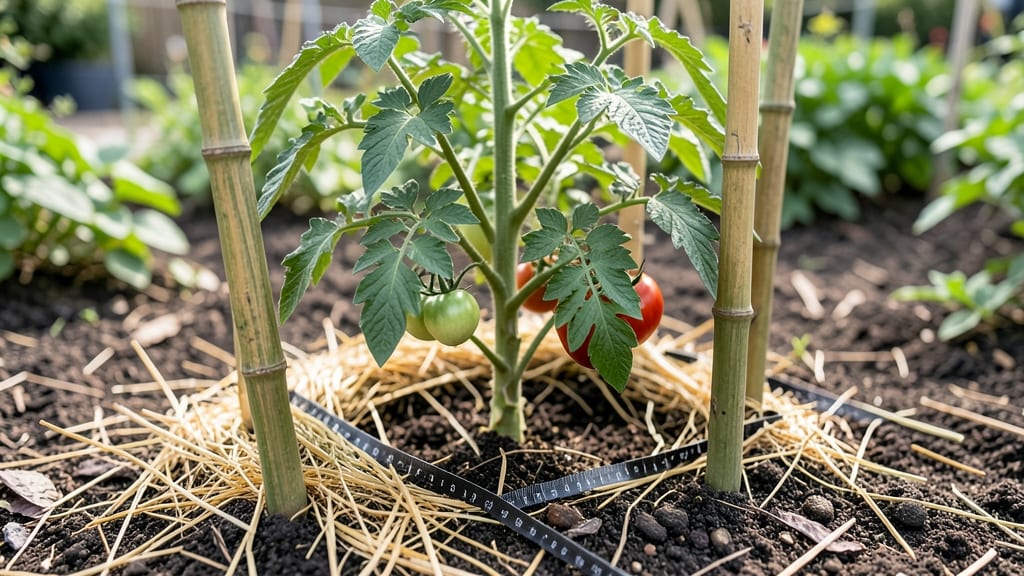
Proper raised bed garden tomato spacing can turn your 4x8-foot plot into a tomato powerhouse—if you know the right tricks. 🌱 I learned the hard way that cramming plants saves space but chokes yields, while the "perfect" layout gives you bushels of ripe fruit with minimal fuss.
The secret lies in matching plant types to their natural growth habits and sunlight needs.
Determinate tomatoes (the bush types) need 18-24 inches apart in rows spaced 2-3 feet apart, while indeterminate vining varieties thrive with 24-36 inches between plants and 3-4 feet between rows.
This isn’t just theory—it’s what separates the gardeners who harvest 50+ pounds of tomatoes from those who end up with sad, leggy plants fighting for light. Add a trellis for indeterminates, and you’ll free up space while improving airflow (which cuts disease risks by half).
Here’s the game-changer: stagger your plants in a quincunx pattern (like a checkerboard) instead of straight rows. This maximizes sunlight exposure and lets you fit 20% more plants in the same bed without sacrificing yield.
Pair your tomatoes with basil or marigolds to repel pests naturally, and you’ve got a system that works whether you’re growing cherry tomatoes or beefsteaks.
Start with healthy transplants, mark your spacing with stakes before planting, and watch your tomatoes grow into a thriving, high-yielding system. The payoff? More fruit, less disease, and a layout that actually makes sense—no more guessing whether your plants have enough room to shine.
📚 In This Guide
- What you need
- Instructions
- Tips and common mistakes
- Wrapping up and next steps
What you need
- ● Raised bed frame: Wooden, metal, or composite (minimum 4 ft x 8 ft for 4–6 plants; adjust for more). Height: 6–12 inches (deeper for larger varieties).
- ● Garden soil: High-quality potting mix or raised bed soil blend (avoid garden soil; it compacts). Quantity: ~1 cubic yard per 4 ft x 8 ft bed.
- ● Compost: Well-aged, organic compost (mix 25–30% compost into soil for nutrients). Quantity: ~1–2 bags per bed.
- ● Tomato plants: Disease-resistant varieties (e.g., 'Celebrity,' 'Sungold,' or 'Roma'). Quantity: 4–6 plants per 4 ft x 8 ft bed (adjust spacing per variety).
- ● Stakes or cages: 5–6 ft tall bamboo stakes or tomato cages (1 per plant).
- ● Mulch: Straw, grass clippings, or shredded leaves (2–3 inches thick).
- ○ Watering can or hose: With a gentle spray nozzle (drip irrigation is optional but ideal).
- ● Gloves & pruners: For handling plants and trimming.
- ● Fertilizer: Balanced organic fertilizer (e.g., 10-10-10 or fish emulsion) for a mid-season boost.
- ● Row covers: Floating fabric to protect seedlings from pests or frost.
- ● Soil pH tester: To ensure your soil is 6.0–6.8 pH (tomatoes love slightly acidic soil!).
- ● Plant markers: Labels or sticks to track varieties and planting dates.
- ● Knee pads: For comfy kneeling while planting!
Step-by-Step instructions for raised bed garden tomato spacing
Here's how I arrange tomatoes in raised beds for maximum yield and airflow—no guesswork, just proven layouts.
🌱 Step 1: Plan Your Raised Bed Layout Based on Tomato Variety
Determine your tomato types first—determinate (bush) varieties like 'Roma' or 'Celebrity' need 18-24 inches apart, while indeterminate (vining) types like 'Sungold' or 'Brandywine' require 24-36 inches. I always draw a quick sketch to visualize spacing before planting, especially in smaller beds where crowding is tempting.
For a 4-foot-wide raised bed, you can fit two rows of indeterminate tomatoes with 30 inches between plants and 18 inches between rows. This creates a natural airflow path down the center. If using cages or stakes, plan their placement now—you don't want to disturb roots later.
☀️ Step 2: Position Plants for Optimal Sun Exposure and Airflow
Place taller indeterminate varieties on the north side of the bed to avoid shading smaller plants. I arrange them in a staggered pattern (like brickwork) so leaves don't block sunlight from reaching the center. This also prevents fungal diseases by reducing humidity buildup in dense foliage clusters.
Leave at least 18 inches of clear space between rows to allow easy access for pruning and harvesting. You'll notice better fruit set and fewer pests when plants aren't competing for sunlight or air circulation. If your bed is wider than 4 feet, add a third row in the center but keep the same spacing.
🌿 Step 3: Plant Deeply and Support Early for Strong Growth
Dig a hole twice as deep as the root ball and loosen the soil at the bottom to encourage root spread. Bury ⅓ of the stem—this stabilizes the plant and promotes stronger root development. I like to add a handful of compost to the planting hole for extra nutrients without overfeeding.
Install stakes or cages immediately (even for small plants) to prevent root disturbance later. For indeterminate varieties, use 6-foot stakes driven 12 inches deep or sturdy 5-foot cages. You'll see less sprawling and more upward growth when support is in place from day one.
✂️ Step 4: Prune and Thin for Maximum Airflow and Yield
After plants reach 12-18 inches tall, prune suckers (shoots in the leaf axils) to direct energy to fruit production. I remove every other sucker on indeterminate varieties to maintain airflow while still encouraging bushiness. For determinate tomatoes, minimal pruning is needed—just remove lower leaves touching the soil.
Watch for leaf yellowing near the soil line—this signals overcrowding or disease. Thin out leaves in the center of the plant to improve airflow. You'll notice fewer blossom-end rot issues and healthier fruit when plants aren't fighting for space or resources.
Tips & tricks for perfect raised bed tomato arrangement
Between us, I've learned the hard way that tomato spacing isn't just about fitting more plants—it's about creating a thriving ecosystem. Here's what nobody tells you about making every inch of your raised bed work for you.
Variety-Specific Spacing Secret: The 18-24 inch spacing for determinate varieties and 24-36 inch spacing for indeterminate types isn't arbitrary—it's about their growth habits. Determinates stay compact, while indeterminates keep growing vertically. I've seen gardeners cram indeterminates too close, and by midsummer, you're fighting tangled vines instead of harvesting. Trust me on this: stick to the wider spacing for those vining types.
Visual Layout Strategy: That staggered brickwork pattern in Step 2 isn't just aesthetic—it creates what I call "airflow corridors." When you arrange plants in offset rows, sunlight reaches the soil between plants, preventing fungal diseases that thrive in damp, shaded conditions. I mark my planting spots with bamboo stakes before even putting plants in the ground to visualize the pattern.
Support System Timing: Installing those 6-foot stakes or 5-foot cages immediately (as mentioned in Step 3) might seem like overkill for small plants, but I've seen too many gardeners wait until plants are sprawling before adding support. The roots get disturbed when you try to insert stakes later, and the plant wastes energy recovering. Bury those stakes deep from day one—they'll anchor your plants through storms and heavy fruit loads.
Pruning Precision: When you're pruning suckers in Step 4, focus on removing every other one rather than going for complete removal. This maintains some foliage density while still improving airflow. I use clean, sharp pruners and make cuts at a 45-degree angle just above a leaf node. This technique reduces stress on the plant and encourages faster healing at the pruning site.
Pro Tips for Raised Bed Garden Tomato Spacing
- Between us, I've learned the hard way that tomato spacing isn't just about fitting more plants—it's about creating a thriving ecosystem.
- Variety-Specific Spacing Secret: The 18-24 inch spacing for determinate varieties and 24-36 inch spacing for indeterminate types isn't arbitrary—it's about their growth habits.
- Visual Layout Strategy: That staggered brickwork pattern in Step 2 isn't just aesthetic—it creates what I call "airflow corridors."
Frequently asked questions
Got questions about spacing tomatoes in raised beds? You’re not alone! Here are answers to the most common concerns—plus pro tips to set your garden up for success.
What’s the best spacing for tomato plants in a raised bed?
For determinate (bush) tomatoes, space plants 18–24 inches apart in rows 24–30 inches apart. For indeterminate (vining) varieties, go 24–36 inches apart in rows 36–48 inches apart. This gives roots room to breathe and airflow to prevent disease.
When is the best time to plant tomatoes in a raised bed?
Plant after the last frost when soil temps hit at least 60°F—usually 2–3 weeks after your area’s last frost date. For cooler climates, start seeds indoors 6–8 weeks before transplanting. Raised beds warm up faster, so you can plant 1–2 weeks earlier than in-ground gardens!
Can I plant tomatoes closer together to save space?
Tempting, but no—crowding leads to poor airflow, fungal diseases (like blight), and smaller yields. If space is tight, opt for determinate varieties or use vertical trellises to train vines upward. Just ensure branches don’t touch each other!
How do I adjust spacing for dwarf or cherry tomatoes?
Dwarf or bushy cherry tomatoes (like ‘Tiny Tim’ or ‘Sweet 100’) can be planted 12–18 inches apart in rows 18–24 inches apart. For trailing varieties (e.g., ‘Tumbling Tom’), space 12–18 inches apart but provide strong support—they’ll spill over edges!
Why are my tomatoes struggling despite proper spacing?
Check these fixes:
- Overwatering: Raised beds dry faster—water deeply 1–2x/week (not daily).
- Poor soil: Amend with compost or aged manure for nutrients.
- Pests: Yellow jackets or hornworms? Handpick or use row covers.
- Sunlight: Tomatoes need 6–8+ hours of sun daily—relocate if shaded.
Wrapping up and next steps
Perfect tomato spacing in your raised bed garden isn’t just about fitting more plants—it’s about setting them up for success! 🌱 By following proven layouts (like the 18”–24” rule for indeterminate varieties or the 12”–18” spacing for determinate types), you’ll boost airflow, reduce disease, and harvest bountiful, flavorful tomatoes all season long.
Now that you’ve got the spacing down, it’s time to roll up your sleeves and plant—your future sauces, salads, and sandwiches are waiting!
Ready to take the next step? Check out our planting guide for soil prep tips, watering schedules, and pro tricks to keep your tomatoes thriving from seedling to harvest. Happy gardening! 🌿