
Planting
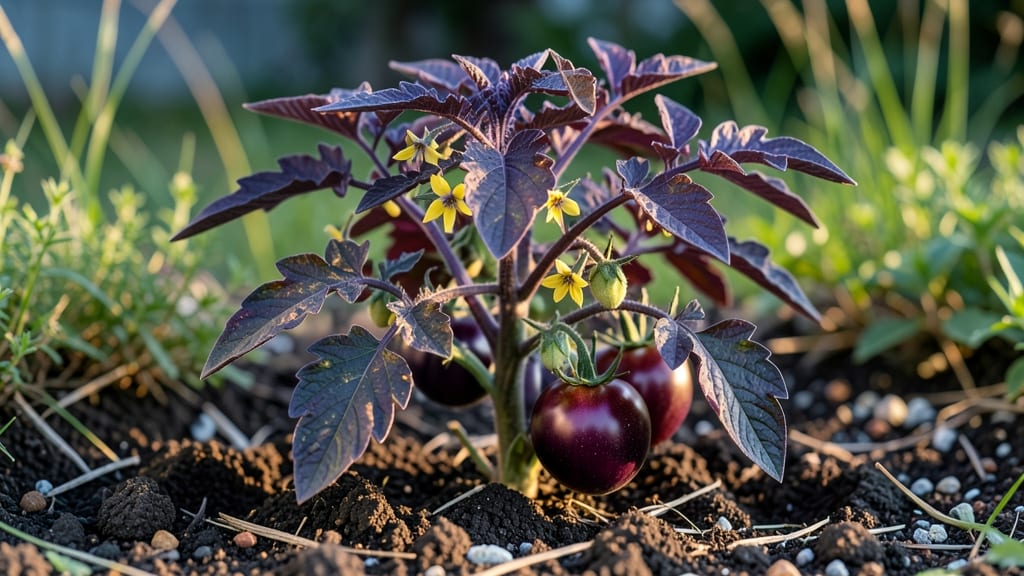
Growing purple tomato plants turns your garden into a living work of art. 🌿 These striking varieties like 'Indigo Rose' and 'Purple Cherokee' don't just look stunning—they produce flavorful fruit with deep purple hues that stay vibrant longer than red tomatoes.
The secret to their success lies in understanding their indeterminate growth habits and specific care needs. Start with rich, well-draining soil mixed with compost to give their roots the nutrients they crave. Purple tomatoes thrive in full sun (6-8 hours daily) and need consistent moisture, especially during fruiting.
The key is balancing watering—too much causes cracking, but too little leads to blossom end rot. I've found that mulching helps maintain even soil moisture and keeps those purple beauties producing all season. You'll be harvesting tomatoes with jewel-toned skins and rich, slightly sweet flavors by midsummer.
These plants keep giving until frost, so plan your trellis early—they can grow 6-10 feet tall if supported properly. The color retention is one of their best traits, making them perfect for salads, salsas, or just admiring in the garden.
For beginners, focus on disease prevention—purple tomatoes are prone to the same issues as red varieties. Crop rotation, proper spacing, and avoiding overhead watering will keep your plants healthy. Once you master these care basics, you'll have a showstopping harvest that neighbors will envy.
📚 In This Guide
- What you need
- Instructions
- Tips and common mistakes
- Wrapping up and next steps
What you need
- ● Purple Tomato Seeds or Seedlings: Choose indeterminate varieties like 'Black Krim,' 'Purple Calabash,' or 'Indigo Rose' (3–5 plants per gardener, depending on yield goals).
- ● Quantity: 1 packet of seeds (50–100 seeds) or 3–6 seedlings (for a small garden).
- ● Containers or Garden Bed: For containers: 5-gallon pots or larger (minimum 12–18 inches deep) with drainage holes. Quantity: 1 pot per plant.
- ● For in-ground: Full-sun spot (6+ hours/day) with well-draining soil. Space plants 24–36 inches apart.
- ● High-Quality Potting Mix: Quantity: 1–2 bags (1–2 cubic feet per pot or bed). Use a lightweight, organic mix with perlite or vermiculite.
- ● Fertilizer: Balanced, organic fertilizer (e.g., 5-5-5 or 10-10-10). Quantity: Follow label instructions (typically 1–2 tbsp per plant every 4–6 weeks).
- ○ Optional boost: Compost or worm castings (mix 1 cup per pot or sprinkle into soil).
- ● Support System: Tall cage (6+ feet), trellis, or stakes (1–2 per plant). Quantity: 1 per plant (indeterminate varieties need vertical support!).
- ● Watering Can or Hose: With a gentle spray nozzle to avoid disturbing soil. Quantity: 1 (or a drip irrigation kit for larger gardens).
- ● Pruning Shears: Sharp, sterilized shears for trimming suckers and dead leaves. Quantity: 1 pair.
- ● Mulch: Straw or shredded leaves to retain moisture and suppress weeds. Quantity: 2–3 inches around plants.
- ● Soil pH Test Kit: Purple tomatoes thrive in slightly acidic soil (pH 6.0–6.8). Adjust with lime or sulfur if needed.
- ● Shade Cloth: For hot climates (provides 30–50% shade during peak sun hours).
- ● Plant Food (Liquid or Granular): Tomato-specific feed (e.g., fish emulsion or seaweed extract) for extra nutrients.
- ● Row Covers: Protect young seedlings from pests or frost.
- ● Garden Journal: Track planting dates, watering schedules, and growth milestones!
Step-by-Step guide to growing purple tomato plants
Here's how to cultivate these stunning, flavorful indeterminate varieties that keep producing all season.
🌱 Step 1: Start Seeds Indoors 6-8 Weeks Before Last Frost
Fill 2-3 inch deep seed trays with sterile seed-starting mix, keeping it lightly moist but not soggy. Purple tomatoes like 'Black Krim' or 'Purple Cherokee' germinate best at 75-85°F, so use a seedling heat mat if your home runs cooler. Plant seeds ¼ inch deep—any deeper and they'll struggle to reach the surface.
Cover the tray with plastic wrap to retain warmth and moisture, then place under grow lights (14-16 hours daily). You'll see sprouts in 7-14 days, depending on variety. Once they emerge, remove the plastic immediately to prevent damping-off. Watch for the first pair of true leaves—those are your signal to begin fertilizing lightly with diluted tomato fertilizer.
☀️ Step 2: Harden Off and Transplant After All Frost Risk Passes
Two weeks before your last frost date, start hardening off seedlings by placing them outside in partial shade for 1-2 hours daily. Gradually increase exposure over 7-10 days, ending with full sun. Purple tomatoes need 6-8 hours of direct sun daily to develop their rich color and sweet flavor.
Transplant after soil reaches 60°F and nighttime temperatures stay above 50°F. Bury stems deeper than usual—up to the first set of leaves—to encourage strong root development. Space plants 24-36 inches apart in rows 36 inches apart to allow for their sprawling vines. Water deeply at transplanting to settle soil around roots.
💧 Step 3: Water Deeply and Prune for Airflow
Water purple tomatoes at the base 1-2 inches deep every 2-3 days, adjusting for rainfall. Let the top inch of soil dry between waterings—consistent moisture prevents cracking (a common issue with thick-skinned purple varieties). Mulch with 2-3 inches of straw to retain moisture and suppress weeds.
Prune suckers (the small shoots that form in leaf axils) regularly to direct energy to fruit production. Remove leaves that shade the lower fruit to improve airflow and reduce disease risk. Purple tomatoes benefit from a balanced fertilizer (10-10-10) applied every 4-6 weeks once flowering begins. You'll know it's working when vines grow vigorously and flowers appear in clusters.
✂️ Step 4: Harvest and Support for Continuous Production
Harvest purple tomatoes when they reach full color but are still slightly firm—overripe fruit on the vine loses flavor and attracts pests. Use pruning shears to cut stems ½ inch above the fruit to prevent disease entry. These indeterminate varieties keep producing until frost, so remove any damaged or diseased fruit immediately to protect the plant.
Install sturdy cages or trellises at planting to support the heavy vines. As the plant grows, gently weave vines through the structure, tying them every 12-18 inches with soft plant ties. Purple tomatoes often develop larger fruits than red varieties, so extra support prevents broken stems. Expect your first harvest in 70-85 days, with continuous production until fall.
Tips & tricks for growing stunning purple tomato plants
These battle-tested strategies will help you cultivate thriving purple tomato plants that produce vibrant, flavorful fruit all season long.
Heat Matters: Those 75-85°F germination temperatures are critical for purple varieties like 'Black Krim'—they're more sensitive to cool conditions than red tomatoes. I've found that using a seedling heat mat underneath your trays can make the difference between 70% and 95% germination rates. If your home stays below 70°F at night, consider using a small greenhouse or heated propagation mat to maintain consistent warmth during the 14-16 hour light cycle.
Harden Off Gradually: The 7-10 day hardening off period in Step 2 is your plant's first real test. I recommend starting with just 1 hour on day one, then adding 30 minutes each subsequent day. Watch for wilting—this is your plant's way of saying "too much sun too soon." Purple tomatoes develop their rich color through photosynthesis, but they need time to acclimate to full sun's intensity. On cloudy days, you can extend exposure times safely.
Support System: Don't wait until your vines are sprawling to install support! I always set up sturdy cages or trellises at planting time—purple tomato varieties often produce larger fruits that can weigh down even strong plants. The 12-18 inch tying interval mentioned in Step 4 works perfectly, but I like to use soft plant ties that won't cut into the stems as they thicken. For extra insurance, consider adding a second support wire halfway up the cage as your plants grow.
Watering Wisdom: The 1-2 inch deep watering guideline is perfect, but timing matters just as much. I water my purple tomatoes in the early morning so the foliage has time to dry completely before evening. This thick-skinned varieties are prone to cracking, so maintaining consistent moisture while preventing waterlogged soil is key. The 2-3 inch straw mulch helps tremendously by locking in moisture while keeping roots cool.
Pro Tips for Purple Tomato Plant
- These battle-tested strategies will help you cultivate thriving purple tomato plants that produce vibrant, flavorful fruit all season long.
- Heat Matters: Those 75-85°F germination temperatures are critical for purple varieties like 'Black Krim'—they're more sensitive to cool conditions than red tomatoes.
- Harden Off Gradually: The 7-10 day hardening off period in Step 2 is your plant's first real test.
Frequently asked questions
Got questions about growing purple tomato plants? You’re not alone! Here are some of the most common queries—and their answers—to help you cultivate a thriving, colorful harvest.
How long does it take for purple tomato plants to produce fruit?
Purple tomato varieties typically take 70–90 days from transplanting to harvest, depending on the cultivar and growing conditions. Indeterminate types (like 'Indigo Rose' or 'Black Krim') may produce fruit over several months if pruned and supported properly. Patience is key—these beauties reward persistence!
Can purple tomatoes survive frost? What’s the best way to protect them?
Purple tomatoes are not frost-tolerant—even young plants can suffer damage below 50°F (10°C). Use frost cloths, row covers, or move potted plants indoors overnight. If frost is inevitable, harvest ripe fruit first and focus on protecting the roots. Prevention is easier than recovery!
Are purple tomatoes as sweet as red ones? Do they taste different?
Purple tomatoes often have a sweeter, richer flavor with deeper umami notes due to higher anthocyanin content. Some varieties (like 'Purple Calabash') are meaty and perfect for sauces, while others (like 'Black Cherry') are burstingly sweet. Taste is subjective—try a few to find your favorite!
What’s the best companion plant for purple tomato plants?
Purple tomatoes thrive with basil, marigolds, or onions, which deter pests and improve growth. Avoid planting near corn or fennel, as they can stunt tomato development. If space is tight, interplant with lettuce or radishes—they’ll grow quickly before the tomatoes take over.
Why are my purple tomato leaves turning yellow or curling?
Yellowing or curling leaves usually signal overwatering, nutrient deficiency (like nitrogen or magnesium), or pest issues (e.g., aphids or spider mites). Check soil moisture, adjust watering, and fertilize with a balanced tomato feed. Inspect undersides of leaves for pests—neem oil can help if needed.
Can I grow purple tomatoes in containers? What’s the ideal pot size?
Yes! Purple tomatoes do well in containers if given enough space. Aim for at least 5-gallon pots (bigger for indeterminate varieties) with drainage holes. Use a lightweight potting mix and stake or cage the plant early—container-grown tomatoes need extra support to avoid toppling.
Wrapping up and next steps
Growing purple tomato plants is a rewarding journey that brings vibrant color and unique flavors to your garden! 🌱 These indeterminate varieties thrive with the right care, offering a bountiful harvest that’s as visually stunning as it is delicious.
Whether you’re a seasoned gardener or just starting out, their adaptability makes them a fantastic choice for any space.
Now that you’re armed with the knowledge to nurture your purple tomatoes, it’s time to get planting! Start by selecting your favorite variety, prep your soil, and watch as your garden transforms into a purple paradise. Happy growing—your future harvests will be worth every effort!