
Pruning
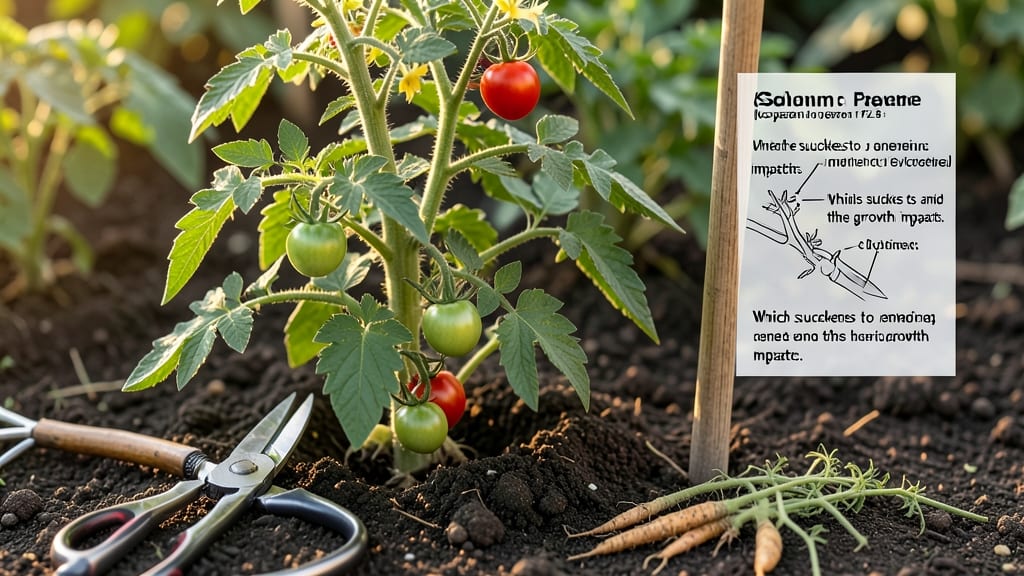
Proper tomato pruning isn't just about shaping your plants—it's about unlocking 30-50% more fruit by directing energy where it matters most. 🌱 I learned this the hard way after my first garden season when my sprawling indeterminate tomatoes produced fewer, smaller tomatoes because they wasted energy on excessive foliage.
The right cuts improve airflow, prevent disease, and let sunlight reach the fruit clusters where it counts.
Timing matters more than you'd think. Prune indeterminate varieties (the vining types) throughout the growing season, removing suckers—the little shoots that form in the leaf axils—when they're still small, about 2-3 inches long.
Determinate tomatoes (bush types) need minimal pruning—just remove lower leaves to improve airflow and prevent soil-borne diseases. Grab a sharp pair of pruners, some gloves, and maybe a small notebook to track your progress.
You'll know you're doing it right when your plants look like open, airy canopies instead of dense jungles. The first wave of pruning in early summer sets the stage for continuous harvests, while late-season trimming keeps energy flowing to ripening fruit.
Avoid cutting into the main stem or removing too many leaves at once—this stresses the plant and can slow down production. Think of pruning as a conversation with your tomato plants, guiding them toward their best possible yield.
For advanced gardeners, try the "Florida Weave" technique for indeterminate varieties, which trains vines to grow upward for easier harvesting and better fruit exposure. Even experienced growers sometimes over-prune, so keep an eye on your plants' overall health—if they look stressed, dial back the cuts.
The goal is more fruit, not fewer leaves.
📚 In This Guide
- What you need
- Instructions
- Tips and common mistakes
- Wrapping up and next steps
What you need
- ● Sharp bypass pruners – Must be clean and sterilized (avoid dull blades that tear stems). Choose bypass pruners (4-6 inches) for precision.
- ● Hand shears or scissors – For smaller cuts (if pruners feel too bulky). Opt for stainless steel, 5-inch blades.
- ● Disinfectant solution – 70% isopropyl alcohol or a 10% bleach-water mix (1 part bleach to 9 parts water) to prevent disease spread.
- ○ Gloves (optional but recommended) – Nitrile or leather gloves to protect against thorns and sap.
- ○ Sturdy pruning saw (optional) – For thick, woody stems (if dealing with overgrown indeterminate varieties). A 10-inch folding pruning saw works well.
- ● Plant ties or soft twine – To secure pruned branches if wind or rain is a concern.
- ● Garden twine or zip ties – For staking pruned plants (especially for heavy-fruited varieties).
- ● Compost or mulch – To replenish nutrients after pruning (sprinkle around the base post-trimming).
- ● Labeling tags – If pruning multiple varieties to track progress and avoid confusion.
- ● Knee pads or a small stool – For comfort if you’re working in large gardens or containers.
Step-by-Step guide to strategic tomato pruning
Here's how I approach tomato pruning to boost fruit production and plant health—no guesswork involved.
🌿 Step 1: Understand Your Tomato Type and Goals
Determine whether you're growing indeterminate (vining, continuous harvest) or determinate (bush, single harvest) varieties first. Indeterminate tomatoes need aggressive pruning to direct energy to fruit production, while determinate types rarely require pruning beyond removing diseased leaves. I always check the plant tag or variety description before touching a stem.
Your goal should be to maximize airflow and sunlight penetration to the lower canopy. This prevents fungal diseases like blight and ensures even ripening. Indeterminate plants will grow taller than your trellis—pruning keeps them manageable while determinate types need minimal shaping. Watch for suckers (the small shoots growing in the leaf axils) as your first pruning targets.
✂️ Step 2: Remove Suckers for Stronger Growth
Start pruning when plants reach 12-18 inches tall. Suckers are the small shoots that grow between the main stem and branches. Pinch them off with your fingers or use clean pruners to make a sharp cut. I always work in the morning when plants are turgid and diseases are less likely to spread.
Leave only the top two leaves above each fruit cluster when pruning. This ensures the plant maintains enough foliage for photosynthesis while directing energy to fruit development. Remove any leaves touching the ground—they'll rot and spread disease upward. You'll know you're doing it right when new growth appears within 5-7 days without stunted development.
☀️ Step 3: Prune for Airflow and Sunlight
After removing suckers, focus on thinning the canopy to improve airflow. Remove any leaves that block sunlight from reaching lower fruit clusters. Start from the bottom and work upward, removing leaves that would shade more than 25% of the plant's surface. This prevents sunscald on exposed fruit while keeping the plant healthy.
For indeterminate varieties, limit the number of main stems to 1-2 per plant. If you choose two stems, select the strongest, most vigorous one and remove its weaker competitor. You'll see more compact growth and better fruit distribution throughout the plant. Never remove more than one-third of the foliage at once—this stresses the plant and reduces yield.
🪴 Step 4: Maintain Pruning Through the Season
Continue pruning weekly during the growing season, focusing on removing suckers and diseased leaves. Always use sterilized pruners (wipe with rubbing alcohol between cuts) to prevent spreading pathogens. Prune just above a leaf node or lateral branch—never leave stubs, as they invite infection.
As fruit sets, reduce pruning intensity. The plant needs foliage to support ripening fruit. Focus on removing only diseased or yellowing leaves and any suckers that appear. You'll know you've found the right balance when the plant produces consistent new growth without excessive leaf drop. Stop pruning entirely 4-6 weeks before your first frost to allow remaining leaves to harden off and protect developing fruit.
Tips & tricks for strategic tomato pruning
These game-changing techniques will transform your tomato harvest—no more guesswork, just proven results.
Timing Secret: Begin pruning only after your plants reach 12-18 inches tall—this ensures the main stem is strong enough to support new growth. I've seen beginners prune too early, which stresses young plants and stunts their development. Wait until you see 3-4 true leaves forming above the first flower cluster before making your first cuts. This timing aligns perfectly with Step 2 in the instructions, where sucker removal becomes effective.
Sucker Identification: The key to successful pruning is spotting suckers early—they're those tiny shoots growing in the leaf axils (where leaves meet the stem). I always run my fingers along the stem from bottom to top, feeling for these small bumps. If you accidentally leave a sucker, it can become a weak branch that steals energy from your fruit. Remember the 5-7 day rule: new growth should appear within this window if you've pruned correctly.
Tool Technique: While fingers work for small suckers, invest in sterilized pruners for cleaner cuts on larger growth. I keep a small bottle of rubbing alcohol handy to wipe blades between cuts—this prevents spreading fungal spores. For indeterminate varieties, make cuts just above a leaf node or lateral branch (never leave stubs). This precise technique matches Step 4's emphasis on clean cuts to prevent infection.
Seasonal Adjustments: The weekly pruning schedule in Step 4 works best when you adjust for your climate. In hot, dry regions, prune more aggressively to improve airflow; in humid areas, prioritize disease prevention by removing any yellowing or spotted leaves immediately. Always stop pruning 4-6 weeks before frost—this gives remaining leaves time to harden and protect developing fruit.
Pro Tips for Proper Tomato Pruning
- These game-changing techniques will transform your tomato harvest—no more guesswork, just proven results.
- Timing Secret: Begin pruning only after your plants reach 12-18 inches tall—this ensures the main stem is strong enough to support new growth.
- Sucker Identification: The key to successful pruning is spotting suckers early—they're those tiny shoots growing in the leaf axils (where leaves meet the stem).
Frequently asked questions
Got questions about tomato pruning? You’re not alone—even seasoned gardeners need a little guidance! Here are answers to the most common queries to help you prune like a pro and keep your tomatoes thriving.
Why should I prune my tomato plants at all?
Pruning improves airflow, reduces disease risk, and directs energy toward fruit production instead of excessive foliage. It also helps indeterminate varieties (like cherry tomatoes) grow taller and yield more. For determinate tomatoes, pruning is optional but can still boost fruit size and quality.
When is the best time to prune tomatoes?
Start pruning when plants are 12–18 inches tall, focusing on suckers (side shoots in the leaf axils). For warm climates, prune early in the morning to avoid stress. In cooler areas, wait until after the last frost. Never prune in late summer—it can stunt fruit development.
How do I know if I’m pruning too much or too little?
Too much pruning (removing >30% of foliage) stresses plants and reduces photosynthesis. Too little leaves crowded branches prone to disease. Aim to remove only suckers and damaged leaves, leaving 3–5 main stems for indeterminate varieties and minimal trimming for determinate types.
Can I prune tomatoes if they’re already flowering or fruiting?
Yes, but lightly! Prune only diseased or overly crowded leaves to avoid shocking the plant. Avoid heavy trimming during flowering/fruiting—this can drop blossoms or reduce yield. Focus on suckers and lower leaves to keep energy flowing upward.
What if I skip pruning entirely?
Your tomatoes will still grow, but you’ll likely see smaller fruits, more disease, and lower yields. Without pruning, plants waste energy on excessive foliage instead of producing flavorful, abundant tomatoes. Think of it as giving your plants a spa day—they’ll thank you with bigger harvests!
Wrapping up and next steps
Mastering proper tomato pruning is your secret weapon for a bountiful harvest—think more fruit, stronger plants, and fewer pests. 🌱 By removing suckers, thinning foliage, and supporting your vines, you’re not just trimming; you’re investing in healthier, high-yielding tomatoes. Start small, stay consistent, and watch your garden thrive!
Ready to put your new skills to work? Grab your pruners and head to the garden today! 🌿 Whether you’re a seasoned gardener or a beginner, every snip brings you closer to that dream harvest. Happy pruning!