
Planting
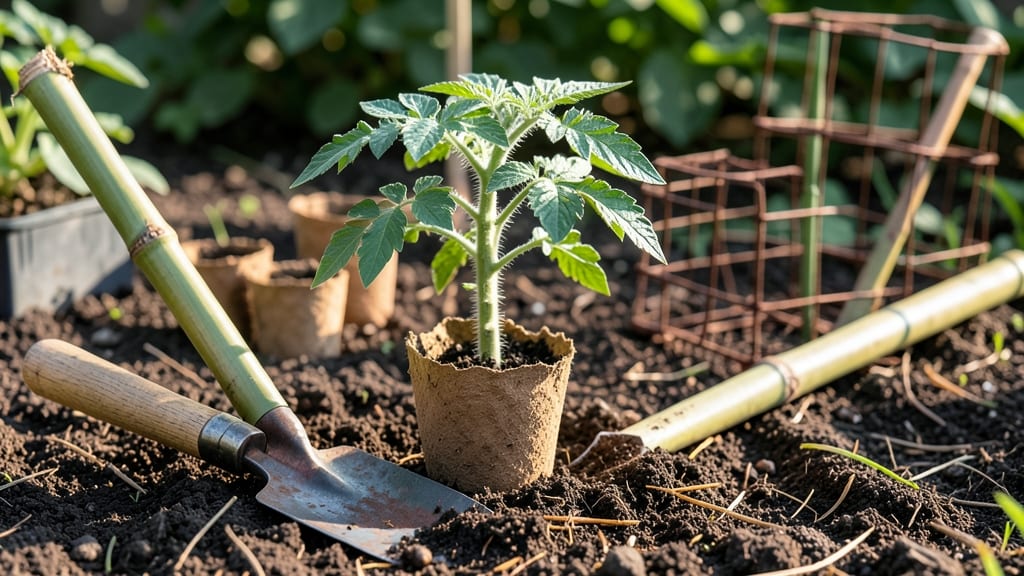
To grow organic tomato transplants successfully, start seeds indoors 6-8 weeks before your last frost date, use certified organic potting mix, and harden off seedlings over 7-10 days by gradually increasing outdoor exposure while shielding them from extreme weather. Patience during this transition prevents transplant shock and ensures stronger plants.
Hardening off organic tomato seedlings is more than just moving them outside—it's about teaching them to adapt to real growing conditions. 🌱 The gradual process helps seedlings adjust their cell membranes and stomata (those tiny leaf pores) to handle wind, sunlight, and temperature fluctuations without going into shock.
I've seen firsthand how skipping this step leads to wilted, stressed plants that struggle to recover, especially when transplanting heat-lovers like heirloom tomatoes too early in cooler climates.
Timing matters just as much as technique. For example, determinate varieties (like Roma) can handle slightly faster hardening than sprawling indeterminates (like Brandywine), which need extra time to strengthen their vines.
A common mistake is rushing the process—some gardeners think "a few hours outside" counts as hardening, but true acclimation requires progressive exposure, starting with just 1-2 hours on day one and building up to all-day outdoor stays by day seven.
💡 In This Article
- Science Behind Hardening Off Organic Tomato Seedlings
- Common Timing Mistakes When Transplanting Organic Tomatoes
Science behind hardening off organic tomato seedlings
When you move organic tomato seedlings outdoors, their cells undergo a fascinating physiological response. The plant's cell membranes become more fluid to adapt to temperature fluctuations, while stomata (those tiny pores on leaves) adjust their opening and closing patterns to regulate water loss.
This process, called acclimation, helps seedlings transition from the cozy, humid indoor environment to the harsher outdoor conditions. Without this gradual adjustment, seedlings experience transplant shock, where their water balance collapses and growth stalls.
The key variables in hardening are temperature swings, wind exposure, and light intensity. For example, seedlings hardened at 50-70°F during the day with 10-15 mph winds develop thicker cell walls over 7-10 days, making them more resilient.
Determinate varieties like 'Celebrity' tomatoes need about 5-7 days of hardening, while sprawling indeterminates like 'Sungold' require 10-14 days to strengthen their vascular systems for better nutrient transport. The difference comes down to their growth habits—determinates grow bushier and can handle stress faster.
Here's what happens if you skip proper hardening: seedlings often develop wilting leaves or yellowing edges from dehydration, or worse, their roots become brittle and break easily when planted.
I've seen organic gardens lose entire batches because they moved seedlings outside on a windy day after a cold snap, causing irreversible damage. The solution?
Start with 1-2 hours of morning sun on day one, then increase exposure by 1-2 hours daily while protecting from afternoon heat and evening chills.
Light plays a surprising role too. Seedlings grown under indoor grow lights often have thinner leaves that struggle with direct sunlight. During hardening, their chlorophyll production ramps up to handle 6-8 hours of full sun per day.
Without this adjustment, leaves burn under 10,000+ lux outdoor light levels. For organic growers, this means using shade cloth (30-50%) during the first few days of hardening to ease the transition.
What most gardeners overlook is how wind stress affects root development. Even gentle breezes (5-10 mph) cause seedlings to grow thicker stems through a process called thigmomorphogenesis. Without this natural toughening, plants become top-heavy and prone to snapping.
To replicate this effect, place seedlings in a sheltered outdoor spot with partial wind exposure—like near a fence or trellis—during hardening.
For organic growers, the hardening schedule also depends on your region's microclimate. In cooler zones (like USDA Zone 5), start hardening 2-3 weeks before last frost when nighttime temps stay above 45°F.
In warmer zones (Zone 8+), begin when daytime highs reach 70°F to avoid heat stress. The goal is to mimic your garden's conditions so seedlings recognize their new home's environment.