
Planting
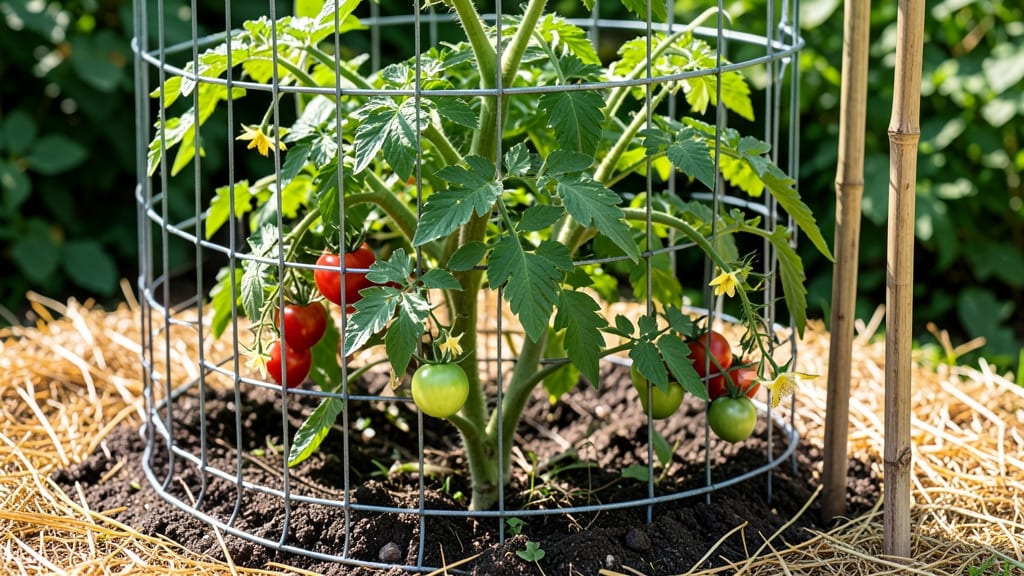
Tomato plant cages transform floppy vines into neat, productive towers—but only if you use them right. 🌱 I’ve seen cages turn from useless wire baskets to the backbone of my garden’s best harvests, and the difference comes down to placement, pruning, and a few key tricks most gardeners miss.
Start with the right size: a 6-foot cage works for most varieties, but beefsteaks need 7-8 feet of support. Drive stakes into the ground first—2 feet deep—then secure the cage to them with zip ties or garden twine. This keeps it from toppling when vines get heavy.
The goal is to guide growth upward while preventing disease from touching soil. Once your plant hits the cage, prune strategically. Remove suckers (those little shoots in the leaf axils) to focus energy on fruit production, and tie main stems to the cage every 12 inches as they grow.
By midsummer, you’ll have a clean, vertical plant that’s easy to harvest from and resists cracking from wind. For maintenance, check cages weekly for loose ties or bent wires. Add mulch around the base to keep soil moist and deter pests from hiding in the cage’s shadow.
With this setup, my tomatoes stay disease-free, sun-drenched, and bursting with flavor—no more sprawling messes or missed harvests.
📚 In This Guide
- What you need
- Instructions
- Tips and common mistakes
- Wrapping up and next steps
What you need
- ● Tomato plant cages: 1–2 cages per plant (depending on variety). Choose sturdy, galvanized metal or plastic cages that are at least 4–5 feet tall (taller for indeterminate varieties).
- ● Tomato plants: 1–3 healthy seedlings or transplants (check your local nursery for disease-resistant varieties like ‘Celebrity’ or ‘Sungold’).
- ● Garden soil or potting mix: 1–2 bags (well-draining mix enriched with compost or aged manure).
- ● Gloves: 1 pair (to protect your hands from thorns and dirt).
- ● Pruning shears: 1 pair (for trimming suckers and excess foliage).
- ○ Stakes or twine: Optional but helpful if cages are lightweight (use 4–6 wooden stakes or soft plant ties for extra support).
- ● Watering can or hose: 1 (with a gentle spray nozzle to avoid damaging plants).
- ○ Mulch (optional but recommended): Straw, grass clippings, or shredded leaves to retain moisture and suppress weeds.
- ● Cage stabilizers: Heavy-duty zip ties or bungee cords to secure cages to stakes in windy areas.
- ● Plant food: Balanced fertilizer (like 10-10-10) or organic options like fish emulsion to boost growth.
- ● Shade cloth: Lightweight fabric to protect young plants from intense afternoon sun.
- ● Trellis or additional supports: For extra-large varieties (like ‘Brandywine’), add a secondary trellis.
Step-by-Step guide to installing tomato plant cages for strong vine support
Here's my foolproof method for keeping your tomato plants upright and productive all season long.
🪴 Step 1: Choose the Right Cage for Your Tomato Variety
Select a cage that's at least 5 feet tall—standard varieties like 'Celebrity' or 'Roma' need this height, while indeterminate types like 'Sungold' or 'Brandywine' require 6-8 foot cages for their vigorous growth. Look for cages made from galvanized steel or heavy-duty plastic with 14-16 gauge wire—thinner wire bends under fruit weight and causes sagging.
I always check the cage's diameter too. A 24-30 inch diameter gives enough space for 3-4 main stems to grow without crowding. Place the cage right at planting time—burying 6-8 inches of the cage into the soil creates stability that shallow stakes can't match. This prevents the cage from toppling when vines get heavy with fruit.
🌱 Step 2: Position and Bury the Cage Properly
Drive the cage 1-2 inches from the plant's stem—too close restricts root growth, while too far creates gaps where vines can flop. Use a post-hole digger to create a hole 6-8 inches deep and 4-6 inches wide at the planting site. This ensures the cage stands vertically without leaning.
Press the soil firmly around the buried portion to eliminate air pockets. I tap the cage gently with a mallet to settle it completely—this prevents shifting when vines start growing. For windy areas, add a stake on the opposite side connected with soft plant ties to create a windbreak.
☀️ Step 3: Train Vines as They Grow
Gently weave the main stem through the cage's first few circles when it reaches 12-18 inches tall. Use soft plant ties or twist ties to secure it—never wrap wire directly around stems as it restricts growth. I like to train one main stem for determinate varieties and 2-3 stems for indeterminate types to maximize yield.
Watch for suckers (side shoots in leaf axils) and remove them promptly—they drain energy from fruit production. When vines reach the top of the cage, prune the growing tip to encourage bushier growth lower down. This creates more fruiting sites and prevents the plant from becoming top-heavy.
💧 Step 4: Maintain Support Through the Season
Check the cage's stability weekly, especially after heavy rains or winds. Loosen any ties that have tightened as the stem grows—too-tight ties strangle stems and create weak points. I also inspect for fruit weight causing sagging between cage rings and add temporary support with small wooden dowels if needed.
Water at the base of the plant rather than overhead to prevent disease spread through the cage's structure. Mulch around the cage's base with 2-3 inches of straw to retain moisture and prevent soil-borne pathogens from splashing onto lower leaves. This keeps your plants healthy and productive all season.
Tips & tricks for perfect tomato plant cage support
Here's what I've learned after years of battling floppy tomato vines—these tricks will keep your plants standing tall.
Cage Material Matters: While galvanized steel cages last the longest, heavy-duty plastic cages are more lightweight and won't conduct heat in hot climates. I've found that cages with 14-16 gauge wire provide the perfect balance of durability and flexibility—thinner wire bends under fruit weight, while thicker wire can be too rigid and restrict vine growth. For windy areas, consider adding a second stake on the opposite side of the cage to create a windbreak.
Training Technique: When you're training vines through the cage's first few circles in Step 3, use a gentle spiral motion rather than forcing the stem straight up. This natural weave helps distribute weight more evenly and prevents the vine from breaking under heavy fruit loads. I also recommend using soft plant ties rather than twist ties—they're gentler on stems and can be easily adjusted as the plant grows.
Weekly Maintenance: That weekly stability check in Step 4 isn't just about preventing toppling—it's your chance to spot potential issues before they become problems. Look for fruit weight causing sagging between cage rings and add temporary support with small wooden dowels if needed. I keep a supply of these dowels handy and cut them to size with a hacksaw, which works perfectly for reinforcing sagging sections without damaging the plant.
Mulching Strategy: The 2-3 inches of straw mulch around your cage's base isn't just for moisture retention—it also creates a barrier that prevents soil-borne pathogens from splashing onto lower leaves. I've found that adding a layer of cardboard underneath the straw (optional but highly effective) blocks weeds and helps retain even more moisture. This simple addition can make a noticeable difference in plant health, especially during hot summer months.
Pro Tips for Use Tomato Plant Cages
- Here's what I've learned after years of battling floppy tomato vines—these tricks will keep your plants standing tall.
- Cage Material Matters: While galvanized steel cages last the longest, heavy-duty plastic cages are more lightweight and won't conduct heat in hot climates.
- Training Technique: When you're training vines through the cage's first few circles in Step 3, use a gentle spiral motion rather than forcing the stem straight up.
Frequently asked questions
Got questions about using tomato plant cages? You’re not alone! Here are answers to the most common queries to help you grow thriving, supported tomato plants with ease.
What’s the best time to install tomato cages?
Install cages as soon as seedlings are 6–8 inches tall (about 2–3 weeks after transplanting). This gives vines early support to climb while preventing root disturbance later. If using them for established plants, gently tuck the cage around the stem to avoid damaging roots.
Can I reuse tomato cages year after year?
Cages are durable and reusable for 3–5+ years if stored properly. Clean them with a 10% bleach solution (1 part bleach to 9 parts water) to kill pests/diseases, then rinse and dry in the sun. Avoid plastic cages in extreme heat—they can degrade faster.
What if my tomato plants outgrow the cage?
If vines exceed the cage height, add a bamboo stake or trellis beside it and weave the excess growth upward. For indeterminate varieties (like ‘Sungold’), opt for taller cages (6–7 feet) or a floppy tomato cage designed for sprawling growth. Prune suckers aggressively to manage size.
How do I keep pests out of tomato cages?
Prevent pests with these tricks:
- Copper tape around the cage base deters slugs and cutworms.
- Use row covers early in the season to block flying insects.
- Apply neem oil or kaolin clay to leaves weekly.
- Remove fallen fruit promptly to avoid attracting critters.
What’s a good alternative if I don’t have cages?
No cages? No problem! Try these supports:
Option
Pros
Cons
Bamboo stakes + twine
Cheap, adjustable, and eco-friendly.
Requires more time to tie vines.
Wire tomato trellis
Sturdy, long-lasting, and space-efficient.
Can rust if not galvanized.
DIY wooden A-frame
Customizable height and strength.
Heavier to move; needs sealing.
For heavy producers, combine stakes with a string grid for extra stability.
Wrapping up and next steps
Using tomato plant cages is a game-changer for growing healthy, productive vines—no more floppy plants or missed harvests! 🌱 With the right setup, sturdy cages, and a little care, you’ll enjoy bountiful tomatoes all season long.
Now that you’re equipped with the know-how, it’s time to roll up your sleeves and get planting!
Your next step? Pick your favorite tomato variety and start building (or buying) your cage today. Happy gardening—your future meals (and neighbors) will thank you! 🍅✨