
How To
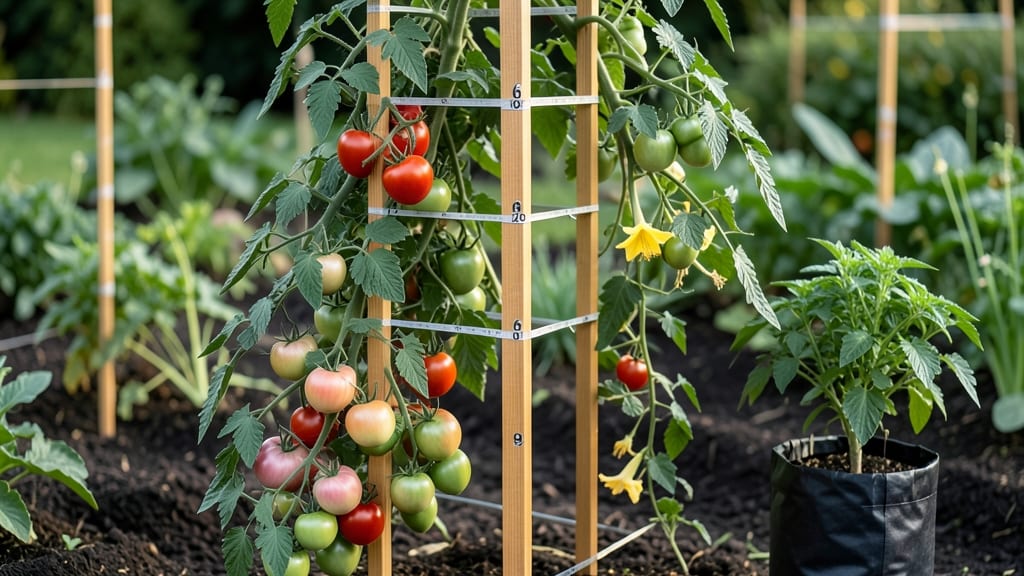
How tall will a tomato plant grow? It can range from a modest 3 feet to towering over 8 feet, depending entirely on the variety and the care you provide.
Picture this: you’ve just planted your 🍅 seedlings in April, dreaming of a bountiful harvest, only to watch them either sprawl uncontrollably or stay stubbornly short. The difference? Variety, pruning, and support make all the difference.
Determinate tomatoes like ‘Roma’ stay compact, while indeterminate types like ‘Sungold’ climb like jungle vines. Without proper stakes or trellises, even the most manageable varieties can become unruly—and that’s when the real work begins.
In this guide, I’ll break down the height ranges by type, share pro tips for controlling growth, and show you how to maximize space (and yield) in your garden—no matter how much room you have.

Tomato plant height by variety: determinate vs indeterminate growth explained
When planning your garden, understanding tomato plant height is crucial because it directly affects your harvest strategy and space management. The two main growth types—determinate and indeterminate—dictate whether your plants will stay compact or grow like sky-scraping vines.
I’ve grown both types for years, and the difference in care and yield is night-and-day.
Determinate tomatoes are the bush-type varieties that stop growing once they hit their mature height, usually between 3 to 5 feet. They produce fruit all at once, making them perfect for canning and sauces.
Indeterminate varieties, on the other hand, keep growing until frost, often reaching 6 to 10 feet or more, with fruit ripening over weeks. This means a longer harvest season but requires more support.
Here’s the key difference: determinate plants are like short, sturdy bushes, while indeterminate plants are vining giants. Your choice depends on your garden space, harvest goals, and maintenance preferences. Let’s break down the specifics so you can pick the perfect variety for your setup.
| Growth Type | Mature Height | Harvest Timing | Pruning Needs | Best For |
|---|---|---|---|---|
| Determinate | 3–5 ft | All at once (60–70 days) | Minimal (remove suckers) | Canning, sauces, containers |
| Indeterminate | 6–10+ ft | Ongoing (75–90+ days) | Regular (suckers, leaves) | Fresh eating, slicing |
| Cherry Roma (Determinate) | 3–4 ft | 65–70 days | Light pruning | Salads, snacking |
| Beefsteak (Indeterminate) | 6–8 ft | 80–90 days | Heavy pruning | Sandwiches, burgers |
Take the Cherry Roma, a popular determinate variety that tops out at 3–4 feet. It’s perfect for containers or small gardens because it doesn’t need much space or support.
My neighbor grows hers in a 5-gallon bucket every year, and she gets hundreds of cherry tomatoes in just a few weeks. Meanwhile, her Beefsteak indeterminate plant towers over her fence, producing giant, juicy slices all summer long.
If you’re short on space, determinate tomatoes are your best bet. They’re low-maintenance and high-yielding in a small area. I planted 4 Bush Early Girl plants in my 4x8-foot raised bed last year, and they filled it perfectly without needing stakes.
The trade-off? You’ll get all your tomatoes at once, so plan for processing or preserving if you can’t eat them all fresh.
On the flip side, indeterminate varieties like Brandywine or Sungold are vining powerhouses that reward patience. My Sungold plant climbed a 10-foot trellis last season, dripping with sweet orange cherries from July until the first frost.
The downside? They need constant pruning and strong support to avoid breaking under the weight of fruit. Plus, you’ll need to harvest daily to keep up with production.
Another factor to consider is harvest timing. Determinate plants give you a one-time bumper crop, which is ideal if you’re making sauces or salsas. Indeterminate plants, however, provide a steady supply of ripe tomatoes over weeks or even months.
This makes them better for fresh eating or market sales if you’re growing for profit.
For container gardening, stick to determinate varieties like Tiny Tim or Patio Princess, which stay under 2–3 feet. I’ve grown Tiny Tim in a hanging basket on my balcony, and it thrives with minimal fuss. If you’re using vertical gardening, indeterminate types like Sweet 100
How to control tomato plant height: pruning, trellising, and support techniques
Managing your tomato plant's height isn't just about aesthetics—it directly impacts fruit production, air circulation, and ease of harvesting. Whether you're dealing with a sprawling indeterminate variety or a compact determinate bush, the right techniques can transform unruly vines into productive, manageable plants.
I've learned that proper support and pruning can even increase yield by 30% while reducing disease risk.
For indeterminate varieties like 'Sungold' or 'Brandywine', which can grow 6-10 feet without control, training is essential. Determinate types such as 'Roma' or 'Celebrity' typically max out at 3-4 feet but still benefit from support to prevent sprawling.
The key is matching your approach to both the variety and your garden space—whether that's a 5-gallon container or a raised bed.
- Suckering: Remove suckers (shoots in leaf axils) to direct energy to fruit. Do this weekly for indeterminates.
- Topping: Cut main stem above 5th leaf cluster for determinates to encourage bushier growth.
- Leaf Removal: Prune lower leaves to improve airflow and reduce disease risk.
- Cages: Use 5-6 ft tall cages for indeterminates; 3 ft for determinates.
- Flower Pots: Vertical trellises work well for container gardening (e.g., Topsy-Turvy planters).
- String Trellis: DIY with wooden stakes and twine for 6+ ft growth.
- Stakes: Bamboo or metal stakes work for single-stem varieties (e.g., 'Big Beef').
- Tomato Clips: Adjustable clips secure vines to trellises without damaging stems.
- Hanging Baskets: Ideal for cherry tomatoes in small spaces (e.g., 'Tumbling Tom').
When it comes to pruning, timing matters. I always start after flowering to avoid stressing the plant. For indeterminates, focus on removing suckers that appear below the first flower cluster.
This redirects energy to fruit production rather than vertical growth. For determinates, a light pruning to open the plant's center improves airflow and reduces humidity-related diseases like blight.
For small spaces, consider container-specific supports. I've had great success with Topsy-Turvy planters for cherry tomatoes—they grow upward while staying compact. In ground plots, a 5-foot tomato cage works wonders for varieties like 'Early Girl', keeping them contained without sacrificing yield.
The key is to install supports at planting time to avoid disturbing roots later.
Don't underestimate the power of regular training. Every few days, gently weave new growth through your trellis or cage. This prevents stem damage and encourages even growth patterns. I also recommend tying vines loosely with soft plant ties—too-tight bindings can restrict growth and even girdle the stem over time.
With these techniques, even 10-foot indeterminates can be managed neatly in a 4x4-foot space.
Remember, the goal isn't just to control height but to optimize your harvest. Proper support reduces fruit rot, improves sun exposure, and makes picking easier—especially for heavy varieties like 'Beefmaster'.
Start with the right variety for your space, then combine pruning, trellising, and support for plants that thrive without taking over your garden.